
Why Are Spiders Important? A Closer Look at Nature’s Quiet Pest Controllers
If you’ve ever asked yourself why are spiders important, you’re definitely not alone. For many people, spiders are unsettling at best and panic-inducing at worst. They show up in corners, spin webs across doorways, and seem to appear exactly where you do not want them.
But once you look past the fear factor, spiders start to seem a lot less like unwelcome intruders and a lot more like some of the most useful animals around us.
They help manage insect populations, support the food chain, protect gardens, and even offer surprising value in medical and material research. You may not want one dropping from your ceiling, but out in the wider ecosystem, spiders are doing important work every single day.
Why Are Spiders Important in the Ecosystem?
At the simplest level, spiders are important because they are predators. They feed on a huge range of insects, including flies, mosquitoes, moths, aphids, and beetles. Without predators like spiders, many insect populations would grow much faster and create more problems for plants, crops, and people.
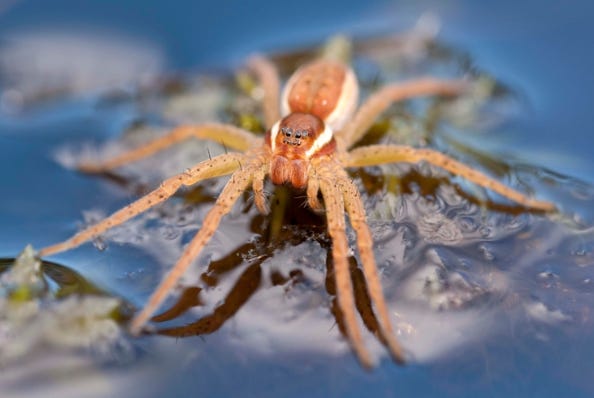
Spiders help keep ecological systems in balance. They reduce the chances of any one insect species becoming too dominant, which matters more than most people realize. A healthy ecosystem depends on countless small checks and balances, and spiders are one of those quiet stabilizing forces.
They are also part of the food chain themselves. Birds, amphibians, reptiles, and small mammals all feed on spiders. That means spiders are not only hunters, but also prey. They connect insect life to larger animals, making them an essential link in the natural web of life.
Spiders Are Natural Pest Control Experts
One of the biggest reasons spiders matter is that they provide free, natural pest control.
A single spider can catch a large number of insects over time, especially in gardens, fields, and outdoor spaces where flying and crawling pests are abundant. Web-building spiders trap prey in silk, while hunting spiders chase it down on foot. Either way, the outcome is the same: fewer insects causing trouble.
This natural pest control brings several practical benefits:
- Fewer insects feeding on plants and crops
- Fewer mosquitoes and biting pests around people
- Less reliance on chemical pesticides
- Better balance in gardens and green spaces
For gardeners, this can be especially important. Spiders help reduce the number of pests that damage leaves, flowers, fruits, and vegetables. If you have ever wondered why a garden feels healthier when it is full of life, spiders are part of that answer.
Why Spiders Matter in Gardens and Farms
Gardeners and farmers often appreciate spiders far more than the average homeowner does.
That is because spiders can be a sign of a thriving, balanced environment. They tend to do well in places where there is biodiversity, shelter, and a stable supply of prey. In other words, if spiders are present outdoors, it often means the environment is active and functioning the way it should.
Spiders are also sensitive to heavy chemical use. In many cases, a garden with a healthy spider population is a garden that has not been overtreated with harsh sprays. Their presence can hint at a more natural and resilient outdoor space.
For farms and food-growing areas, spiders help suppress insect pests before they become overwhelming. They are not the whole solution, of course, but they are part of a healthier, lower-chemical approach to pest management.
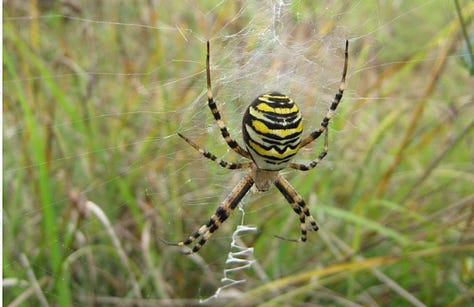
Spiders May Look Strange, but They Are Remarkable Animals
It is easy to dismiss spiders as creepy, but biologically, they are fascinating.
Many species have eight eyes, though their eyesight varies widely. Some rely more on touch and vibration than vision. Tiny sensory hairs on their legs and bodies allow them to detect movement, scent, and even subtle changes in the world around them. In some species, these sensory systems are so refined that they can tell what kind of prey is caught in a web based on vibration alone.
Different spiders also use different survival strategies. Some build intricate webs. Others hide in burrows. Some stalk prey with excellent vision, while others remain still and rely on ambush. Their variety is part of what makes them so evolutionarily successful.
And then there is silk.
Spider Silk Is One of Nature’s Most Impressive Materials
Spider silk may look delicate, but it is an extraordinary material. Pound for pound, it is often described as having a strength comparable to high-grade steel, while also being lightweight and flexible.
Spiders use silk for far more than building webs. Depending on the species, silk can be used to:
- Build snares for prey
- Create shelters or retreats
- Protect eggs
- Travel through the air by “ballooning”
- Bridge gaps between branches, walls, or plants
Some small spiders release silk into the wind and let air currents carry them to a new location. It is a surprisingly elegant way to travel, and it is one of those details that makes spiders seem less frightening and more extraordinary.
Spider silk has also inspired research into advanced materials. Scientists have long studied its structure because of its potential applications in textiles, medicine, and engineering.
Spider Venom Is More Useful Than Most People Think
When people hear the word “venom,” they usually think of danger. But spider venom is also an area of serious scientific interest.
Researchers have studied spider venom for its potential in medicine, including pain management, neurological treatment, and other pharmaceutical uses. Certain compounds found in spider venom may have antimicrobial, neuroprotective, or therapeutic potential. This is one of the more surprising answers to the question, why are spiders important: they may help shape future medical treatments.
That does not mean all spiders are harmless, of course. A small number of species can be dangerous to humans, and caution is always sensible when identifying unfamiliar spiders. But most species are not aggressive and prefer to avoid people whenever possible.
Are Spiders Dangerous to Humans?
This is where fear tends to take over, so it helps to keep things in perspective.
Yes, there are a few medically significant spiders in some parts of the world. But most spiders are not interested in biting humans. In general, they would rather hide, flee, or stay still and hope not to be noticed.
For most people, the typical house spider is more nuisance than threat. It looks alarming, but it is usually there because it has found shelter and a food source, not because it wants any interaction with you.
Understanding this can make spiders a little less intimidating. You do not have to love them or invite them indoors to recognize that they serve a real purpose.
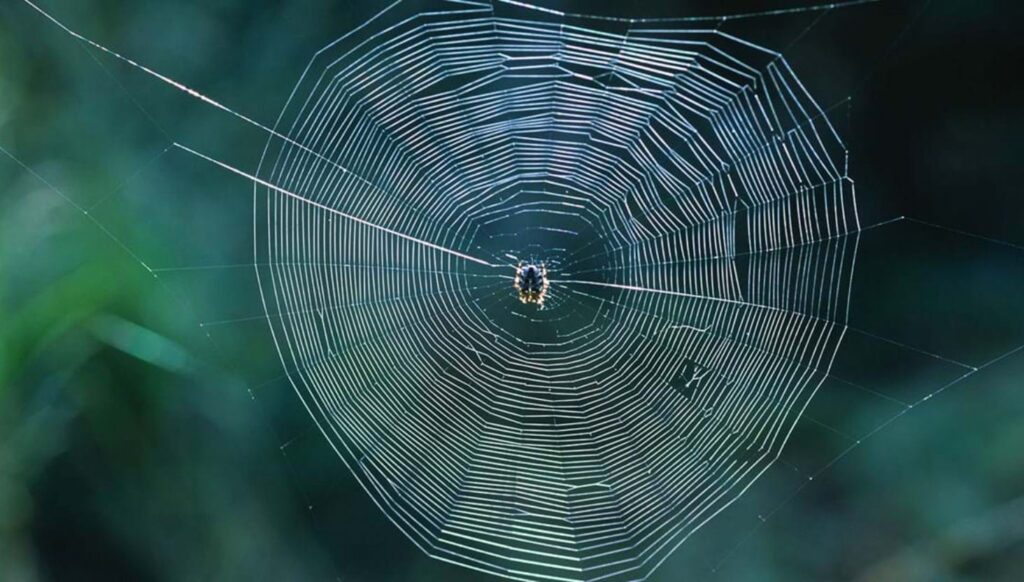
Why You May Not Want Spiders in the House — Even If They Are Helpful
It is perfectly reasonable to appreciate spiders and still not want them in your home.
Outdoors, they are useful and exactly where they belong. Indoors, they can become an unwelcome surprise, especially in closets, basements, garages, and quiet corners where clutter collects.
If you want fewer spiders inside, the best approach is prevention rather than panic:
1. Reduce clutter
Spiders like calm, undisturbed places to hide. Storage piles, old boxes, dusty corners, and rarely used shelves are ideal shelter.
2. Control other pests
If your home has insects, it also has food for spiders. Reducing flies, ants, moths, and other pests often reduces spider activity too.
3. Seal entry points
Repair torn window screens, add weather stripping, and seal small cracks around doors, vents, and foundations.
4. Keep outdoor lighting in mind
Lights attract insects, and insects attract spiders. If spiders gather near entryways, the real draw may be the insects clustering around the light.
5. Relocate rather than kill
If you find a spider indoors, moving it outside is often the simplest and most balanced solution.
So, Why Are Spiders Important?
Because they do far more good than most people realize.
They control insect populations, support birds and other wildlife, help gardens stay balanced, and offer insights for science and medicine. They are skilled hunters, sophisticated silk makers, and a key part of healthy ecosystems.
You do not have to enjoy finding one in the bathtub to admit that spiders are useful. Sometimes the creatures we fear most are also the ones quietly doing some of the most valuable work.
The next time you see a spider in the garden, on a fence, or tucked into a corner outdoors, it may be worth pausing before brushing it away. It is probably doing exactly what nature designed it to do.
FAQ
Are spiders good for the environment?
Yes. Spiders are good for the environment because they help control insect populations and support the food chain. They reduce pests naturally and help keep ecosystems balanced.
Why are spiders important in gardens?
Spiders are important in gardens because they eat common plant-damaging insects such as aphids, flies, and beetles. Their presence can also suggest a healthier, less chemically disturbed garden environment.
Do spiders help control mosquitoes?
They can. Many spiders eat flying insects, including mosquitoes, which makes them useful natural predators around yards, gardens, and outdoor lights.
Are all spiders dangerous?
No. While a small number of species can be medically significant, most spiders are not dangerous to humans and prefer to avoid contact.
Should I leave spiders in my house?
That depends on your comfort level, but in most cases it is better to relocate them outside rather than kill them. Outdoors, they can continue helping control pests without sharing your living space.
What makes spider silk so special?
Spider silk is incredibly strong for its weight, while also being flexible and lightweight. Scientists study it for possible uses in materials science, medicine, and engineering.
