Is the Spotted Ground Spider Poisonous?
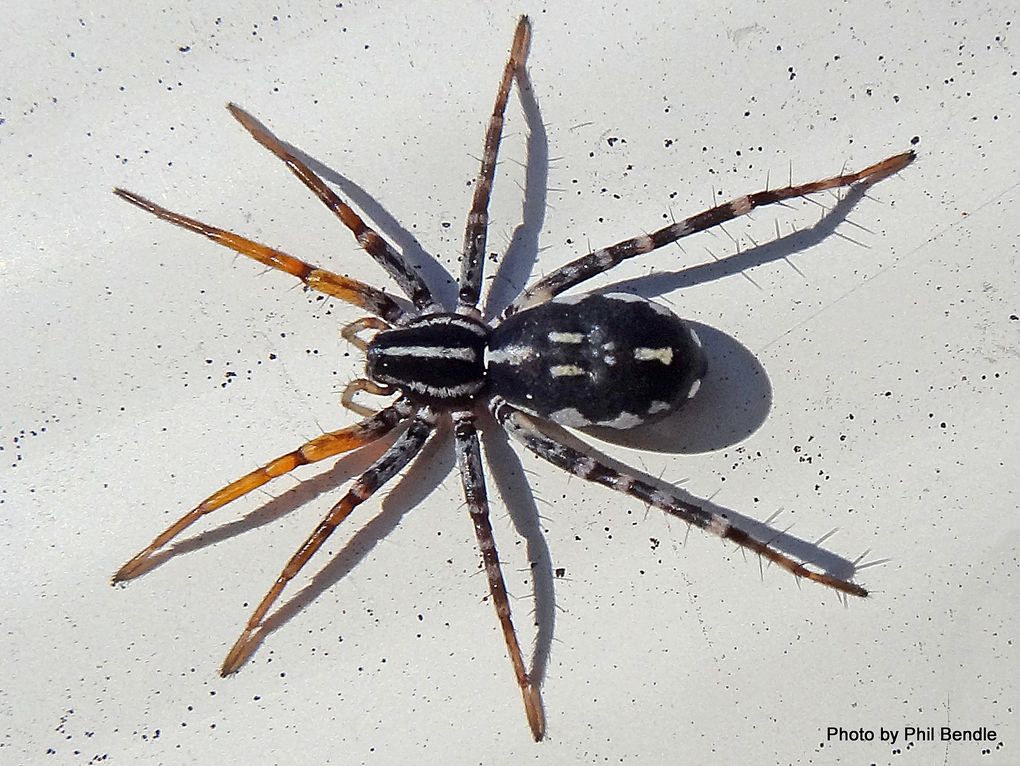
This guide focuses specifically on Nyssus coloripes, the spotted ground swift spider or orange-legged swift spider. The name “spotted ground spider” is also applied to unrelated Australian spiders, so the scientific name is essential when discussing identification, behavior, distribution and bite risk.
Spotted Ground Swift Spider at a Glance
Spotted Ground Spider Identification
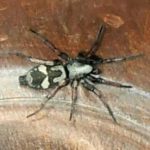
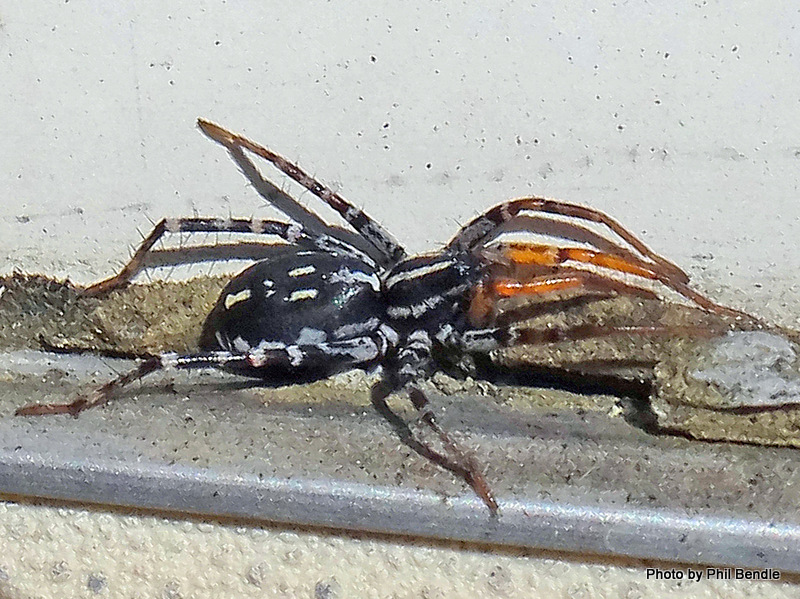
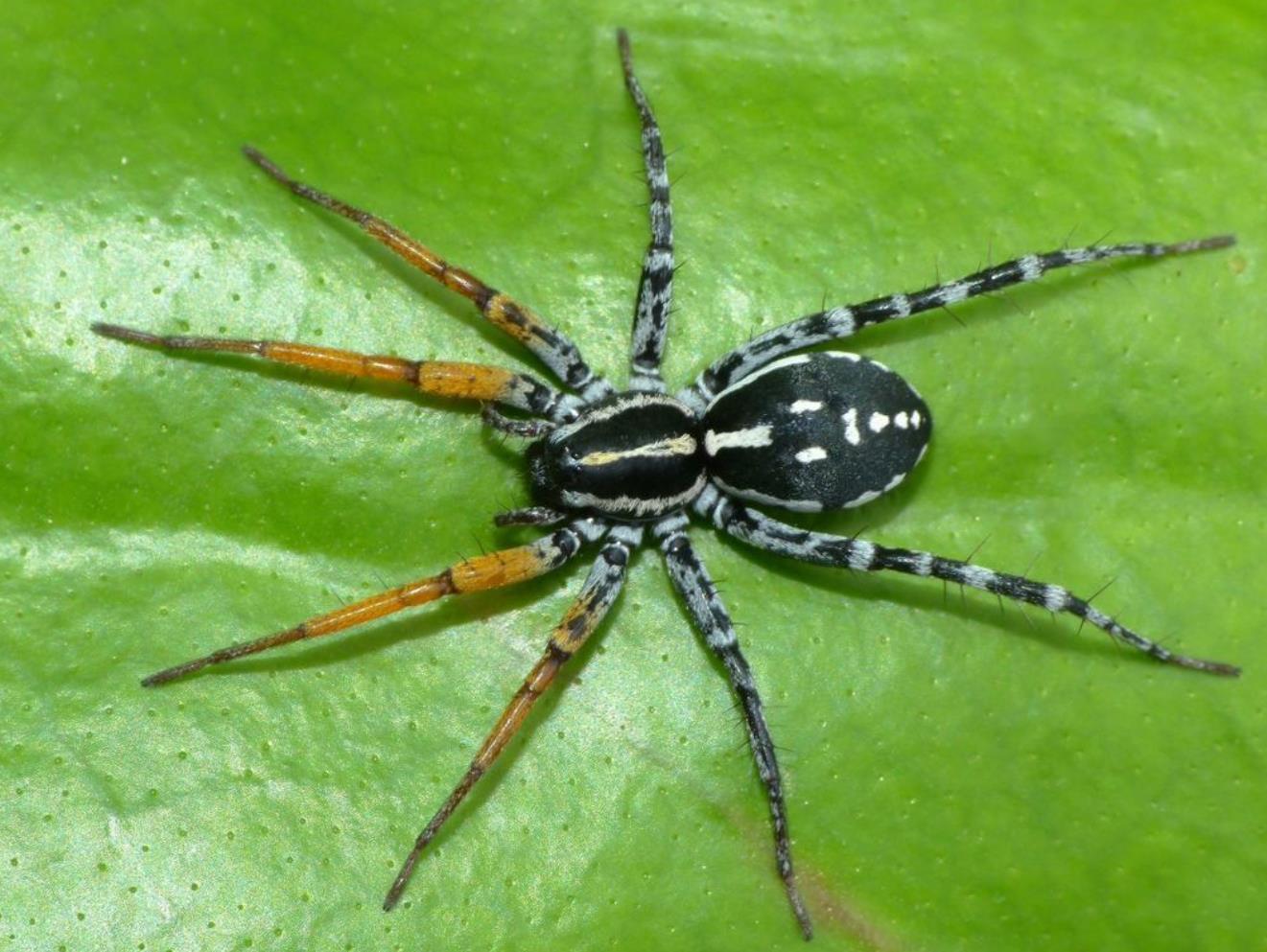
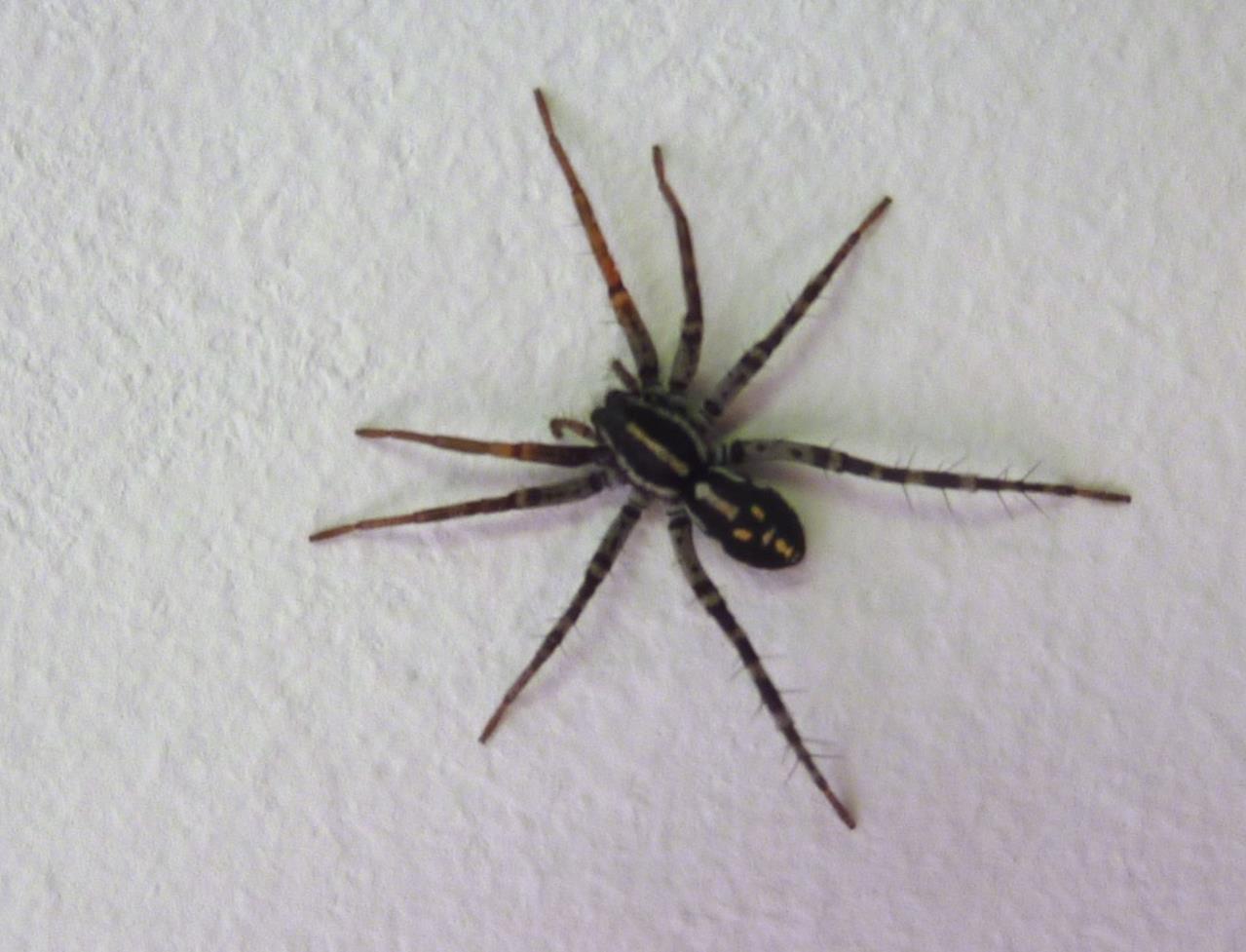
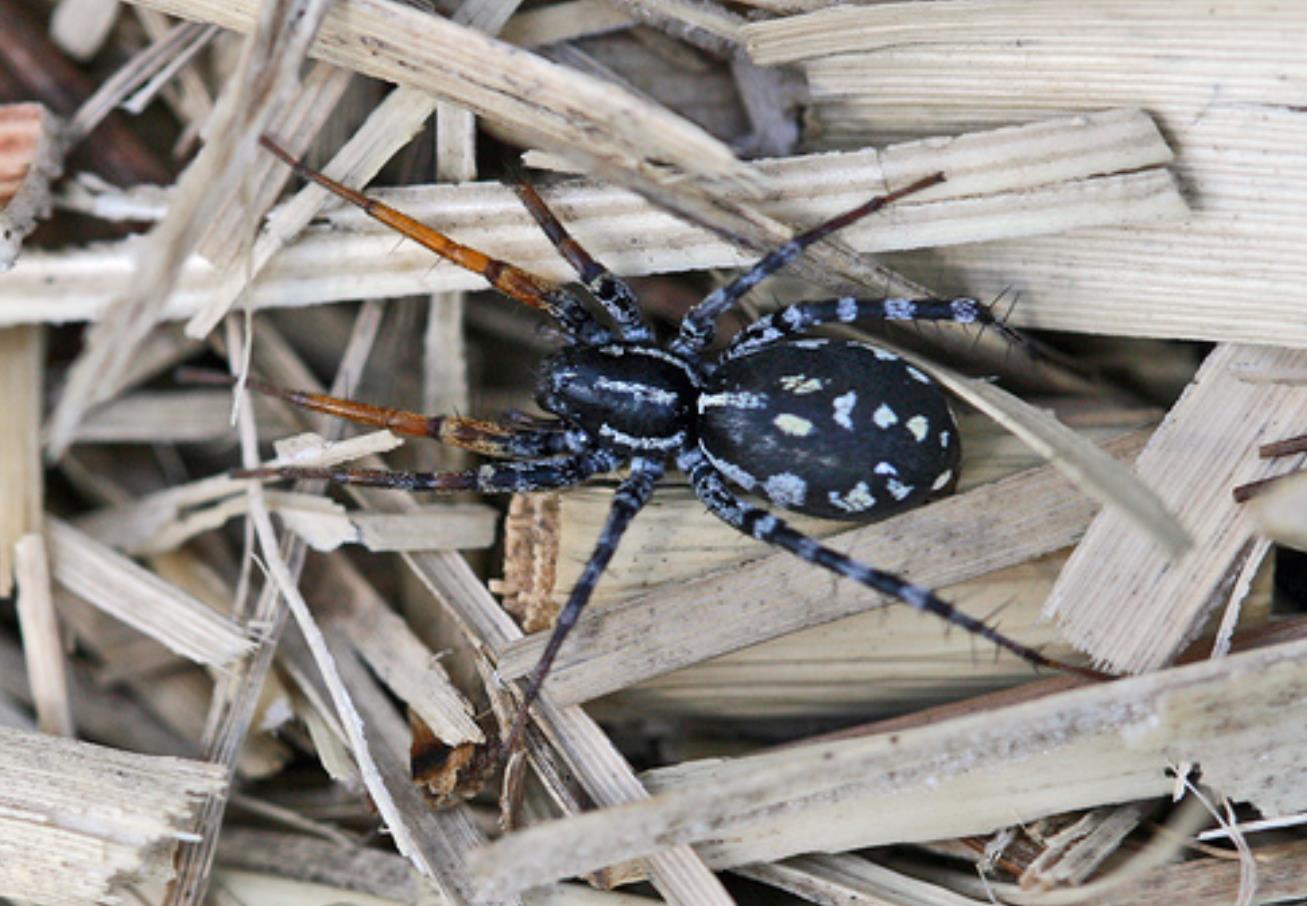
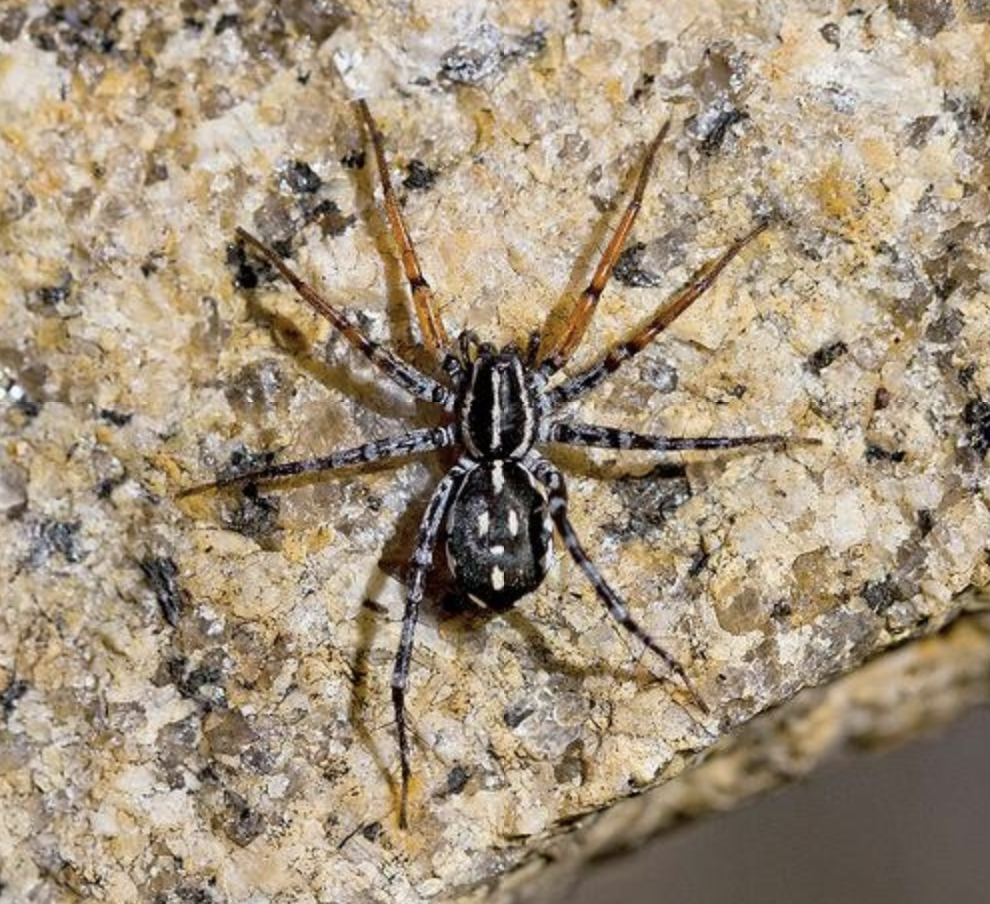
A typical Nyssus coloripes has a mostly black or very dark body marked with contrasting white or pale patches. The first pair of legs is commonly yellow, orange or orange-brown, creating the most recognizable feature behind the name orange-legged swift spider.
Useful preliminary identification clues include:
- A predominantly black or dark body
- White, cream or pale markings on the body
- Yellow-to-orange coloring on the front pair of legs
- A small, streamlined appearance
- Rapid running with frequent pauses or direction changes
- Activity on the ground, bark, walls or low vegetation
- No large prey-capture web surrounding the spider
- Records from Australia or introduced populations in New Zealand
Color should not be used by itself. Lighting, camera flash, age, sex, recent molting and natural variation can change how strongly the orange legs or white markings appear.
A photograph can sometimes support identification to genus or species, but a poor image of a fast-moving spider may only justify a broader family-level identification. Do not handle the spider to obtain a closer photograph.
Common-Name Confusion: Which Spotted Ground Spider?
“Spotted ground spider” is not a unique scientific name. It has been used for spiders from more than one family, creating a serious risk of mixing unrelated species into a single description.
| Name or group | Family | How it relates to this article |
|---|---|---|
|
Nyssus coloripes Spotted ground swift spider Orange-legged swift spider | Corinnidae | This is the principal species discussed on this page. |
|
Storena species Sometimes called spotted ground spiders or ant-eating spiders | Zodariidae | These are not Nyssus coloripes. Their identification, biology and bite information must be evaluated separately. |
|
Habronestes species Australian ant-eating spiders | Zodariidae | These belong to another spider family and should not be used as evidence for the size, range or behavior of Nyssus coloripes. |
The word “ground” is also used informally for many spiders that run across soil or leaf litter. It does not prove membership in a single spider family. In particular, this page should not combine:
- the Corinnidae classification of Nyssus coloripes;
- the Zodariidae classification of Storena or Habronestes;
- the family Gnaphosidae, which is also widely called the ground-spider family.
For a broader introduction to visual mimicry, see spiders that look like ants .
Habitat and Distribution
The World Spider Catalog records Nyssus coloripes from mainland Australia and Tasmania and lists it as introduced to New Zealand. The Atlas of Living Australia also recognizes the species under the common name spotted ground swift spider.
In Australia, swift spiders may be encountered in leaf litter, around bark, beneath objects, on low vegetation and across open ground. They can also wander onto exterior walls or enter buildings accidentally while searching for prey or shelter.
A sighting inside a home does not mean the species normally depends on indoor conditions. Location records should be interpreted alongside the surrounding habitat, season and availability of small arthropod prey.
New Zealand observations involve an introduced population. A New Zealand record should not be described as evidence that the species is native there.
Behavior, Hunting and Silk Use
Nyssus coloripes is an active hunter. Instead of constructing a large snare to intercept flying insects, it moves rapidly across the ground, bark or vegetation while searching for small arthropod prey.
Its speed does not mean that it is aggressive toward people. Fast running is part of its normal hunting and escape behavior.
Possible Wasp Mimicry
The Australian Museum notes that the orange front legs, black-and-white pattern and stop-start movement of Nyssus coloripes resemble pompilid spider wasps. When the spider moves, its colored front legs may contribute to an antenna-like visual effect.
This resemblance is commonly interpreted as mimicry. It should be stated cautiously: an observer can describe the visual and behavioral similarity, but should not claim that every movement has been experimentally proven to deceive every predator.
Does It Build a Web?
The spotted ground swift spider does not rely on a large prey-capture web. That does not mean it never uses silk.
Swift spiders may construct a small silken retreat for:
- resting or shelter;
- molting;
- protection while inactive;
- producing or guarding an egg sac.
A few strands of silk beneath bark or behind another protected object may indicate a retreat. This structure should not be confused with a large web designed to trap passing prey.
To understand the different functions of spider silk, read why spiders build webs .
Is Nyssus coloripes Dangerous?
The Australian Museum states that swift spiders occasionally bite people, but reported effects are usually minor and resolve quickly. The group is not regarded as dangerous to humans.
A cautious risk summary is:
- The spider is capable of biting.
- It uses venom for prey capture.
- It is not classified as a dangerous Australian spider.
- Reported effects are generally mild and localized.
- Individual responses can vary.
- A low-risk classification does not justify deliberate handling.
It is therefore inaccurate to say that the venom is “completely ineffective” on humans. It is also inaccurate to portray Nyssus coloripes as a major medical threat.
What Might a Bite Feel Like?
Museum guidance supports only a restrained description of generally minor, short-lived effects. Possible local symptoms after a confirmed bite may include brief pain, stinging, redness or limited swelling.
This page does not assign every unexplained red mark to a spotted ground swift spider. Many skin conditions, infections and bites from other arthropods can resemble one another.
Spotted Ground Swift Spider Lookalikes
Several unrelated spiders can look dark, spotted and fast-moving. Identification should combine markings with taxonomy, geography and behavior.
| Possible lookalike | Why confusion occurs | Useful distinction |
|---|---|---|
| Other Nyssus species | Related swift spiders can share dark coloration, pale markings and rapid movement. | Species-level confirmation may require clearer pattern details or examination beyond an ordinary photograph. |
| Storena species | Some are dark with contrasting markings and may be called spotted ground spiders. | Storena belongs to Zodariidae, not Corinnidae. |
| Habronestes species | These active Australian ant-eating spiders can have patterned bodies and occur on the ground. | They are zodariids and should be assessed using separate taxonomic references. |
| White-tailed spiders | Both may appear dark and can be seen running across floors or walls. | A white-tailed spider does not normally show the same combination of bright orange front legs and the characteristic Nyssus coloripes body pattern. |
| Ant-mimicking spiders | Slender form, rapid movement and raised front legs may create an ant-like impression. | Ant mimicry occurs in several spider families; resemblance does not establish the genus or species. |
Begin with body shape, leg coloration, pattern, location and behavior. General spider anatomy can be reviewed in how many legs spiders have .
What to Do After a Suspected Bite
The following measures provide general safety boundaries for a mild, suspected bite. They are not a remote diagnosis and do not replace local medical advice.
Move away from the spider
Avoid further contact. Do not pick up an unknown spider with bare hands or risk another bite to obtain a photograph.
Wash the area
Gently clean the skin with soap and water.
Use a cold pack for mild local discomfort
Apply a wrapped cold pack for a short interval. Do not place ice directly on bare skin.
Monitor the symptoms
Note whether pain, redness or swelling remains localized and begins improving rather than spreading.
Seek medical advice when needed
Obtain professional help if pain becomes severe, swelling or redness spreads, the wound worsens, symptoms persist, or the person develops vomiting, dizziness, weakness, breathing difficulty or other whole-body symptoms.
For a broader discussion of mild bite care and warning signs, see how to treat a suspected spider bite at home .
Frequently Asked Questions
Is the spotted ground spider poisonous?
This article focuses on Nyssus coloripes. It is more accurate to call it venomous because it delivers venom through its fangs while subduing prey. It is not regarded as dangerous to humans.
Is the spotted ground swift spider venomous?
Yes. Like most hunting spiders, Nyssus coloripes uses venom during prey capture. Venomous does not automatically mean medically dangerous to people.
Can Nyssus coloripes bite humans?
It can bite, especially if pressed against skin or handled. The Australian Museum describes bites as occasional, with effects usually minor and short-lived.
Is an orange-legged swift spider bite dangerous?
It is not generally considered dangerous. A confirmed bite may cause temporary local discomfort, but severe, spreading or whole-body symptoms require medical assessment regardless of the presumed species.
How do I identify a spotted ground swift spider?
Look for a dark body with pale markings, yellow-to-orange front legs, rapid running and an Australian or New Zealand location. These clues support an identification but do not guarantee it from a poor photograph.
Does Nyssus coloripes build a web?
It does not use a large web to capture prey. It may still produce a small silk retreat for shelter, molting or egg-sac production.
Is the spotted ground swift spider native to New Zealand?
No. Current taxonomic references list it as native to Australia and introduced to New Zealand.
Are all spotted ground spiders Nyssus coloripes?
No. The common name is ambiguous. Australian Storena and Habronestes spiders may also be described with similar common names, but they belong to the family Zodariidae.
Can a skin lesion prove that this spider bit me?
No. Without seeing the bite occur and reliably identifying the spider, a skin lesion cannot confirm that Nyssus coloripes, or any spider, was responsible.
Related Spiderpedia Guides
Authoritative Sources
- Australian Museum. Swift Spiders, genus Nyssus. Identification, behavior, proposed wasp mimicry, retreats and human bite risk. View source
- Atlas of Living Australia. Nyssus coloripes: Spotted Ground Swift Spider. Accepted taxon record and Australian occurrence data. View source
- World Spider Catalog, Natural History Museum Bern. Nyssus coloripes, family Corinnidae. Australia, including Tasmania; introduced to New Zealand. View source
- Raven, R. J. 2015. A revision of ant-mimicking spiders of the family Corinnidae (Araneae) in the Western Pacific. Zootaxa 3958(1): 1–258. View source
- Australian Museum. Ant-eating Spider. Classification of Habronestes and Storena within Zodariidae. View source
- Jackson, R. R. and Poulson, B. A. 1990. Predatory versatility and intraspecific interactions of Supunna picta, now treated as Nyssus coloripes. New Zealand Journal of Zoology 17(2): 169–184. View source
- Healthdirect Australia. Spider bites: symptoms, first aid and when to seek medical care. View source
- Fusto, G. et al. 2020. Spider bites of medical significance and the limits of diagnosis when the biting spider was not observed and identified. View source