Why Are There Spiders in My Bathroom?
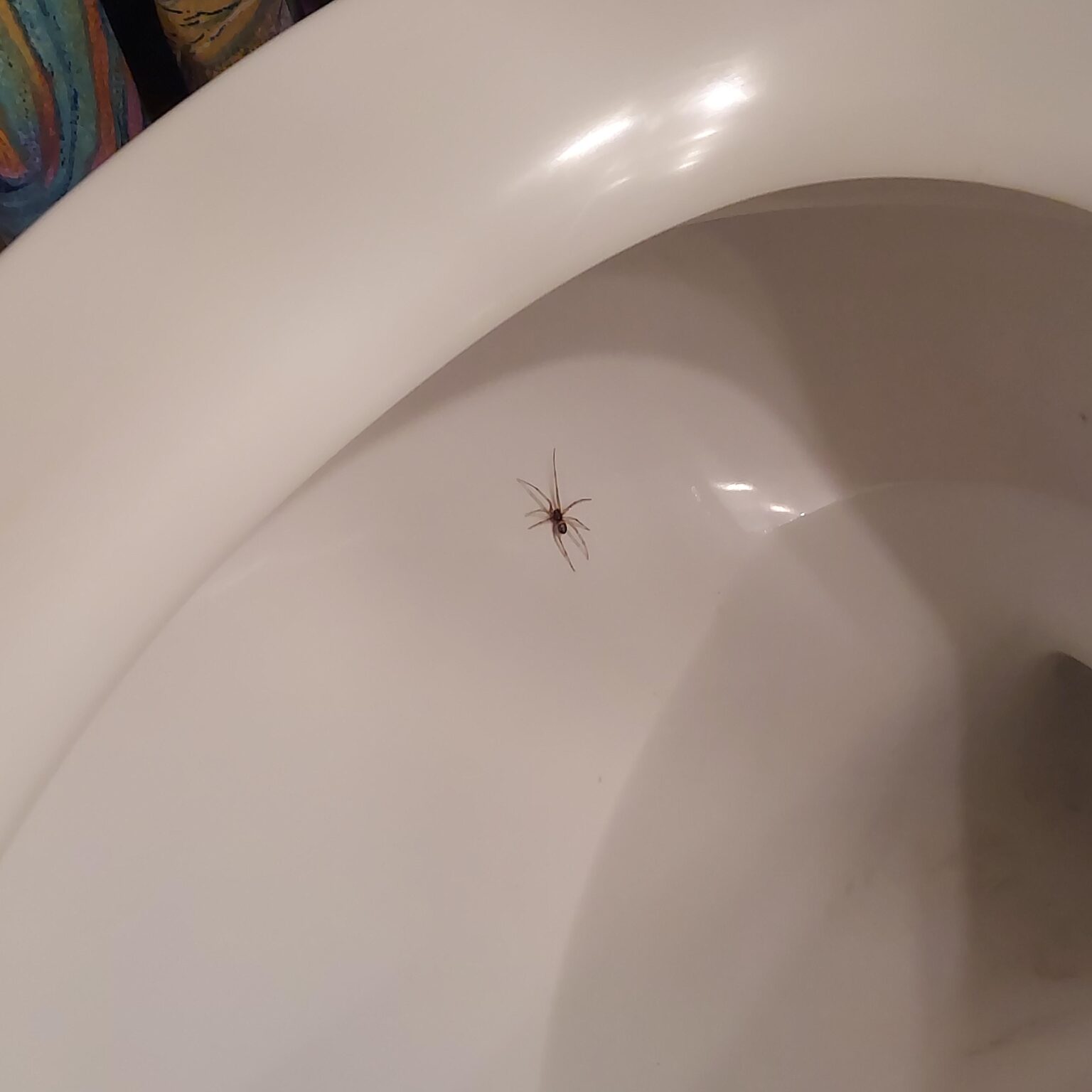
A bathroom can offer spiders protected hiding places, occasional water droplets or humid microhabitats, and small insects to hunt. However, a spider beside a drain or inside a bathtub did not necessarily come through the plumbing or deliberately choose a wet location.
Why Do Spiders Appear in Bathrooms?
Spiders do not enter bathrooms because they are attracted to porcelain, soap or household plumbing. They remain in places that offer some combination of shelter, prey, suitable temperature and access to the rest of the building.
A bathroom can provide several of these conditions at the same time:
Quiet hiding places
Ceiling corners, cabinet voids, spaces behind a toilet and the area beneath a vanity may remain undisturbed for long periods.
Condensation and leaks
Water droplets, damp surfaces and leaking plumbing can create humid microhabitats, although their importance varies among spider species.
Small prey
Gnats, drain flies, mosquitoes, moths, springtails, silverfish and other small arthropods can give a spider a reason to remain nearby.
Easy routes into the room
Gaps around water lines, exhaust vents, windows, doors and wall cavities can connect a bathroom to other parts of the home.
Not All Spiders Prefer Damp Conditions
It is inaccurate to say that all spiders love humidity. Spiders occupy many different habitats, and their moisture requirements vary widely. Some indoor species tolerate damp locations, while others normally prefer dry, sheltered spaces.
A spider in a humid bathroom may be there because insects are available, because the room provides an entry route, or because it accidentally became trapped. The sighting alone does not prove that the species is moisture-loving.
To learn more about the prey that may support indoor spiders, see what house spiders eat .
Why Are Spiders Found in Different Parts of the Bathroom?
The exact location can help explain how a bathroom spider arrived, but it cannot identify the species by itself.
| Bathroom location | Possible explanation | What to inspect |
|---|---|---|
| Bathtub | The spider may have fallen from a wall, shower curtain or ceiling and then failed to climb the smooth sides. | Check wall edges, curtain folds, nearby gaps and the space behind the tub rather than assuming it came through the drain. |
| Shower | A shower can provide condensation, hiding places around products and access to insects attracted to damp organic material. | Inspect the shower frame, sealant joints, curtain, vent and corners where water remains after use. |
| Sink | A wandering spider may fall into the basin and become trapped on the smooth surface. | Look around the backsplash, faucet openings, overflow area, window and pipe penetrations beneath the basin. |
| Ceiling | Ceiling edges offer stable web supports and may be close to an exhaust vent or wall cavity. | Check the exhaust grille, light fitting, crown molding and upper wall cracks. |
| Under the vanity | The area is dark, quiet and connected to plumbing openings that may lead into wall or cabinet voids. | Check for leaks, insect activity, cardboard, clutter and unsealed openings around supply and waste pipes. |
| Near a window | The spider may have entered through a damaged screen or may be hunting insects attracted to light. | Inspect screens, frames, weather seals and exterior vegetation touching the building. |
Do Spiders Come Up Through Bathroom Drains?
In a normally installed and maintained plumbing system, spiders are unlikely to travel directly from a sewer through a sink, bathtub or shower drain.
Most plumbing fixtures have a curved trap beneath the drain. This trap retains water and creates a seal between the room and the downstream drainage system. The water barrier is designed primarily to block sewer gases, and it also makes a direct route through the plumbing difficult for insects and other small animals.
A spider seen beside a drain may therefore have:
- fallen into the sink or tub from above;
- walked across the room from a wall, cabinet or door gap;
- followed insects living near damp organic buildup;
- emerged through an opening around the pipe rather than inside it.
When Can a Drain Route Be More Plausible?
Plumbing should not be treated as an impossible route in every building. A different situation may exist when a fixture has:
- a missing trap;
- a cracked or incorrectly installed trap;
- a trap that has dried out after a long period without use;
- damaged drainage or vent connections;
- an unsealed opening associated with old or abandoned plumbing.
A persistent sewer odor, visible plumbing damage, unexplained moisture or repeated pest activity near an unused drain is a reason to have the plumbing inspected. Do not dismantle concealed plumbing unless you are qualified to do so.
How Do Spiders Get Into a Bathroom?
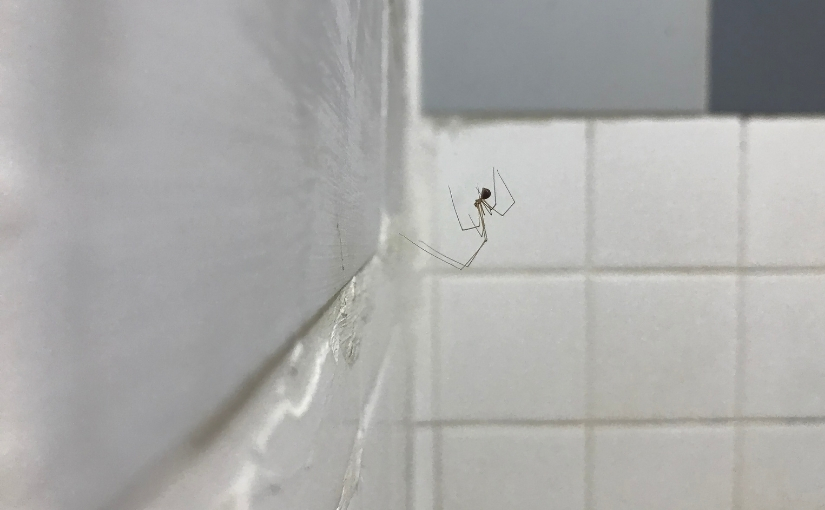
A bathroom is connected to the rest of the building by more openings than are immediately visible. Some spiders enter from outdoors, while others already live in a basement, attic, wall void or another room and simply wander into the bathroom.
Common entry routes include:
- unsealed gaps around supply pipes and drainpipes;
- openings around exhaust fans and ventilation ducts;
- damaged window screens or gaps around window frames;
- spaces beneath doors or around loose door frames;
- cracks along baseboards, tile edges and wall joints;
- openings around light fittings and ceiling penetrations;
- wall cavities connected to an attic, basement or crawlspace.
Repeated sightings do not necessarily mean spiders are breeding inside the drain. They may indicate an accessible wall void, a gap around a pipe, a nearby insect population or several independent spiders using the same route.
What Does a Tiny Spider in the Bathroom Mean?
A tiny spider in a bathroom may be an immature spider, commonly called a spiderling. It may also be a fully grown member of a naturally small species. Size alone cannot tell you which explanation is correct.
Very small animals in humid rooms are also easily confused with mites, springtails and tiny insects. Before calling something a spider, look for a clearly divided spider body and eight walking legs. A sharp photograph is generally more useful than a description such as “tiny,” “brown” or “fast.”
Tiny Bathroom Spider Identification Clues
The following table offers broad, preliminary clues only. It cannot replace examination by a qualified identifier, and it should not be used to make a medical or pesticide decision.
| Visible clue | Possible group-level clue | Why it is not definitive |
|---|---|---|
| Tiny body with extremely long, thin legs; loose web in an upper corner | May suggest a cellar spider or another long-legged web builder. | Several arachnids have long legs, and proportions are difficult to judge without a clear image. |
| Compact body; short, sturdy-looking legs; quick turns or jumping | May suggest a jumping spider. | Movement is useful but cannot establish a species, especially when the spider is disturbed. |
| Rounded abdomen in a messy, irregular or tangled web | May suggest a cobweb weaver or common indoor web-building group. | A rounded abdomen occurs in many unrelated spiders, and web structure can be damaged or incomplete. |
| Flat sheet of silk ending in a narrow funnel or retreat | May suggest a funnel-weaving spider. | The entire web and the spider’s geographic location are needed for a more useful assessment. |
| No capture web; spider runs across the floor or wall | May be an active hunting spider rather than a web-based hunter. | Many spider families roam without capture webs, so behavior alone is too broad for species identification. |
| Several extremely small spiders appearing close together | They may be recently dispersed spiderlings from a nearby egg sac. | Multiple sightings can also involve unrelated tiny arthropods or several spiders entering through the same gap. |
For a broader comparison of indoor groups, use the common house spiders in North America guide . For small brown specimens, see how to compare small brown spiders found in a house .
Why Do Small Spiders Keep Appearing?
Seeing one bathroom spider does not necessarily indicate an indoor population. Finding spiders repeatedly, however, suggests that the room or an adjacent space continues to provide an entry route, shelter or prey.
Possible explanations include:
- a gap around pipes connecting the vanity to a wall cavity;
- an exhaust vent or window that is not adequately screened;
- small insects developing around leaks or damp organic residue;
- an undisturbed storage area beneath or beside the bathroom;
- a nearby egg sac producing spiderlings;
- seasonal movement of wandering spiders through the building.
Rather than assuming every sighting has the same cause, record where the spiders appear. A pattern concentrated beneath the sink suggests a different route from spiders repeatedly appearing at a window or ceiling vent.
Are Bathroom Spiders Dangerous?
An ordinary spider found in a bathroom should not automatically be treated as a serious threat. Spiders generally use venom to capture small prey and do not seek people as food. Bites are more likely when a spider is trapped against skin, handled or crushed than when it is sitting undisturbed on a wall.
Risk cannot be determined from the room in which the spider was found. Medically important species vary by country and region, and many harmless spiders are misidentified from vague descriptions or poor photographs.
Avoid touching an unidentified spider with bare hands. If it has distinctive warning features, is in a region where medically important species occur, or cannot be moved without close contact, keep your distance and obtain local identification help.
Detailed safety information belongs on the separate Are House Spiders Dangerous? guide rather than turning every bathroom sighting into an emergency.
How to Remove a Bathroom Spider Safely
A spider that can be approached safely can usually be moved without direct contact.
- Place a clear cup or container over the spider.
- Slide a piece of stiff paper or thin cardboard beneath the container.
- Keep the container level while moving it.
- Release the spider in a sheltered location away from frequently used doors and windows, where local rules and conditions permit.
Wear shoes and avoid using bare hands. Do not attempt close capture if the spider may be medically important, if it is hidden in an unsafe location, or if getting to it would require climbing on a wet surface.
A vacuum can remove webs and inaccessible low-risk spiders, but the canister or bag should be emptied appropriately afterward. Avoid spraying unidentified chemicals in an enclosed bathroom merely because one spider is present.
How to Keep Spiders Out of the Bathroom
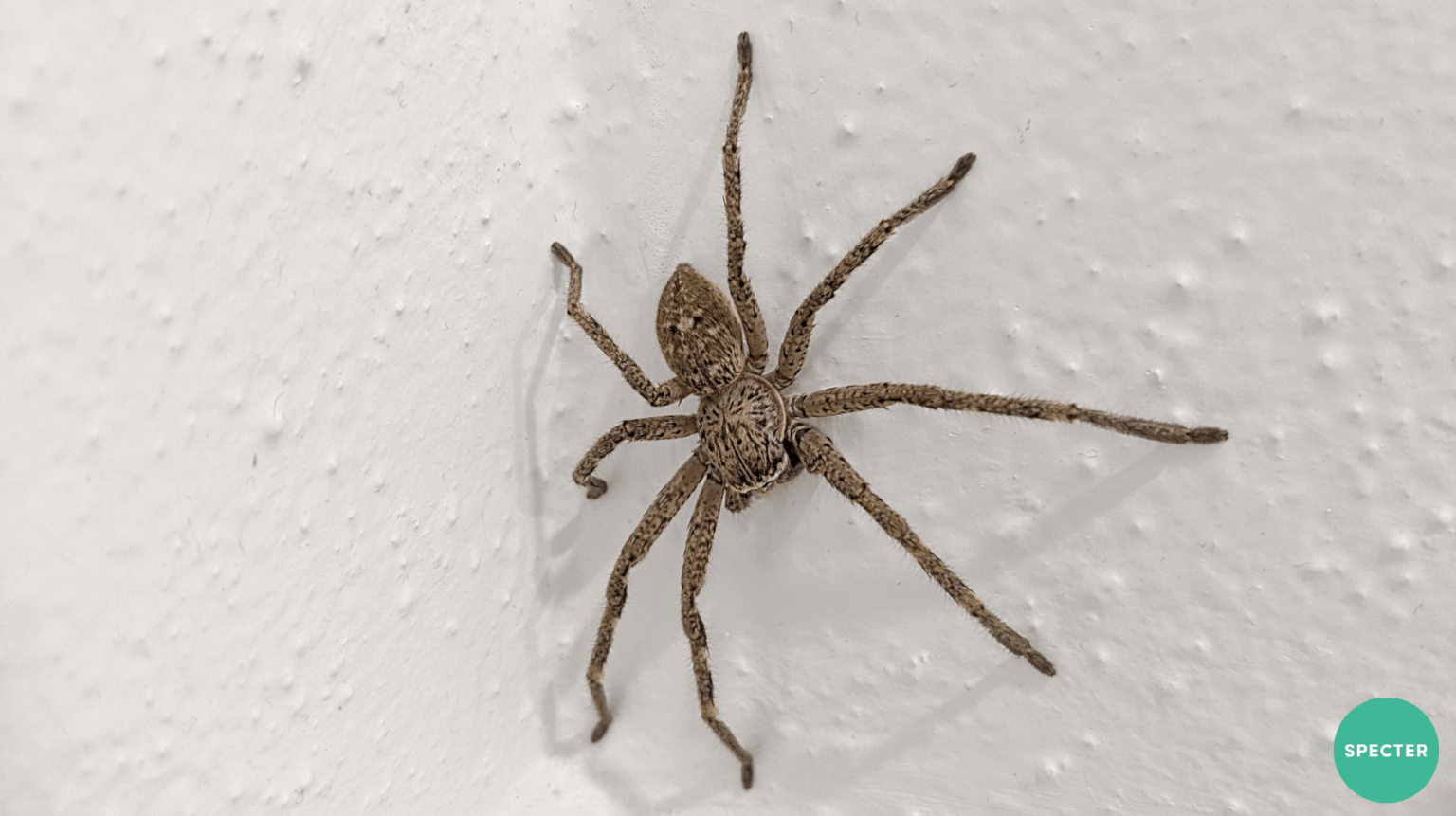
Removing the visible spider addresses the immediate encounter. Reducing future sightings requires changing the conditions that allow spiders and their prey to enter or remain.
Seal gaps around pipes
Inspect the openings where water lines and drainpipes pass through cabinets, floors and walls. Seal appropriate nonmoving gaps with a material suitable for the surface and local building requirements.
Check windows, doors and vents
Repair damaged screens, improve loose door sweeps and inspect the exhaust grille. Do not block ventilation openings that are required for airflow or building safety.
Improve ventilation
Use the exhaust fan during and after bathing, allow wet surfaces to dry and address persistent condensation. A fan that vents poorly may need cleaning, repair or professional assessment.
Repair leaks
Check beneath the sink, around the toilet, beside the tub and near supply connections. Moisture can support mold, springtails, drain flies and other organisms that may become spider prey.
Reduce insect activity
Identify the insects present before treating them. Clean suitable drain and overflow areas, repair screens and remove conditions that support gnats, flies or other small arthropods. Spiders have less reason to remain when prey becomes scarce.
Remove webs and hiding places
Vacuum ceiling corners, cabinet edges and the spaces behind movable items. Remove abandoned webs and egg sacs, and avoid storing loose cardboard or piles of damp fabric beneath the vanity.
Track repeated sightings
Note the date and exact location of each spider. Monitoring helps distinguish a window-entry problem from activity around plumbing, vents or wall cavities.
Do Essential Oils or Ultrasonic Repellers Work?
Do not rely on essential oils, ultrasonic devices or internet remedies as the primary way to keep spiders out of a bathroom.
Laboratory research has found that peppermint or chestnut odors can influence the settlement behavior of certain tested spider species, while other substances and species showed little or no response. Those results do not establish a dependable, long-lasting treatment for every bathroom spider.
Reviews of commercial ultrasonic pest devices have also found that broad household pest-control claims are not supported reliably. Sealing entry points, correcting moisture problems, reducing prey and removing shelter are more direct and measurable approaches.
When Should You Contact a Professional?
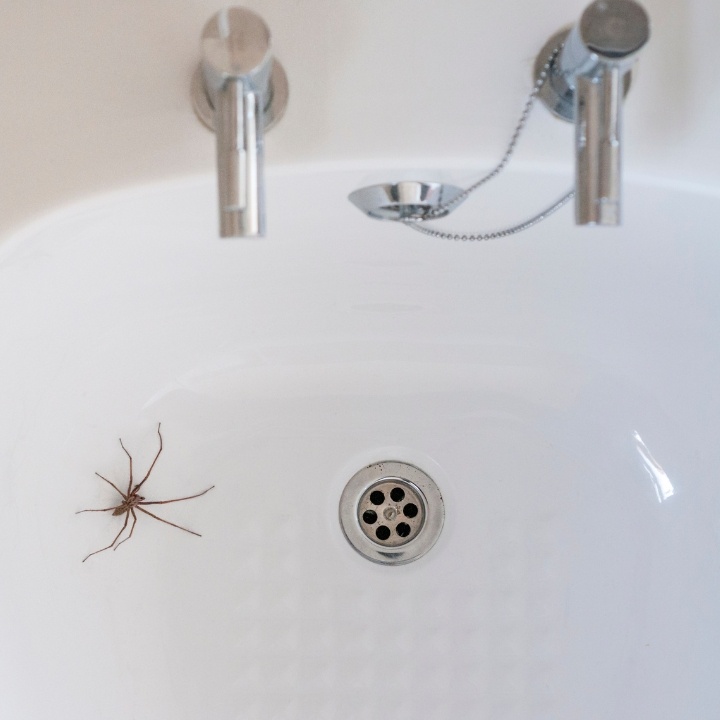
One occasional spider usually does not require pest treatment. Consider qualified local help when:
- spiders appear repeatedly despite sealing and cleaning;
- many spiderlings or egg sacs are found in the same area;
- there is persistent insect activity that cannot be identified;
- a damaged, dry or missing plumbing trap is suspected;
- the spider may be a medically important regional species;
- the entry point is inside an inaccessible wall or ceiling void.
A plumber is the appropriate professional for suspected trap, leakage or drainage defects. A qualified pest professional or local arachnid specialist can help with identification and recurring arthropod activity.
Frequently Asked Questions
Why are there spiders in my bathroom?
The room may provide quiet hiding places, access to small insects, condensation and openings around pipes, vents, windows or doors. Some spiders may also enter accidentally while moving through the house.
What does a tiny spider in the bathroom mean?
It may be a spiderling or a naturally small adult spider. Size alone cannot confirm its age or species. Use body shape, web type, movement, geographic location and a clear photograph as preliminary clues.
Why do I keep finding a spider in the bathtub?
The bathtub may be acting as a trap. A spider can fall from the wall, curtain or ceiling and then have difficulty climbing the smooth surface. Its presence in the tub does not prove it came through the drain.
Do spiders come up through bathroom drains?
Usually not when the fixture has a functioning water-filled trap. The water seal blocks a direct route through the drainage system. Missing, damaged or dried-out traps can create different circumstances and should be inspected.
Why are spiders in the shower?
A shower has corners, sealant joints, curtains and stored products that provide cover. Condensation may also support small insects. Some spiders simply wander into the shower and become trapped.
Why is a spider on the bathroom ceiling?
Ceiling edges provide stable web supports and may connect to an exhaust vent, light opening or wall cavity. Flying insects can also gather near lights or windows.
Are bathroom spiders dangerous?
The room does not determine the spider’s risk. Many routine indoor encounters are low risk, but medically important species vary by region. Avoid bare-hand contact and seek reliable identification when a concerning species is possible.
How can I safely remove a bathroom spider?
Cover it with a clear container, slide stiff paper underneath and move it without touching it. Do not attempt close capture if the spider may be medically important or is in an unsafe location.
How do I keep spiders out of my bathroom?
Seal gaps around pipes, repair screens and door gaps, improve ventilation, fix leaks, remove clutter and reduce the small insects spiders hunt. These steps address the underlying conditions rather than only removing individual spiders.
Do several tiny spiders mean an egg sac hatched?
It is possible, especially when many similarly sized spiders appear close together. However, repeated tiny animals may also be mites, springtails or spiders using the same entry point. Inspect the area before drawing a conclusion.
Related Spiderpedia Guides
Sources and Further Reading
- Colorado State University Extension — Spiders in the Home
- University of Minnesota Extension — Spiders
- Natural History Museum, London — Spiders in Your Home
- New Mexico State University — Tips on Identification of Spiders
- City of Superior, Wisconsin — Sewer Smarts and Plumbing Basics
- Pima County, Arizona — Household Pest Prevention and P-Traps
- University of Arizona Cooperative Extension — Sonic Pest Repellents
- Journal of Economic Entomology — Natural Compounds as Spider Repellents: Fact or Myth?