Common Spider Identification: Common Spiders in North America
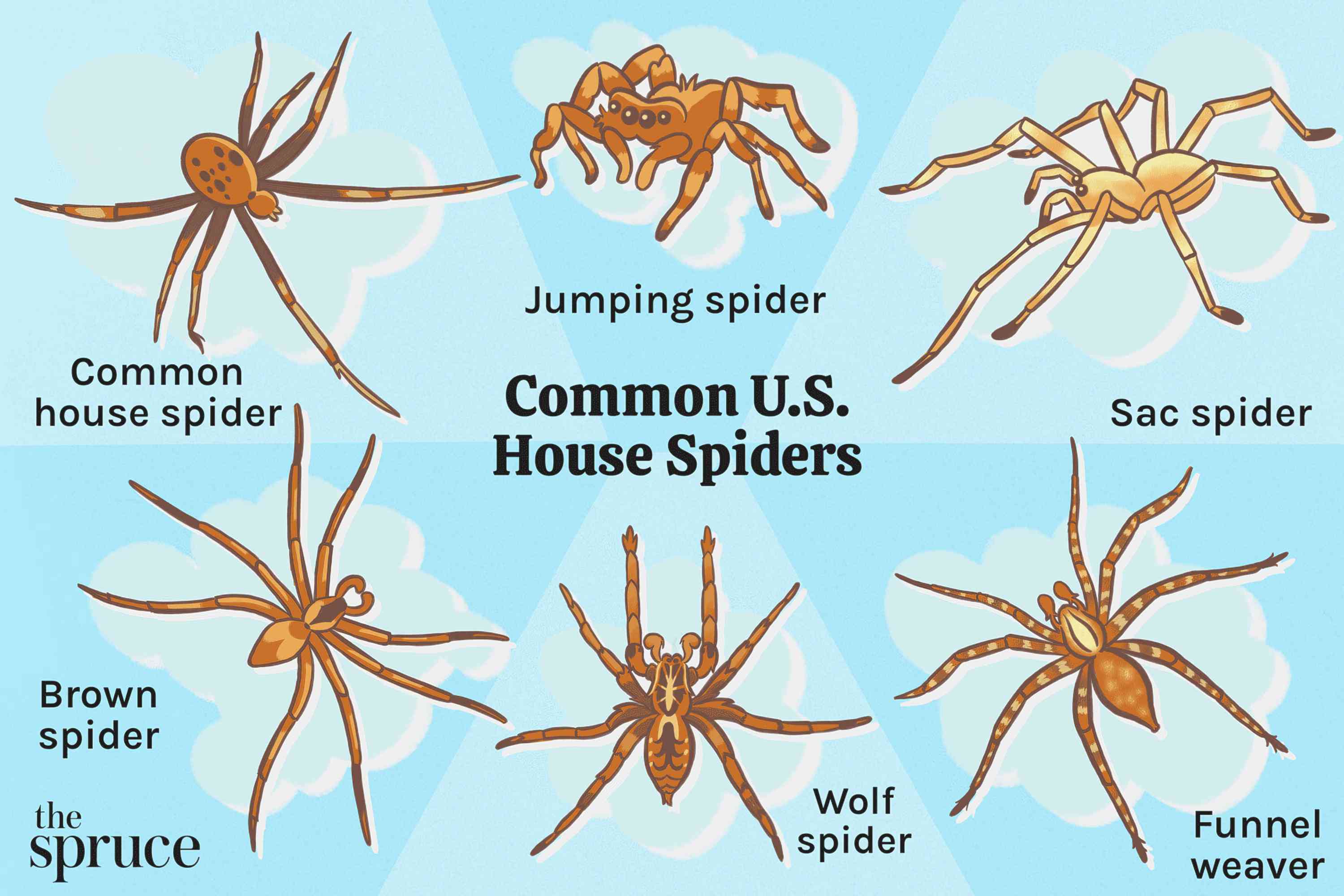
Common North American spiders include jumping spiders, wolf spiders, orb-weavers, cobweb spiders, cellar spiders, funnel weavers, crab spiders, fishing spiders, nursery web spiders, sac spiders and several other groups. The most reliable identification uses a combination of body shape, web type, behavior, habitat and geographic location.
“Common” is regional. A spider frequently seen in Florida, Missouri or coastal British Columbia may be absent or uncommon in Alberta, Maine, Arizona or another part of North America. Climate, season, elevation, habitat and urban development all influence which spiders people encounter.
This directory focuses on spiders that ordinary readers are reasonably likely to notice in yards, gardens, grass, vegetation, exterior walls, garages, sheds and occasionally inside homes. It does not attempt to list every spider species in North America. Many entries identify a family or genus because closely related species cannot be separated reliably from a casual photograph.
Common names are not globally uniform. A spider called a “house spider” in Britain, continental Europe or Australia may be unrelated to the species commonly given that name in the United States or Canada. Always combine the name with the scientific group and geographic range.
How to Use This Common Spider Identification Directory
Begin with the clues that eliminate the largest number of impossible matches. Color should be considered near the end, not at the beginning.
- Confirm the region. Record the state, province or territory and the nearest general location.
- Estimate body length. Measure the body from the front of the prosoma to the end of the abdomen, excluding the legs.
- Check for a web. Note whether the spider was occupying a prey-catching web, sitting in a retreat or walking freely.
- Identify the web shape. Look for a circular orb, tangled cobweb, horizontal sheet, funnel retreat or loose three-dimensional web.
- Compare body shape and legs. Decide whether the spider is compact, round-abdomened, flattened, long-legged, robust or slender.
- Compare behavior and habitat. Running, jumping, waiting on flowers, hanging under a web and moving on water are useful supporting clues.
- Use color and markings last. Confirm that the color pattern agrees with the spider’s structure, web, behavior and range.
For measurements, eye patterns, photo angles, identification terminology and the full step-by-step process, use the Spider Identification Guide.
Body length is not leg span. The approximate sizes below refer to the spider’s body unless otherwise stated. Adult males and females may differ substantially, and juveniles are smaller than the listed adult range.
Find a Common Spider by Where You Saw It
Common North American Spider Comparison Chart
Use this table to identify a likely group. It is designed for quick comparison, not confirmation of an exact species.
| Spider or group | Body shape | Typical color | Web type | Where commonly seen | Best clue | Usually indoors or outdoors |
|---|---|---|---|---|---|---|
| Orb-weavers | Often rounded or oval abdomen | Brown, gray, orange, yellow, green or patterned | Wheel-shaped orb | Gardens, shrubs, eaves and open gaps | Radial spokes and spiral capture lines | Outdoors |
| American house spider | Small with rounded abdomen | Mottled brown, gray or tan | Irregular tangled cobweb | Corners, sheds, garages and window areas | Small mottled spider in a persistent messy web | Both |
| False widows | Bulbous, smooth-looking abdomen | Brown, purplish brown or dark glossy brown | Tangled cobweb | Structures, cavities and sheltered corners | Widow-like shape without a typical adult widow pattern | Both |
| Widow spiders | Rounded abdomen; adult female often glossy | Black, brown or patterned depending on species and age | Strong irregular cobweb | Sheltered outdoor spaces and structures | Regional range plus ventral markings and body form | Both, usually sheltered |
| Cellar spiders | Tiny body with extremely long legs | Pale tan, gray or yellowish | Loose three-dimensional web | Basements, garages, ceilings and sheds | Very long delicate legs and web vibration | Mainly indoors or structures |
| Grass spiders | Slender, long-legged, visible spinnerets | Brown or tan with lengthwise bands | Horizontal sheet with funnel retreat | Lawns, shrubs, foundations and window wells | Sheet-and-funnel web plus long spinnerets | Outdoors |
| Sheet-web weavers | Usually tiny and delicate | Brown, gray, tan or dark | Flat, bowl-shaped or hammock-like sheet | Grass, low shrubs and leaf litter | Tiny spider hanging beneath a silk sheet | Outdoors |
| Jumping spiders | Compact, sturdy and often hairy | Black, brown, gray, tan or colorful | No prey-catching web | Walls, windows, bark, leaves and fences | Large forward-facing eyes and alert movements | Mainly outdoors |
| Wolf spiders | Robust, ground-running body | Brown, gray or tan with stripes or mottling | No prey-catching web | Ground, lawns, leaf litter and basements | Large reflective eyes and maternal behavior | Mainly outdoors |
| Ground spiders | Low, elongated or cylindrical body | Brown, gray, reddish or black | Silk retreat only | Under stones, logs, bark and ground debris | Fast nocturnal hunter with visible rear spinnerets | Outdoors |
| Parson spiders | Elongated, dark ground-spider shape | Black or dark gray with white markings | Silk retreat only | Leaf litter, walls, floors and storage areas | Distinct white necktie-like abdominal stripe | Both |
| Yellow sac spiders | Slender with relatively long front legs | Pale yellow, cream or greenish | Small resting sac, not a capture web | Leaves, ceilings, corners and window frames | Pale nocturnal hunter resting in a silk tube | Both |
| Crab spiders | Flattened with enlarged front legs | White, yellow, green, brown or patterned | No prey-catching web | Flowers, foliage, bark and ground surfaces | Sideways crablike posture | Outdoors |
| Lynx spiders | Slender with long, conspicuously spiny legs | Green, tan, brown, gray or rusty | No prey-catching web | Grass, flowers and foliage | Numerous long leg spines | Outdoors |
| Nursery web spiders | Long-legged and streamlined | Tan or brown with longitudinal markings | Nursery tent for young, not prey capture | Foliage, tall grass and garden vegetation | Long legs held forward and backward along a stem | Outdoors |
| Fishing spiders | Large, flattened and long-legged | Brown or gray with bands or spots | No prey-catching web | Water edges, docks, trees and exterior walls | Large pisaurid-like hunter able to move on water | Outdoors |
| Woodlouse spider | Robust front body and large jaws | Reddish orange with pale abdomen | Silk retreat only | Under damp logs, stones and ground debris | Red legs and prosoma with pale unmarked abdomen | Mainly outdoors |
| Spitting spiders | Small with a high, domed prosoma | Pale brown or yellowish with dark speckles | No capture web | Walls, basements and sheltered crevices | Domed front body and spotted pattern | Often indoors |
| Recluse spiders | Slender, plain and relatively flat | Tan to medium brown | Irregular retreat, not a prey-catching web | Dry sheltered spaces within established range | Geography, six-eye pattern and uniformly colored legs | Both within range |
Common Web-Building Spiders
Web architecture is often one of the fastest ways to narrow an identification. It usually identifies a broad group rather than an exact species because web shape can change with available space, damage, age and weather.
Orb webs
Wheel-shaped webs with spokes and a spiral capture area usually indicate an orb-building spider.
Tangled cobwebs
Irregular three-dimensional webs are associated with American house spiders, false widows, widows and other cobweb spiders.
Funnel and sheet webs
A horizontal sheet leading into a tube suggests a funnel weaver. Smaller flat or bowl-like sheets may belong to Linyphiidae.
Loose cellar webs
A pale, extremely long-legged spider hanging in loose silk in a basement or ceiling corner is often a cellar spider.
1. Orb-Weavers
Family Araneidae
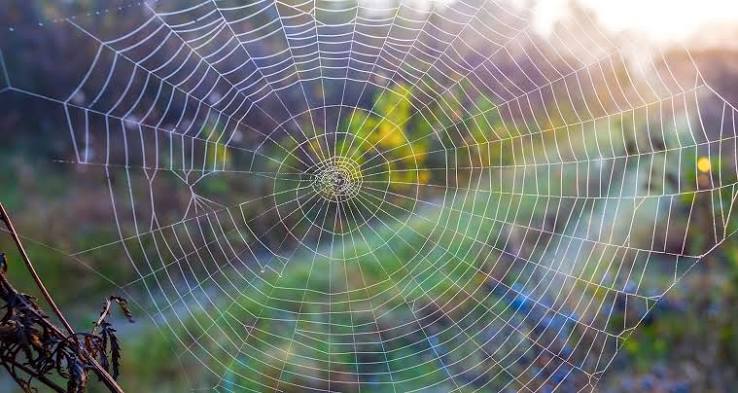
Orb-weavers are among the most noticeable backyard spiders because many species build large circular webs across garden paths, shrubs, porches and exterior gaps. The family includes numerous species with very different shapes and colors.
- Typical appearance
- Often a rounded, oval or angular abdomen with relatively long legs. Patterns may include spots, stripes, marbling, humps or bright contrasting colors.
- Adult body length
- Commonly about 5–25 mm; the broader family includes species roughly 2–30 mm.
- Best clues
- A wheel-shaped web with radial spokes and a spiral catching area. Many individuals sit at the hub after dark or hide near the web edge during daylight.
- Web or hunting method
- Orb web. Some araneids modify, reduce or abandon the classic orb, so family membership does not guarantee a perfect circular web.
- Common habitat
- Gardens, tall vegetation, woodland edges, railings, porches, eaves and spaces between buildings or trees.
- North American distribution
- Numerous genera occur throughout the United States and Canada, but individual species have narrower regional and climatic ranges.
- Season noticed
- Most conspicuous from midsummer through fall, when mature females and full-sized webs are easiest to see.
- Common lookalikes
- Long-jawed orb-weavers, orchard orb-weavers, cobweb spiders and other spiders occupying damaged or incomplete webs.
- Risk to people
- Low. Orb-weavers are not considered medically important and usually remain in or near their webs.
2. American House Spider
Parasteatoda tepidariorum, family Theridiidae
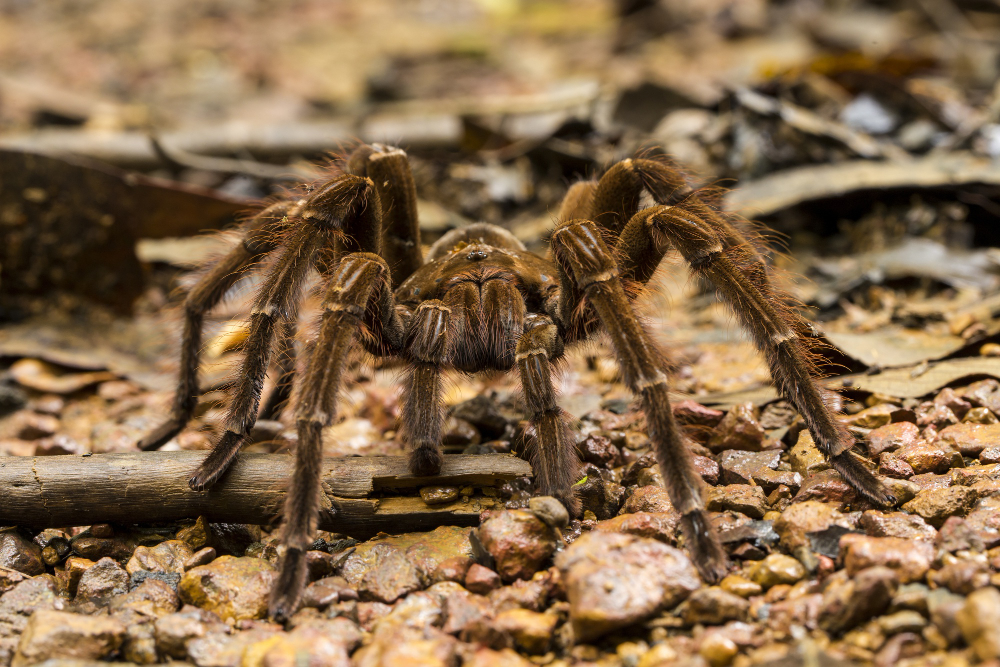
The American house spider is a small cobweb spider that can live and reproduce in human structures. It is one of the most plausible identifications for a mottled, round-abdomened spider occupying a dusty-looking web in a quiet corner.
- Typical appearance
- Small, variable brown, gray or tan spider with a rounded abdomen marked by pale and dark mottling. The legs often show subtle banding.
- Adult body length
- Adult females are usually about 5–6 mm; males are smaller and more slender.
- Best clues
- Small size, mottled abdomen and an irregular web that remains in the same sheltered location.
- Web or hunting method
- Tangled three-dimensional cobweb with sticky capture lines.
- Common habitat
- Window frames, garages, sheds, basements, ceiling corners, furniture, porch fixtures and sheltered outdoor structures.
- North American distribution
- Widespread in much of the United States and southern Canada, particularly around buildings. It also occurs outside North America.
- Season noticed
- Potentially year-round indoors; more noticeable outdoors during warmer months.
- Common lookalikes
- False widows, juvenile widows and other small members of Theridiidae.
- Risk to people
- Low. It is not considered medically important.
3. False Widows
Genus Steatoda, family Theridiidae
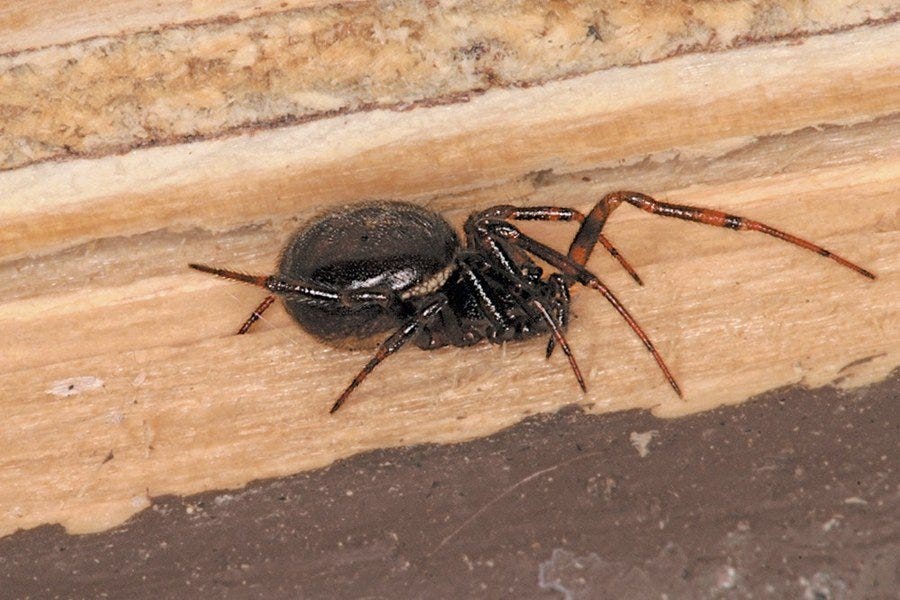
False widows are relatives of true widow spiders. Several Steatoda species occur in North America, including native and introduced forms, so the genus should not be treated as one globally uniform spider.
- Typical appearance
- Rounded or bulbous abdomen, relatively slender legs and a brown, reddish brown, purplish brown or nearly black surface. Some have pale dorsal markings.
- Adult body length
- Frequently about 4–10 mm, depending on species and sex.
- Best clues
- Widow-like body shape combined with brown coloration, dorsal patterning or the absence of the expected adult female widow markings.
- Web or hunting method
- Irregular cobweb in a sheltered cavity or corner.
- Common habitat
- Garages, sheds, wall voids, window frames, outdoor furniture, rocks, bark and other protected sites.
- North American distribution
- Species-specific. Members of the genus occur across large portions of the United States and southern Canada, while some introduced species are concentrated around cities and coastal regions.
- Season noticed
- Warm months outdoors and potentially year-round in heated structures.
- Common lookalikes
- American house spiders, true widows and other rounded cobweb spiders.
- Risk to people
- Usually low. Bites can cause localized pain or other symptoms, but false widows should not automatically be treated as equivalent to medically important Latrodectus.
4. Widow Spiders
Genus Latrodectus, family Theridiidae
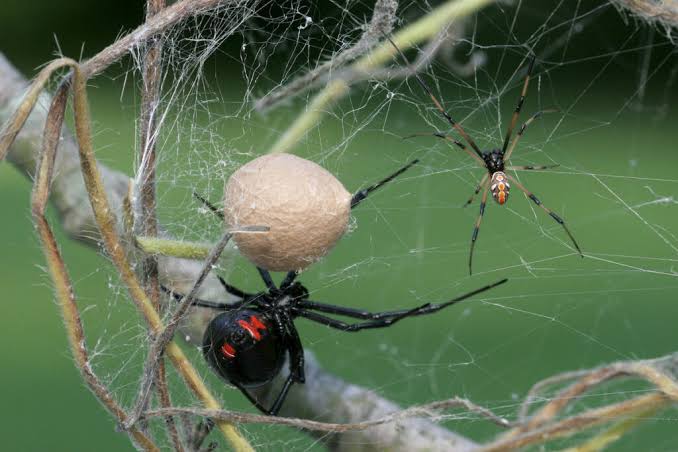
North America has several widow species. Their ranges, adult patterns and juvenile markings differ, so the phrase “black widow” should not be applied to every dark, round-abdomened cobweb spider.
- Typical appearance
- Adult females usually have a rounded abdomen and glossy surface. Depending on species and age, they may be black, dark brown or patterned with red, orange, white or cream markings.
- Adult body length
- Adult females commonly about 8–15 mm; adult males are much smaller and more slender.
- Best clues
- Regional range, cobweb structure, body form and markings on the underside of the abdomen. Juveniles and males may not resemble the familiar adult female image.
- Web or hunting method
- Strong, irregular cobweb in a sheltered site, often with the spider hanging beneath the web.
- Common habitat
- Woodpiles, sheds, crawl spaces, utility boxes, outdoor furniture, rock cavities and undisturbed structural recesses.
- North American distribution
- Species-specific. Widows occur in the United States and parts of southern Canada but are generally more frequent in warm southern and western regions. The western black widow occurs in southern British Columbia.
- Season noticed
- Most often during warm months, although individuals may persist in protected structures.
- Common lookalikes
- False widows, American house spiders, dark orb-weavers and glossy ground spiders.
- Risk to people
- Medically important. Do not handle. A suspected bite accompanied by significant pain, muscle cramping or systemic symptoms requires prompt medical advice.
5. Cellar Spiders
Family Pholcidae; common indoor example Pholcus phalangioides
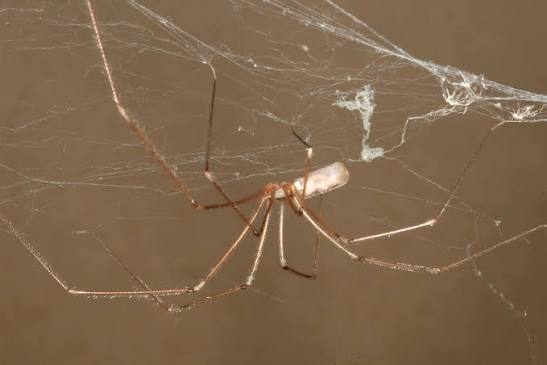
Cellar spiders are true spiders with extremely long, delicate legs. The nickname “daddy longlegs” is ambiguous because it may also refer to harvestmen, which are not spiders.
- Typical appearance
- Tiny pale body, narrow abdomen and legs many times longer than the body. Other pholcid species may have rounder abdomens.
- Adult body length
- The common long-bodied cellar spider is usually about 6–8 mm, excluding the legs.
- Best clues
- Extremely long legs, two visibly separate body regions and a loose web. The spider may vibrate rapidly when disturbed.
- Web or hunting method
- Loose, irregular three-dimensional web without the dense sticky appearance of many cobweb spider webs.
- Common habitat
- Basements, garages, crawl spaces, ceilings, sheds, caves and shaded structural corners.
- North American distribution
- Several pholcid species occur in North America. The introduced long-bodied cellar spider is widespread in buildings across much of the United States and southern Canada.
- Season noticed
- Year-round indoors.
- Common lookalikes
- Harvestmen, long-jawed orb-weavers and other very long-legged spiders.
- Risk to people
- Low. Cellar spiders are not considered medically important.
6. Grass Spiders
Genus Agelenopsis, family Agelenidae
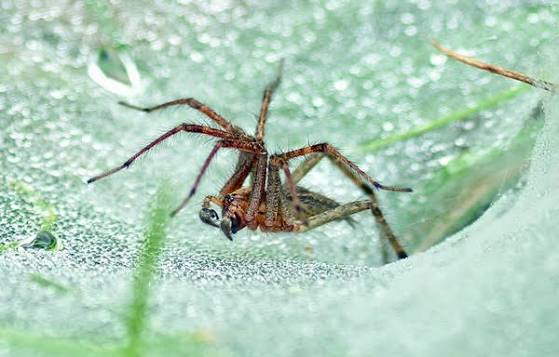
Grass spiders are North American funnel weavers. They are often confused with wolf spiders because both can be brown, striped and fast, but grass spiders normally occupy a conspicuous sheet-and-funnel web.
- Typical appearance
- Slender brown or tan body, lengthwise bands on the prosoma, chevrons on the abdomen and noticeably extended spinnerets.
- Adult body length
- Approximately 5–18 mm, depending on species and sex.
- Best clues
- A pair of long spinnerets combined with a horizontal silk sheet that narrows into a funnel retreat.
- Web or hunting method
- Non-orb sheet web with a funnel. The spider rushes across the sheet when prey creates vibrations.
- Common habitat
- Lawns, shrubs, dense groundcover, landscape stones, foundations, window wells and crevices beside buildings.
- North American distribution
- The genus is widespread across the United States and Canada, with different species occupying different regions.
- Season noticed
- Webs become especially conspicuous from summer into early fall and may stand out when covered with morning dew.
- Common lookalikes
- Wolf spiders, hobo spiders, domestic house spiders and other funnel weavers.
- Risk to people
- Low. Grass spiders are not considered medically important.
7. Sheet-Web Weavers
Family Linyphiidae
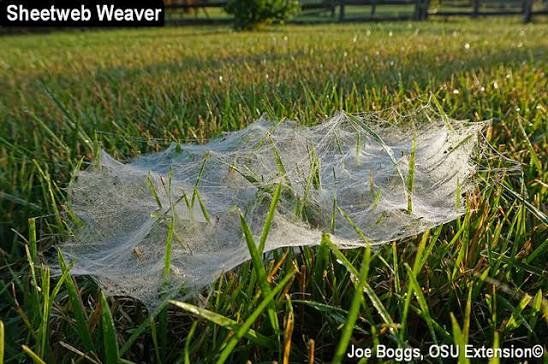
Linyphiidae is an extremely diverse family of small spiders. Ordinary photographs often support only a family-level identification, but their flat, bowl-shaped or hammock-like webs can be recognizable.
- Typical appearance
- Usually tiny and delicate, with brown, gray, tan or dark coloration. Many species have few obvious markings at normal viewing distance.
- Adult body length
- Most commonly noticed species are under 6 mm.
- Best clues
- A very small spider hanging beneath a thin horizontal or curved silk sheet, often with loose knockdown threads above it.
- Web or hunting method
- Flat, bowl-shaped, dome-shaped or hammock-like sheet web.
- Common habitat
- Grass, low shrubs, hedges, gardens, fields, woodland understory, crop vegetation and leaf litter.
- North American distribution
- Highly diverse and widespread throughout the United States and Canada, including cool northern habitats.
- Season noticed
- Spring through fall; webs are often easiest to see on damp or dewy mornings.
- Common lookalikes
- Juvenile funnel weavers, small cobweb spiders and other tiny web-building families.
- Risk to people
- Very low. Their small size and habits make bites highly unlikely.
Common Hunting Spiders
These spiders do not normally rely on a prey-catching web. They may stalk prey, run it down, ambush it or attack from vegetation. “No hunting web” does not mean “no silk”: hunting spiders still use silk for safety lines, resting retreats, molting chambers, egg sacs and nurseries.
8. Jumping Spiders
Family Salticidae
Jumping spiders are among the easiest common spiders to recognize at family level. They are visual hunters that frequently turn toward movement and may appear to look directly at an observer or camera.
- Typical appearance
- Compact body, sturdy front legs, relatively high prosoma and a conspicuous pair of large forward-facing eyes. Many are hairy or covered with reflective scales.
- Adult body length
- Commonly about 4–15 mm, although the North American family includes smaller and larger species.
- Best clues
- Large front eyes, short bursts of movement, deliberate stalking, pivoting toward motion and jumping without using a capture web.
- Web or hunting method
- Active visual hunting. Silk is used for draglines, sleeping retreats and egg sacs.
- Common habitat
- Sunny walls, windows, fences, tree bark, leaves, flowers, railings and outdoor furniture.
- North American distribution
- Many genera occur throughout the United States and Canada. Individual species vary from broadly distributed to regional.
- Season noticed
- Most active during daylight from spring through fall; some may appear indoors near windows during colder months.
- Common lookalikes
- Small wolf spiders, lynx spiders and compact ground spiders.
- Risk to people
- Low. Jumping spiders generally retreat or jump away when disturbed.
9. Wolf Spiders
Family Lycosidae
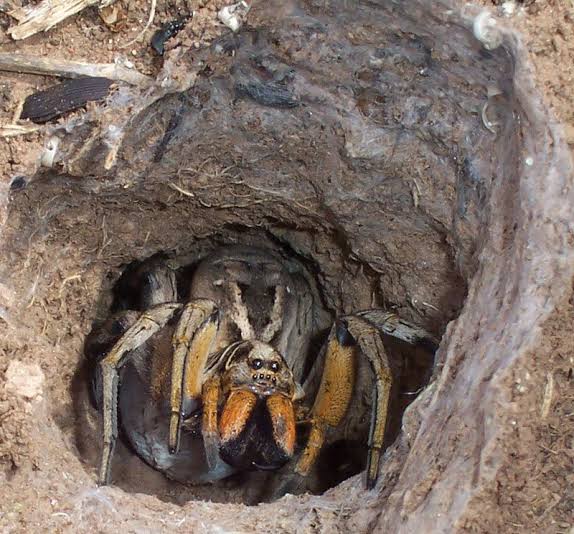
Wolf spiders are common ground hunters. Their size and speed often attract attention, but the family includes many species ranging from small lawn-dwelling spiders to large burrowing forms.
- Typical appearance
- Robust, usually brown, gray or tan, with lengthwise bands, mottling or chevrons that provide ground camouflage.
- Adult body length
- Approximately 3–35 mm across the family; many commonly encountered adults are 6–25 mm.
- Best clues
- Distinctive eye arrangement with two large reflective eyes, active ground hunting and maternal behavior. Females carry the egg sac on the spinnerets and later carry spiderlings on the back.
- Web or hunting method
- Runs down or ambushes prey. Some species shelter in burrows, but they do not build the sheet-and-funnel capture web of grass spiders.
- Common habitat
- Lawns, gardens, fields, beaches, woodland floors, leaf litter, stream edges and burrows.
- North American distribution
- Highly diverse and widespread throughout the United States and Canada, including northern and montane habitats.
- Season noticed
- Spring through fall. Wandering adults may enter garages, basements and ground-floor rooms, especially during seasonal movement.
- Common lookalikes
- Grass spiders, nursery web spiders, fishing spiders and large ground spiders.
- Risk to people
- Low. Large individuals can bite when trapped or handled, but wolf spiders are not considered medically important.
10. Ground Spiders
Family Gnaphosidae
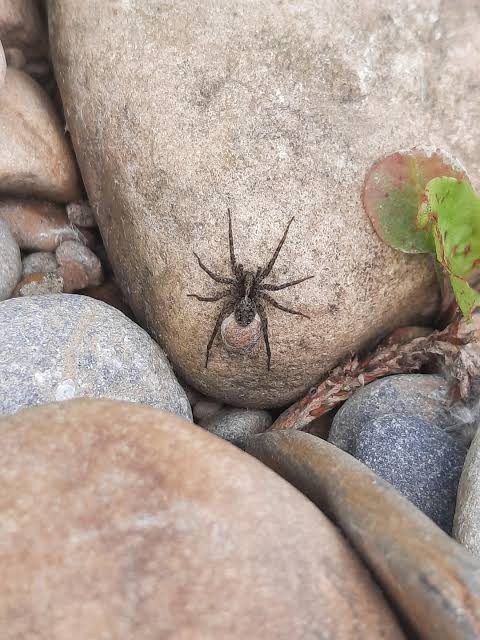
Ground spiders are mostly nocturnal hunters that hide beneath debris during the day. Gnaphosidae contains many similar-looking species, so photographs often support only a family or genus-level identification.
- Typical appearance
- Low, elongated or cylindrical body, often brown, gray, reddish brown or black. The paired spinnerets may be visible from above.
- Adult body length
- Many commonly encountered species are approximately 3–15 mm, although the family includes larger forms.
- Best clues
- Fast nighttime movement at ground level, a dark elongated body and relatively prominent cylindrical spinnerets.
- Web or hunting method
- Active nocturnal hunting. Silk is used for daytime retreats and egg sacs rather than a prey-catching web.
- Common habitat
- Leaf litter, mulch, under stones, logs, bark, decomposing wood and ground-level crevices.
- North American distribution
- Numerous genera occur throughout the United States and Canada in a wide range of dry and moist terrestrial habitats.
- Season noticed
- Spring through fall, especially at night or when ground debris is moved.
- Common lookalikes
- Wolf spiders, parson spiders, dark sac spiders and juvenile funnel weavers.
- Risk to people
- Low. North American ground spiders are not generally considered medically important.
11. Parson Spiders
Genus Herpyllus, family Gnaphosidae
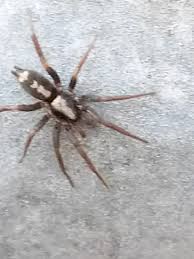
Parson spiders are recognizable ground spiders named for a pale abdominal marking that was compared with an old-fashioned clerical necktie or cravat.
- Typical appearance
- Dark gray or blackish elongated body with a contrasting white or cream stripe or patch running along the abdomen.
- Adult body length
- Usually about 6–13 mm, with females generally larger than males.
- Best clues
- A fast dark spider with a clear white longitudinal abdominal mark rather than a round widow-like abdomen.
- Web or hunting method
- No capture web. It hunts at night and rests in a silk retreat during the day.
- Common habitat
- Leaf litter, bark, stones, walls, foundations and occasionally indoor floors or storage spaces.
- North American distribution
- Different Herpyllus species occur in eastern and western North America. The eastern parson spider is common across much of the eastern United States and nearby Canada.
- Season noticed
- Warm months outdoors; wandering individuals are sometimes noticed indoors in late summer or fall.
- Common lookalikes
- Other ground spiders, dark jumping spiders and juvenile widows.
- Risk to people
- Low. A defensive bite may cause local discomfort but the genus is not regarded as medically important.
12. Yellow Sac Spiders
Genus Cheiracanthium, family Cheiracanthiidae
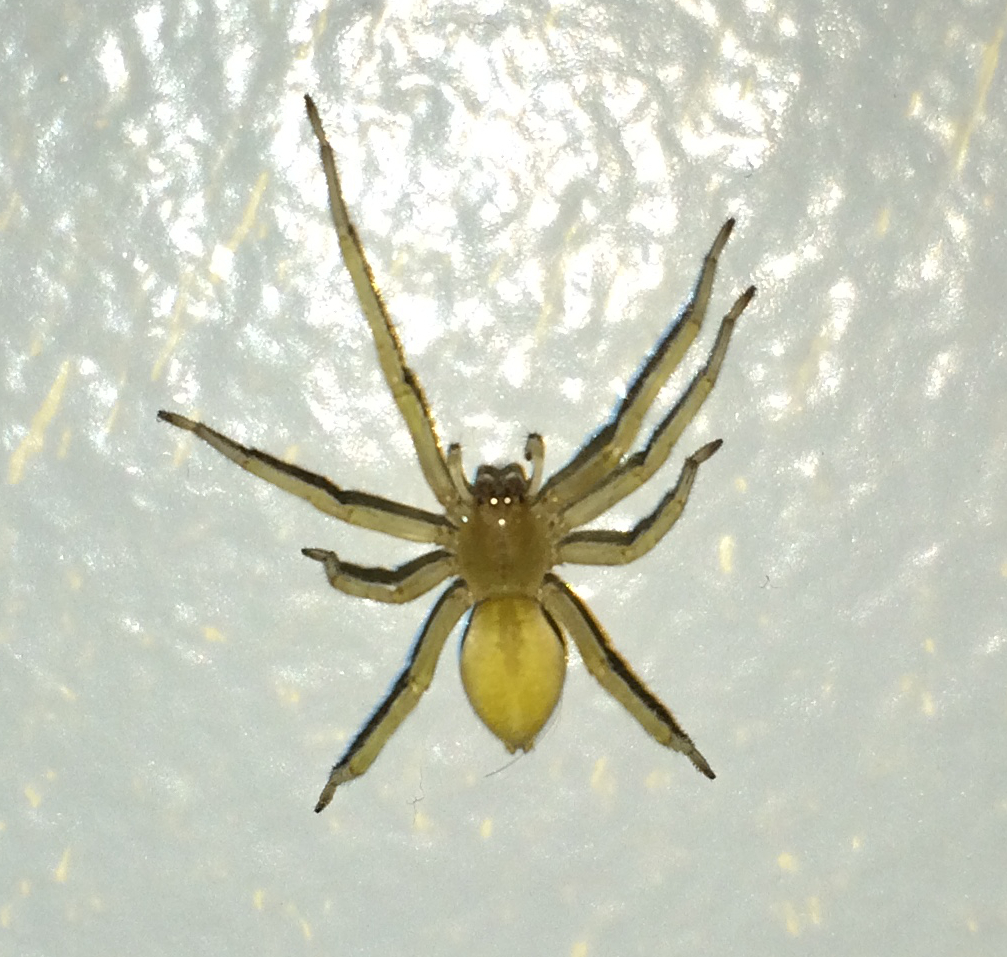
“Sac spider” has been used for several unrelated spider groups. This entry refers specifically to the long-legged yellow sac spiders in Cheiracanthium, currently placed in Cheiracanthiidae.
- Typical appearance
- Slender pale yellow, cream, tan or slightly greenish body with long legs. The mouthparts and tips of the legs may appear darker.
- Adult body length
- Usually about 5–10 mm.
- Best clues
- Pale color, nocturnal wandering and a small silk tube or flattened sac used as a daytime retreat.
- Web or hunting method
- Active hunting at night. The silk sac is a shelter, not a prey-catching web.
- Common habitat
- Foliage, gardens, agricultural vegetation, walls, ceilings, window frames and sheltered corners.
- North American distribution
- Cheiracanthium inclusum is native and broadly distributed in the United States, especially in vegetation. The introduced C. mildei is established in parts of the United States and Canada and is frequently associated with structures.
- Season noticed
- Spring through fall outdoors; indoor individuals may be seen at night or in silk retreats throughout the year.
- Common lookalikes
- Recluse spiders, pale ghost spiders, other sac-building spiders and immature hunters.
- Risk to people
- Generally low. Bites can be painful and cause local symptoms, but yellow sac spiders are not placed in the same medical-risk category as widows or recluses.
13. Crab Spiders
Family Thomisidae
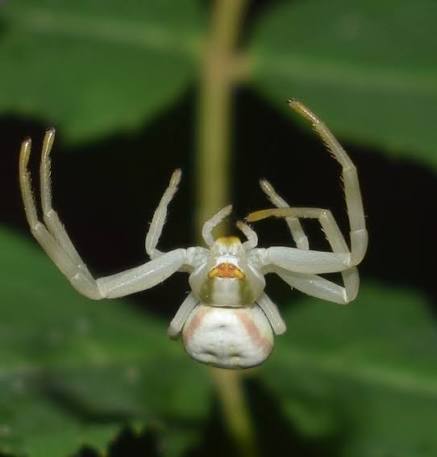
Crab spiders are ambush hunters with legs that extend sideways. Flower-associated species are especially familiar, but other thomisids live on bark, foliage or the ground and may be brown or gray rather than brightly colored.
- Typical appearance
- Flattened body with the first two pairs of legs enlarged and held outward. Color may be white, yellow, green, tan, brown or patterned.
- Adult body length
- Approximately 2–11 mm for many common North American species.
- Best clues
- Sideways crablike posture and enlarged front legs used to seize insects.
- Web or hunting method
- Ambush hunting without a capture web. Silk is used for safety lines and reproduction.
- Common habitat
- Flowers, leaves, stems, bark, fences and ground surfaces.
- North American distribution
- Many genera occur throughout the United States and Canada. Flower crab spiders are especially noticeable in gardens, meadows and open habitats.
- Season noticed
- Spring through fall, often when flowers are attracting pollinating insects.
- Common lookalikes
- Running crab spiders, lynx spiders and small pale jumping spiders.
- Risk to people
- Low. They are not considered medically important.
14. Lynx Spiders
Family Oxyopidae
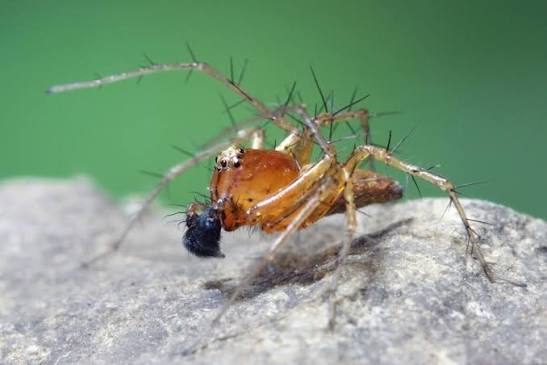
Lynx spiders are fast foliage hunters. The striped lynx spider, Oxyopes salticus, is a widespread North American representative commonly seen in fields, gardens and weedy vegetation.
- Typical appearance
- Slender body, pointed abdomen and long legs armed with conspicuous spines. Color may be tan, brown, gray, rusty or green.
- Adult body length
- Many commonly encountered North American species are about 5–10 mm; Oxyopes salticus is commonly near 6 mm.
- Best clues
- Rows of long, obvious spines on the legs combined with active hunting among leaves and grasses.
- Web or hunting method
- Runs, stalks and jumps after prey without a capture web.
- Common habitat
- Fields, prairies, gardens, crop vegetation, flowers, tall grass and open shrub habitats.
- North American distribution
- The striped lynx spider is broadly distributed in the United States and extends into Canada. Lynx spider diversity is greater in warmer southern areas.
- Season noticed
- Late spring through fall, especially on sunny vegetation.
- Common lookalikes
- Nursery web spiders, jumping spiders and slender wolf spiders.
- Risk to people
- Low. Lynx spiders are not considered medically important.
15. Nursery Web Spiders
North American examples in genus Pisaurina, family Pisauridae
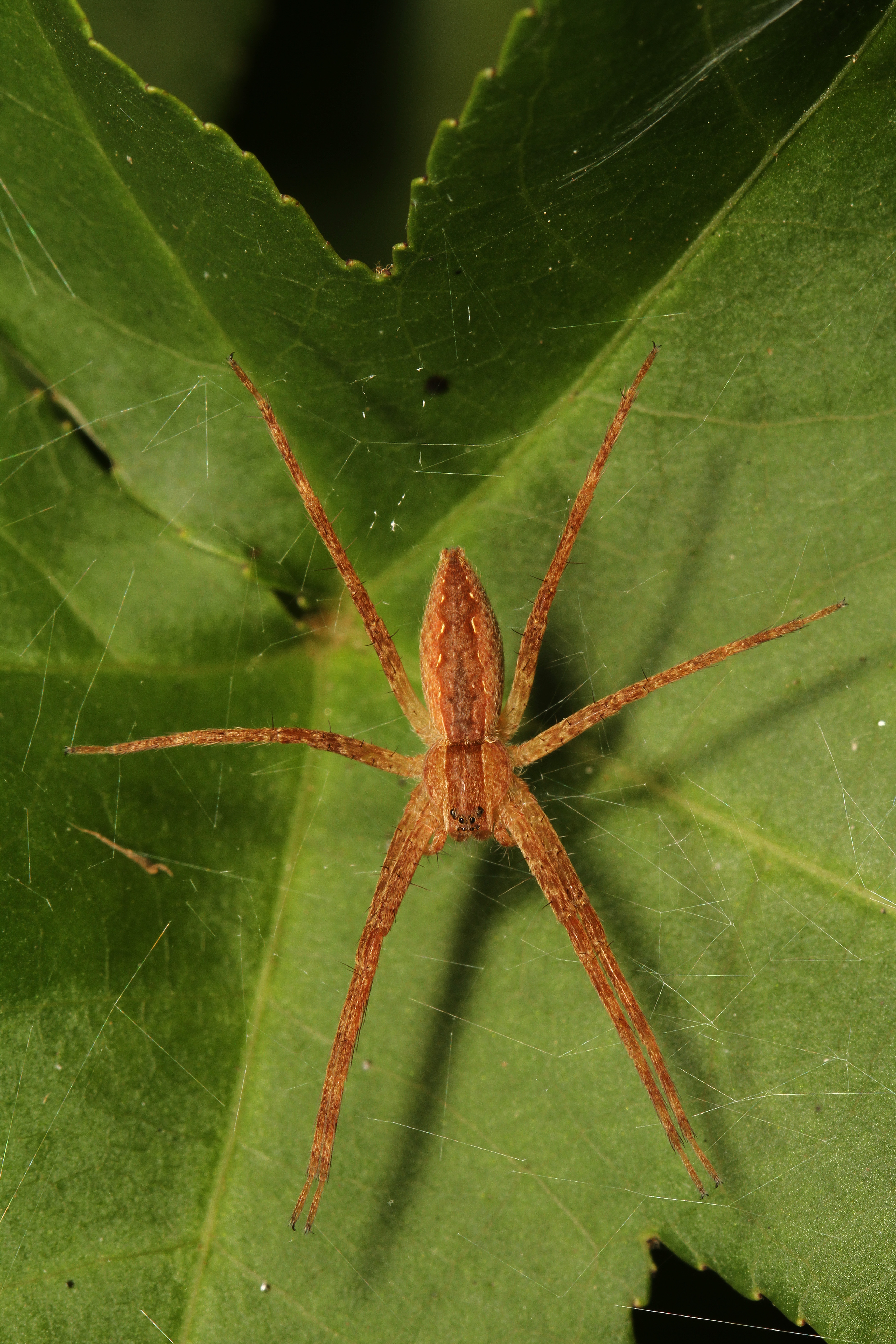
Nursery web spiders are roaming hunters. Their name comes from the protective silk nursery that females construct around the egg sac and newly hatched young, not from a web used to capture prey.
- Typical appearance
- Streamlined tan or brown body with long legs and lengthwise stripes. The front pairs of legs may be held close together.
- Adult body length
- Common Pisaurina adults are often about 13–19 mm.
- Best clues
- Long-legged spider resting lengthwise along a plant stem or leaf, often holding the front legs forward and rear legs backward.
- Web or hunting method
- Active ambush hunting on vegetation. Females carry the egg sac in the jaws and later suspend it inside a guarded silk nursery.
- Common habitat
- Tall grass, shrubs, garden plants, woodland edges and vegetation near moist habitats.
- North American distribution
- Several Pisaurina species occur in the United States and parts of southern Canada, with greatest familiarity in eastern and central regions.
- Season noticed
- Late spring through summer, particularly when females are carrying egg sacs or guarding nursery tents.
- Common lookalikes
- Fishing spiders, wolf spiders, grass spiders and lynx spiders.
- Risk to people
- Low. Nursery web spiders are not considered medically important.
16. Fishing Spiders
Genus Dolomedes, family Dolomedidae
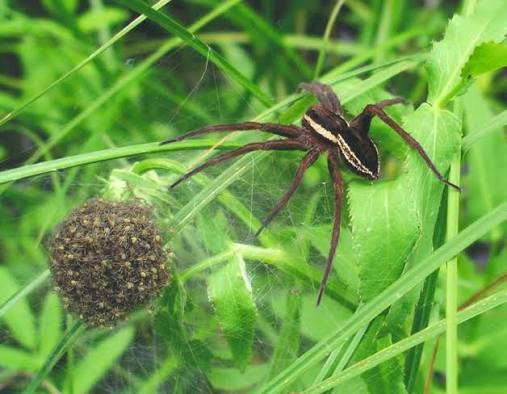
Fishing spiders are large, long-legged hunters. Most field guides published before the recent taxonomic change place Dolomedes in Pisauridae, but the World Spider Catalog now recognizes the genus in Dolomedidae.
- Typical appearance
- Large, somewhat flattened brown or gray spider with long legs and species-specific pale bands, dark spots or wavy markings.
- Adult body length
- Commonly about 9–26 mm. Females of large species such as the dark fishing spider can reach the upper end of this range.
- Best clues
- Large size, long outstretched legs and association with water, docks, tree trunks or wooded building exteriors.
- Web or hunting method
- Active hunting. Many species detect vibrations on the water surface and can run across or dive beneath it. Silk is used for egg sacs and nurseries.
- Common habitat
- Ponds, streams, wetlands, docks, bridges, tree trunks and wooded structures. Some species, including the dark fishing spider, may occur well away from open water.
- North American distribution
- Different Dolomedes species occur widely in the United States and Canada. Exact range and degree of association with water vary by species.
- Season noticed
- Late spring through early fall, especially on warm nights.
- Common lookalikes
- Large wolf spiders, nursery web spiders and grass spiders.
- Risk to people
- Low. Large individuals may bite if restrained, but fishing spiders are not considered medically important.
17. Woodlouse Spider
Dysdera crocata, family Dysderidae
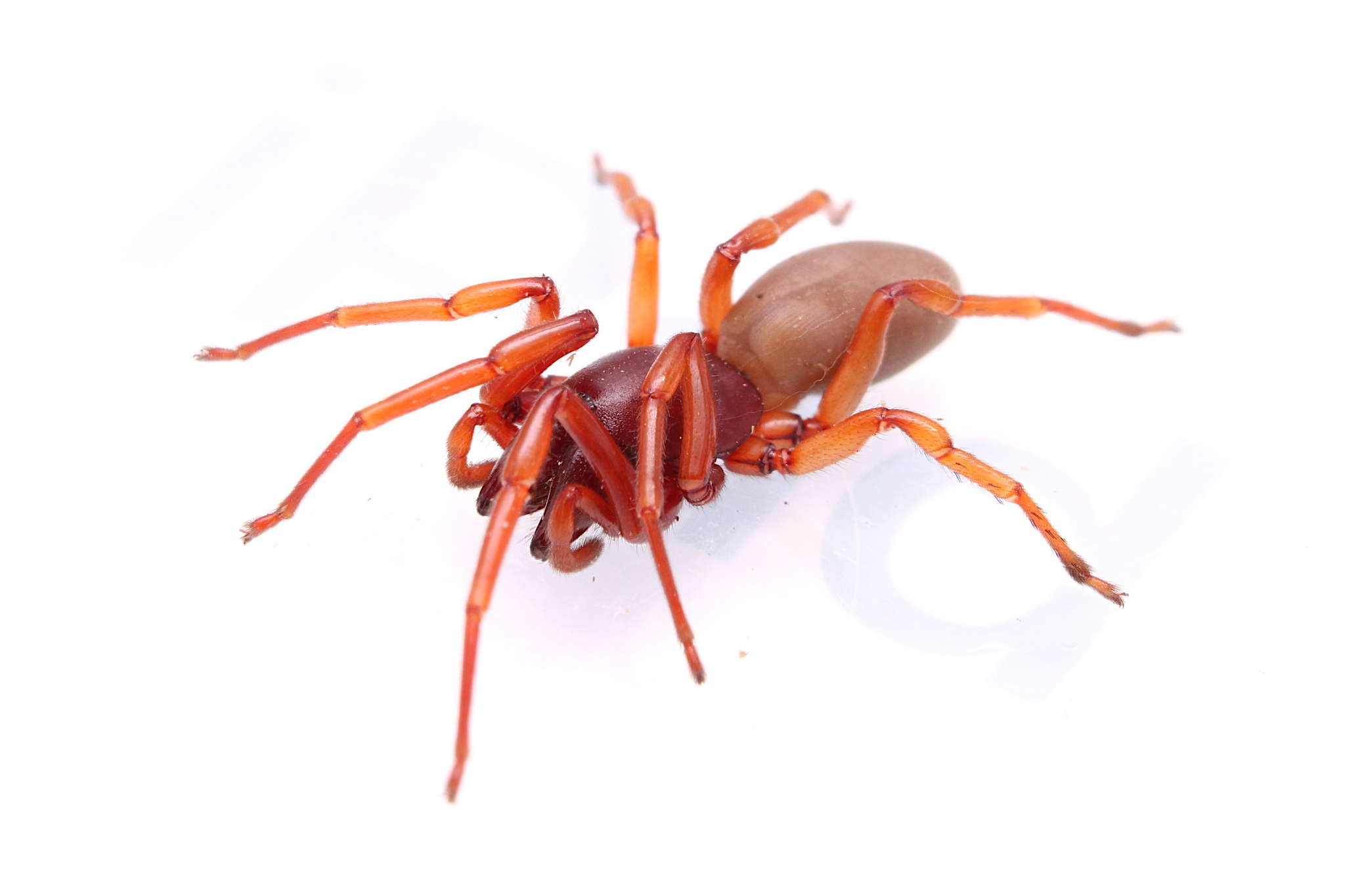
The introduced woodlouse spider has one of the most distinctive color combinations among common ground-dwelling spiders. Its large jaws are adapted for capturing woodlice and other small invertebrates.
- Typical appearance
- Reddish orange prosoma and legs, prominent forward-projecting jaws and a smooth pale cream, grayish or pinkish abdomen.
- Adult body length
- Approximately 9–15 mm, with females generally larger.
- Best clues
- Red-orange front body and legs contrasted with an unpatterned pale abdomen and conspicuous jaws.
- Web or hunting method
- No capture web. It hunts at night and shelters in a silken retreat beneath an object during the day.
- Common habitat
- Under damp logs, stones, bark, plant pots and garden debris where woodlice are abundant.
- North American distribution
- Introduced but now widespread across much of the United States and southern Canada, particularly in gardens and developed areas.
- Season noticed
- Spring through fall, especially when damp ground cover is moved.
- Common lookalikes
- Broad-faced sac spiders, reddish ground spiders and pale-abdomened hunters.
- Risk to people
- Low. The large jaws can produce a painful defensive bite, but systemic medical effects are not expected.
18. Spitting Spiders
Family Scytodidae; common introduced example Scytodes thoracica
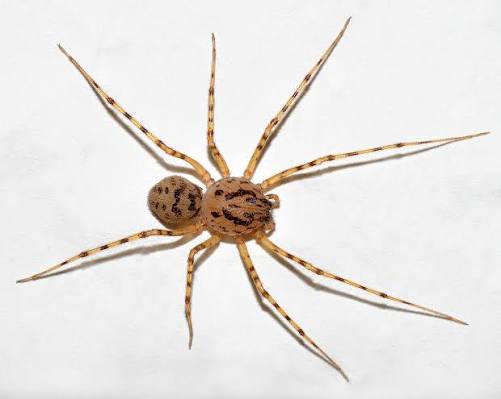
Spitting spiders immobilize small prey by projecting a mixture of sticky silk and venom from the mouthparts. Their slow movement and unusually domed front body help separate them from many other small brown spiders.
- Typical appearance
- Small pale yellowish, beige or light brown spider with dark speckles or marbling and a high, rounded prosoma.
- Adult body length
- Usually about 3–6 mm.
- Best clues
- A domed prosoma almost as high as the abdomen, delicate legs and dark spotting over the body.
- Web or hunting method
- Slow stalking followed by short-range projection of sticky material. It does not build a prey-catching web.
- Common habitat
- Walls, basements, cellars, sheltered crevices, under stones and other protected locations.
- North American distribution
- Scytodes thoracica is introduced and recorded in buildings across parts of the United States and southern Canada. Other Scytodes species occur mainly in warmer southern regions.
- Season noticed
- Potentially year-round indoors; warm seasons outdoors.
- Common lookalikes
- Recluse spiders, cellar spiders and other small pale hunters.
- Risk to people
- Very low. Spitting spiders are not considered medically important.
19. Recluse Spiders
Genus Loxosceles; central U.S. example Loxosceles reclusa
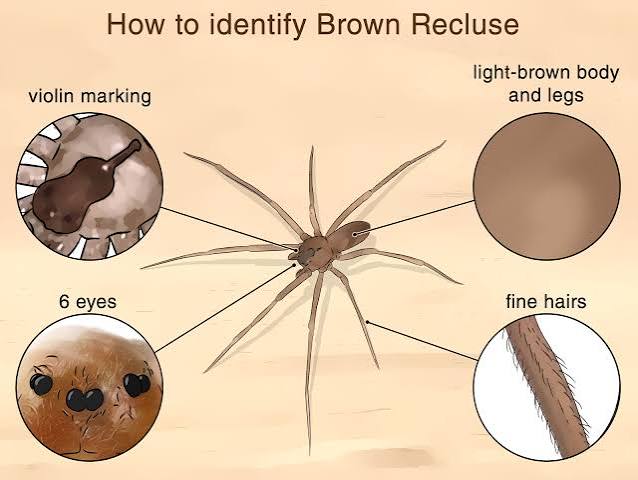
The brown recluse is common in parts of its established range but is not a common spider across North America as a whole. It is included here primarily to prevent harmless brown spiders from being mislabeled.
- Typical appearance
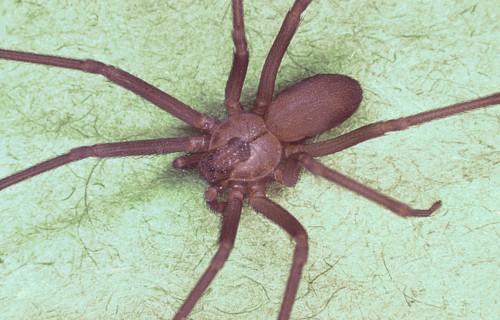
- Plain tan to medium-brown body, relatively long uniformly colored legs and an abdomen that normally lacks strong bands or chevrons.
- Adult body length
- Commonly about 6–12 mm, with some adult females larger.
- Best clues
- Established geographic range, six eyes arranged in three pairs, plain legs without obvious banding or heavy spines and the complete combination of diagnostic traits. A dark mark alone is insufficient.
- Web or hunting method
- No prey-catching web. It rests in a loose irregular silk retreat and hunts or scavenges at night.
- Common habitat
- Dry sheltered sites beneath rocks and bark, woodpiles, storage areas, boxes, wall voids and undisturbed structural spaces within its range.
- North American distribution
- Loxosceles reclusa is established mainly in the central and south-central United States. It is not native to most of Canada, the Pacific Northwest, New England or much of the far western United States. Other recluse species occur in limited southwestern areas.
- Season noticed
- Warm months, although established indoor populations may be encountered throughout the year.
- Common lookalikes
- Grass spiders, wolf spiders, cellar spiders, spitting spiders, yellow sac spiders, crevice weavers and many other ordinary brown spiders.
- Risk to people
- Medically important within its established range. Do not handle. A skin lesion cannot establish that a recluse was responsible.
Common Spiders by Color
Color is a navigation aid, not a diagnosis. Age, sex, recent molting, lighting, camera settings and natural variation can alter a spider’s apparent color. Confirm every color-based candidate with body shape, web, behavior and geographic location.
Common Brown Spiders
Likely groups include wolf spiders, grass spiders, nursery web spiders, fishing spiders, ground spiders, American house spiders and many orb-weavers. A brown spider is not automatically a brown recluse.
Common Black Spiders
Dark jumping spiders, parson spiders, ground spiders, false widows and some cobweb spiders may look black. Confirm a widow only through body form, markings, web and regional range.
Common Gray Spiders
Gray coloration occurs in wolf spiders, fishing spiders, American house spiders, orb-weavers, cellar spiders, jumping spiders and spitting spiders.
Common Yellow or Green Spiders
Flower crab spiders, lynx spiders, yellow sac spiders and several orb-weavers may be yellow or green. Their posture and hunting method are usually more informative than color.
Common Red or Orange Spiders
The woodlouse spider has red-orange legs and prosoma. Some orb-weavers are orange, and juvenile widow spiders may show red or orange markings without resembling adult females.
Common Spider Lookalikes
Wolf Spider vs Grass Spider
Wolf spider: normally hunts away from a prey-catching web, has the characteristic wolf-spider eye pattern and lacks the very long spinnerets typical of many grass spiders.
Grass spider: occupies a horizontal sheet leading to a funnel and often has two visibly extended spinnerets at the rear.
Jumping Spider vs Small Wolf Spider
Jumping spider: compact body, conspicuous front eyes, daytime activity and short, deliberate jumps.
Small wolf spider: more ground-oriented, usually longer-bodied, often active at dusk or night and equipped with two large eyes above a row of smaller eyes.
American House Spider vs False Widow
American house spider: often small, mottled and less glossy, with variable pale and dark abdominal patterning.
False widow: frequently has a smoother, darker and more bulbous abdomen. Because both belong to Theridiidae and build tangled webs, some individuals require close examination.
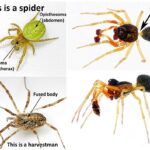
Cellar Spider vs Harvestman
Cellar spider: true spider with two visibly separate body regions; produces silk and usually hangs beneath a web.
Harvestman: belongs to order Opiliones, has a compact fused-looking body and does not produce a spider web.
Orb-Weaver vs Cobweb Spider
Orb-weaver: typically associated with a wheel-shaped web containing spokes and a spiral capture zone.
Cobweb spider: builds an irregular three-dimensional tangle in a corner, cavity or sheltered space.
Brown Recluse vs Common Brown Spiders
First check whether the observation falls inside an established recluse range. Grass spiders have long spinnerets and funnel webs; wolf spiders have a different eye pattern and often stronger markings; cellar spiders have very long legs; many common brown spiders have leg bands, abdominal chevrons or conspicuous spines that do not fit a recluse.
Which Common Spiders Actually Live in Houses?
Seeing a spider indoors does not prove that it is a true house-dwelling species. North American household encounters fall into three broad categories.
Indoor-adapted spiders
American house spiders, long-bodied cellar spiders, some false widows, some funnel weavers, spitting spiders and introduced yellow sac spiders can remain, molt and reproduce inside suitable structures.
Outdoor spiders that wander inside
Wolf spiders, grass spiders, ground spiders, parson spiders, fishing spiders and many jumping spiders usually originate outdoors but may enter through gaps or open doors.
Spiders around doors and foundations
Orb-weavers, grass spiders, cobweb spiders and jumping spiders may live on the exterior of a building without forming an indoor population.
Room location, indoor web structure and whether multiple life stages are present become especially important for house-spider identification. Continue with Common House Spiders in North America. For small brown indoor specimens, use Small Brown Spiders in House.
A Careful Note About Medically Important Spiders
Most North American spiders present little risk to people. Widow spiders and recluse spiders deserve caution, but each has a defined distribution, recognizable biological context and many harmless lookalikes.
- A dark spider is not automatically a black widow.
- A brown spider is not automatically a brown recluse.
- A red, orange or violin-like mark does not confirm an identification by itself.
- Do not handle an unknown spider to examine its eyes, underside or markings.
- Use a container only when safe to do so; otherwise photograph the spider from a comfortable distance.
- A skin lesion, unexplained wound or set of symptoms cannot identify the spider that caused it.
- Seek medical evaluation for severe pain, muscle cramping, breathing difficulty, widespread symptoms or a rapidly worsening wound.
When medical importance is a concern, contact a local poison center, public health service, university extension office, museum or qualified arachnologist. Identification from an actual specimen or clear regional photographs is more reliable than identification from a bite mark.
Common Spider Identification FAQ
What are the most common spiders in North America?
Frequently encountered groups include jumping spiders, wolf spiders, orb-weavers, cobweb spiders, cellar spiders, grass spiders, sheet-web weavers, crab spiders, ground spiders, sac spiders, fishing spiders and nursery web spiders. The most common group in one region may be uncommon or absent in another.
How do I identify a common spider?
Start with the state or province, estimate body length, determine whether the spider occupies a web, identify the web shape, compare body proportions and observe its behavior and immediate habitat. Use color and markings only after those clues agree.
What is the most common house spider?
There is no single answer for all of North America. The American house spider, Parasteatoda tepidariorum, is a widespread indoor cobweb spider, while cellar spiders, funnel weavers, false widows and other species may be more noticeable in particular regions or buildings.
What common spider makes a round web?
A wheel-shaped or round web is usually made by an orb-building spider. Many familiar garden orb-weavers belong to Araneidae, although other spider families also produce orb webs.
What common spiders hunt without webs?
Jumping spiders, wolf spiders, ground spiders, parson spiders, yellow sac spiders, crab spiders, lynx spiders, fishing spiders and nursery web spiders normally hunt without a prey-catching web. They still produce silk for safety lines, retreats, egg sacs or nurseries.
How can I identify a brown spider?
Do not begin with the assumption that it is a brown recluse. Compare its web, body shape, spinnerets, leg bands, abdominal pattern, eye arrangement and geographic range. Brown is common in many unrelated spider families.
Are common black spiders black widows?
No. Dark jumping spiders, parson spiders, ground spiders, false widows and several cobweb spiders may look black. A widow identification requires the correct body form, markings, web and regional distribution.
How can I tell a wolf spider from a grass spider?
Grass spiders normally occupy a horizontal sheet web leading into a funnel and often have visibly elongated spinnerets. Wolf spiders hunt on the ground without that capture web and have a characteristic arrangement of large reflective eyes.
Are common spiders dangerous?
Most common North American spiders pose little risk to people. Widow and recluse spiders are medically important, but they have regional distributions and many harmless lookalikes. Bites from any spider are more likely when it is handled or trapped against skin.
Can a spider be identified from one photograph?
A clear photograph may identify a family, genus or recognizable species, but one image may not show the underside, eyes, spinnerets, web, scale or diagnostic adult structures. A broader, well-supported identification is better than an unsupported species name.
References
- World Spider Catalog. Natural History Museum Bern. Current spider taxonomy and accepted scientific names. https://wsc.nmbe.ch/
- World Spider Catalog. Dolomedes Latreille, 1804. Current placement in Dolomedidae and 2025 family transfer. https://wsc.nmbe.ch/genus-detail/2579
- American Arachnological Society Committee on Common Names of Arachnids. Common Names of Arachnids, Fifth Edition. AAS common-names document
- Bradley, Richard A. Common Spiders of North America. University of California Press, 2013.
- Colorado State University Extension. Spiders in the Home. https://extension.colostate.edu/resource/spiders-in-the-home/
- Utah State University Extension. Top 20 Arachnids. https://extension.usu.edu/planthealth/uppdl/top-20-arachnids
- Utah State University Extension. Beneficial Insects of Utah Identification Guide. Spider-family body-length ranges and field characteristics. USU identification guide
- Missouri Department of Conservation. Grass Spiders. https://mdc.mo.gov/discover-nature/field-guide/grass-spiders
- Missouri Department of Conservation. Nursery Web Spiders. https://mdc.mo.gov/discover-nature/field-guide/nursery-web-spiders
- Missouri Department of Conservation. Lynx Spiders. https://mdc.mo.gov/discover-nature/field-guide/lynx-spiders
- Royal BC Museum. Not So Scary: Learning About Spiders. Regional spider-distribution and safety context for British Columbia. https://learning.royalbcmuseum.bc.ca/pathways/not-so-scary/
- Centers for Disease Control and Prevention, NIOSH. Venomous Spiders at Work. https://www.cdc.gov/niosh/outdoor-workers/about/venomous-spiders.html
- Poison Control. Insect and Spider Bites: When to Worry. https://www.poison.org/articles/insect-and-spider-bites