Spider Identification Guide: How to Identify a Spider
Spider identification works best by combining geographic location, body shape, size, leg proportions, markings, eye arrangement, web type, habitat and behavior. Color alone is rarely enough to identify a spider reliably.
A clear photograph can often help you recognize a family, genus or familiar spider group. It may not be enough to confirm an exact species, especially when the spider is immature, unusually colored or one of several closely related species.
What this guide can do: help you document an observation, distinguish spiders from similar animals and narrow an unknown spider to a likely family or recognizable group.
What it cannot guarantee: a species-level identification from one photograph. Closely related spiders may require magnification, a regional identification key or examination of reproductive structures by an experienced arachnologist.
Spider identification principles are broadly useful around the world, but the final answer must be regional. A spider that is common in one country may be absent from another, and familiar names such as “house spider,” “brown spider” or “daddy longlegs” can describe different animals in different places.
The World Spider Catalog listed 54,046 valid spider species in 139 families when checked on July 19, 2026. That total changes as new species are described and existing names are revised, combined or transferred to different genera.[1]
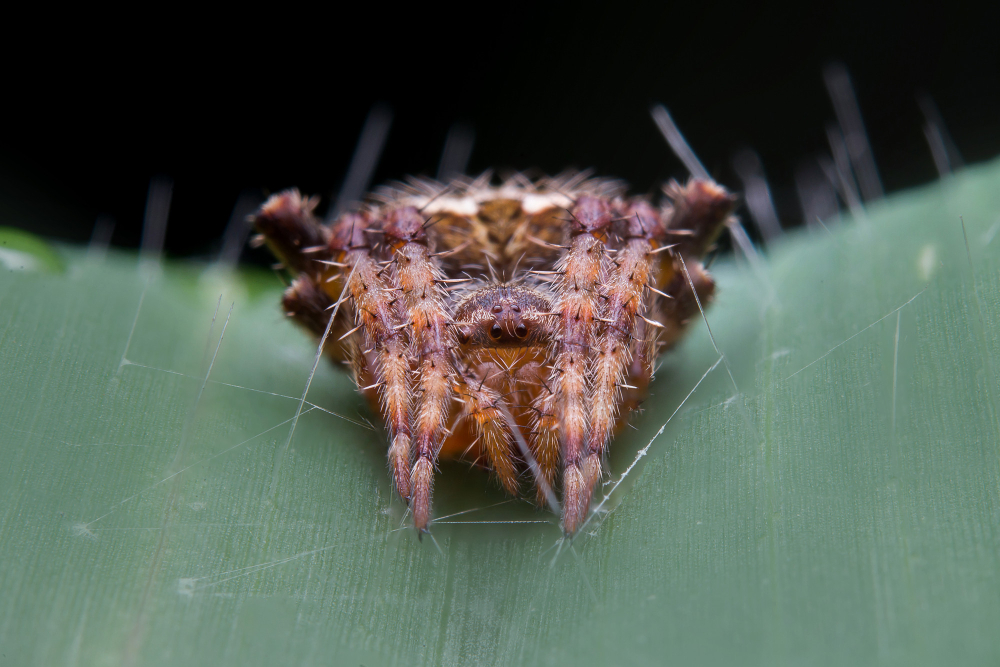
1. First Record Where the Spider Was Found
Geographic location is one of the most valuable spider identification clues. Before studying color or markings, record where the spider was seen. A species cannot be identified responsibly without checking whether it is known from that region.
- Country
- State, province, territory or county
- Nearest city or general region
- Date and approximate time
- Season and recent weather conditions
- Indoors or outdoors
- Room, structure, plant or surface
- Nearby habitat, such as woodland, grassland or wetland
Distribution information helps rule out attractive but impossible matches. For example, many harmless brown spiders are identified online as brown recluses even when they were photographed far outside the established range of Loxosceles reclusa. Location does not prove an identification, but it can make some suggested identities much more or less plausible.
Use the most precise location that is useful without publishing a private address. A city, county or nearby protected area is usually enough for public identification requests.
Do not assume a spider occurs “worldwide” because photographs appear on international websites. Some spiders have broad distributions, while others are restricted to a country, island, climate zone or small habitat range.
2. Decide Whether It Is Really a Spider
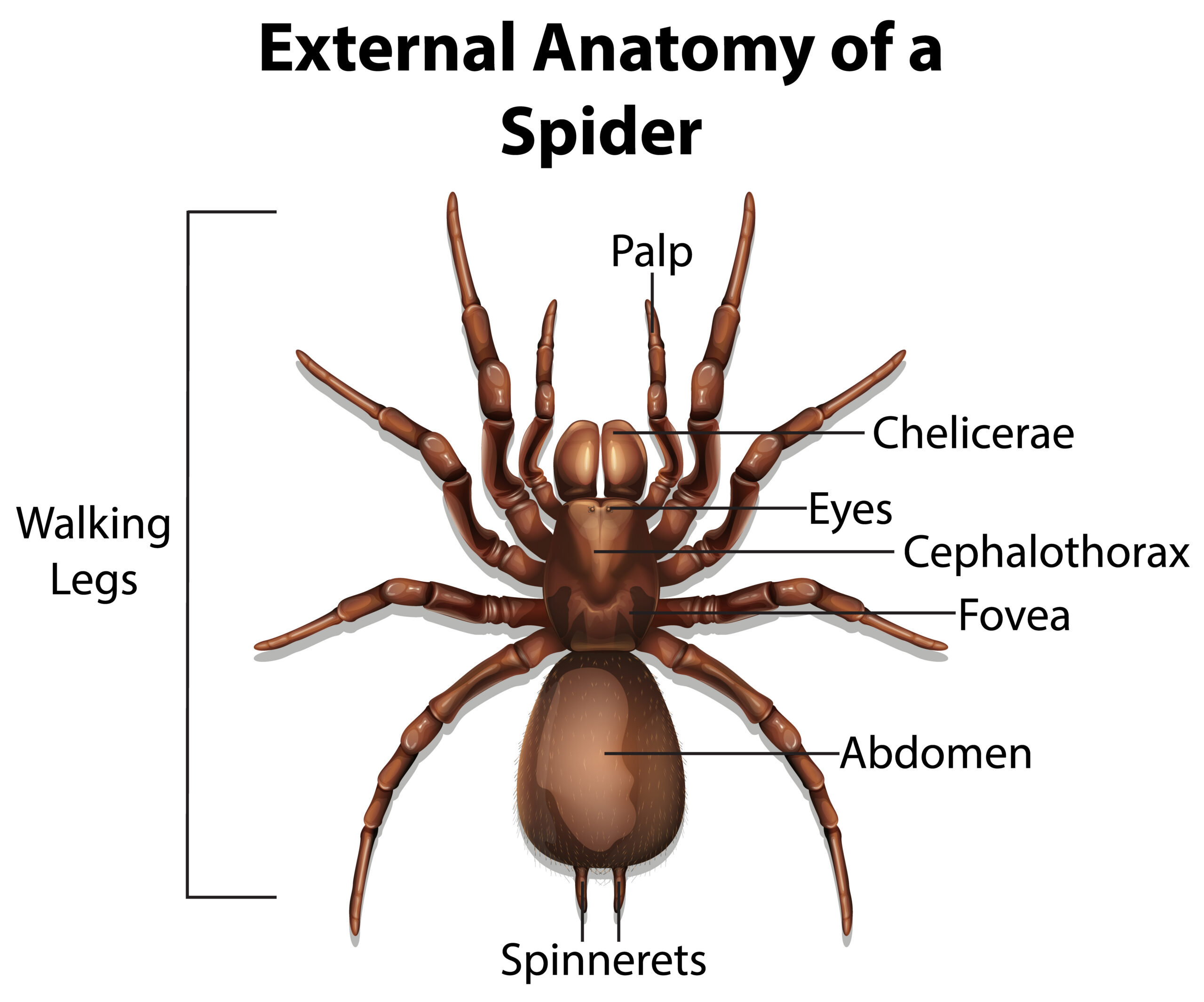
Adult spiders normally have eight walking legs, two main body regions, no antennae and no wings. The front region, often called the cephalothorax or prosoma, carries the eyes, mouthparts and legs. A narrow connection joins it to the abdomen, which carries the spinnerets used to produce silk.[2]
Several other small animals are routinely called spiders even though they belong to different arachnid orders—or are insects rather than arachnids.
| Animal | Typical visible features | Main difference from a spider | Common source of confusion |
|---|---|---|---|
| Spider | Usually eight legs; two visibly separate body regions; no antennae or wings | Has a prosoma and abdomen connected by a narrow waist; produces silk | Damaged spiders may be missing one or more legs |
| Harvestman | Eight legs, often very long; body looks like one compact oval unit | No narrow waist between the two main regions; does not produce spider webs | Often called “daddy longlegs,” the same name used for cellar spiders in some regions |
| Tick | Broad, flattened or swollen body; short legs concentrated near the front | Body regions are not visibly separated like those of a spider; no spinnerets | Tick larvae have six legs, while nymphs and adults have eight |
| Mite | Usually extremely small; body may look rounded or oval under magnification | Main body regions are generally not visibly divided | Some plant-feeding mites produce silk and are called spider mites |
| Pseudoscorpion | Tiny flattened body with two conspicuous pincer-like pedipalps | Has pincers but no scorpion-like tail; lacks the body form of a spider | Can resemble a tick carrying miniature claws |
| Six-legged insect | Six legs; usually has antennae; may have wings | Insects have three main body regions rather than two | Ant-mimicking spiders may hold their front legs up like antennae |
Leg count should not be used alone. A spider may lose a leg through injury or escape, and a photograph may hide legs behind the body.
For a fuller comparison, see Are Spiders Insects or Animals? and Cellar Spider vs Daddy Long Legs.
3. Measure the Spider’s Size Correctly
“Large,” “tiny” and “about the size of a coin” are subjective descriptions. Spider identification becomes more useful when you separate body length from total leg span.
The standard biological measurement
Measure from the front of the main body to the end of the abdomen, excluding the legs. Do not include projecting spinnerets unless an identification guide specifically requests them.
The space occupied by the extended legs
Leg span may make a slender spider appear much larger than its body length. It also changes with posture, so it is less consistent than body length.
What the photograph seems to show
A close camera angle can make a small spider look enormous. Wide-angle phone lenses, cropping and the absence of nearby objects all affect perceived scale.
A known object or measured surface
Photograph a ruler, floorboard, brick joint or other known feature from a safe distance. A measurement taken after the spider has moved away is also useful.
Do not place your hand, a coin or a ruler beside an unknown spider while it is present. Do not move closer than is safe simply to obtain a measurement.
4. Observe the Overall Body Shape
Body shape is useful for placing a spider into a broad visual group. It is not an absolute identification rule: unrelated spiders can evolve similar shapes, and males, females and immature spiders may have different proportions.
Compact jumping spiders
Often short-bodied and alert-looking, with a relatively high front body region and prominent forward-facing eyes. Many move in short bursts and turn toward movement.
Robust wolf spiders
Usually ground-running spiders with a sturdy body, substantial legs and a lower, elongated profile. Their characteristic eye pattern is more useful than “hairiness” alone.
Long-legged cellar spiders
Small, narrow bodies combined with extremely long, fine legs. They are often found hanging in loose indoor webs, but long legs alone do not confirm the family.
Flattened crab-like spiders
A broad, flattened body with legs extending sideways. In many crab spiders, the first two pairs are comparatively strong and useful for grasping prey.
Round-abdomen cobweb spiders
Frequently have a small front body region and a rounded, oval or bulbous abdomen. Widow and false widow relatives belong to this broad form, but so do many low-risk species.
Long-spinneret funnel weavers
Often elongated and brown, with paired spinnerets visibly extending beyond the end of the abdomen. Several ground-running spiders can appear similar when spinnerets are hidden.
Heavy-bodied tarantulas and trapdoor spiders
Thick legs, a substantial body and large downward-moving fangs characterize many mygalomorph spiders. Exact identification remains strongly regional.
Slender sac and foliage spiders
Often have a narrow abdomen and relatively long legs. Many rest inside a temporary silk retreat instead of building a permanent prey-catching web.
Use these shapes as a first sorting tool, then test the result against location, eye arrangement, leg posture, web and habitat. Browse Spider Types after you have narrowed the spider to a likely group.
5. Examine the Legs
Spider legs provide more information than simple length. Study their proportions, markings, posture and surface structures whenever the photograph is clear enough.
- Relative length: Are all four pairs similar, or are the front or rear pairs noticeably longer?
- Strength: Are the front legs enlarged for grasping or jumping?
- Banding: Do the legs have alternating light and dark rings?
- Spines: Are stiff, projecting spines visible rather than only fine hairs?
- Resting position: Are the legs directed mostly forward and backward, or extended sideways?
- Tufts and brushes: Are there dense hairs near the feet or along particular segments?
- Uniformity: Are the legs a single color, or do the joints and tips differ?
Sideways-extending legs may suggest a crab spider or huntsman-type body plan. Large rear legs can be associated with jumping. Very long, threadlike legs can suggest a cellar spider, but harvestmen and several unrelated spiders can produce the same first impression.
“Long-legged brown spider” is not a diagnosis. Brown recluses, cellar spiders, funnel weavers, male crevice weavers and many other spiders may all appear long-legged in a photograph.
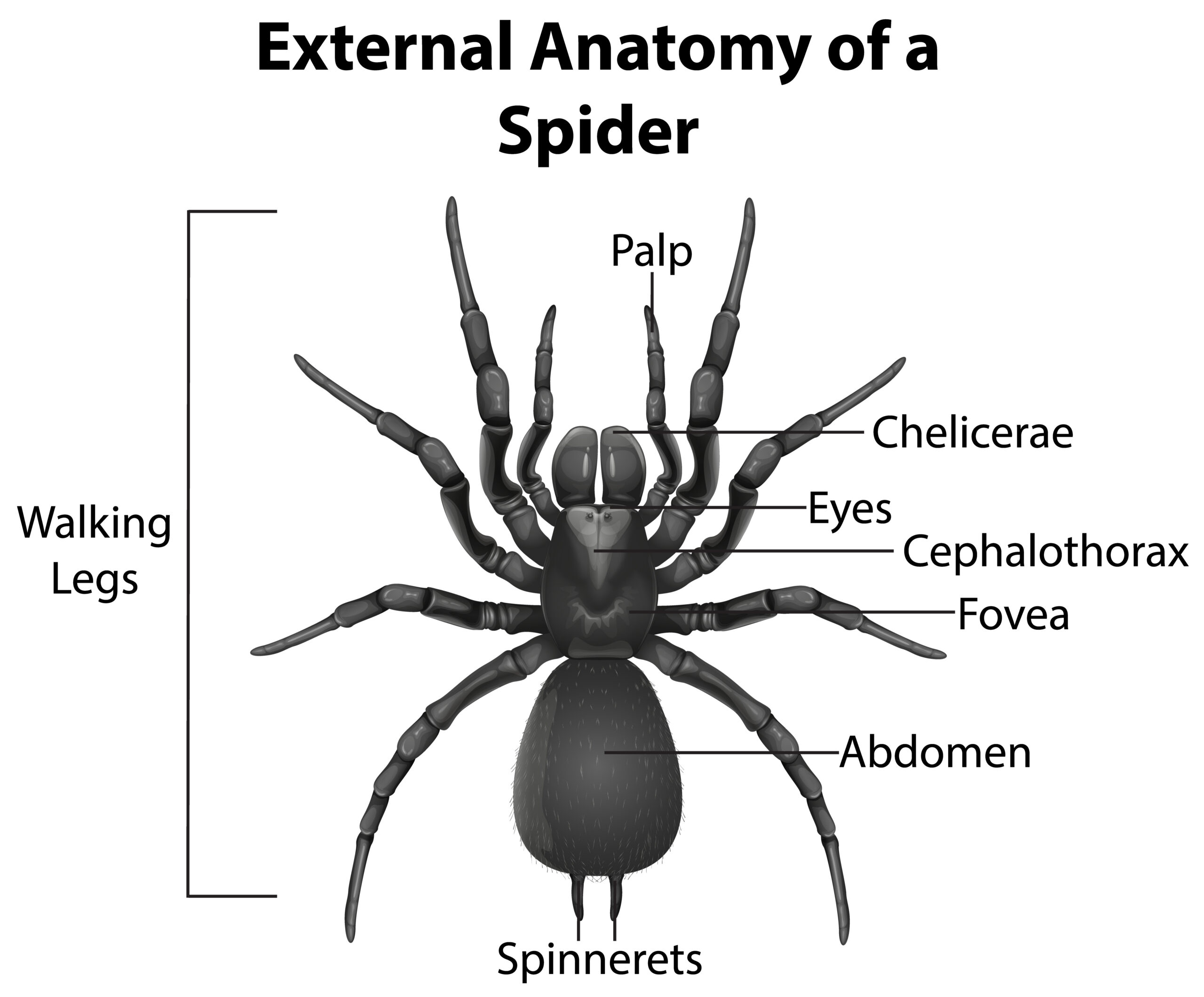
6. Look at the Eye Arrangement
Eye number, size and arrangement are important family-level characteristics. Most spiders have eight eyes, while some have six, four, two or none. The arrangement is usually more useful than the number alone.
Jumping spiders
Typically show a conspicuous pair of large forward-facing principal eyes, with smaller eyes positioned around the sides and top of the head region.
Wolf spiders
Commonly show four small eyes in a lower row, two much larger eyes above them and two additional eyes farther back.
Recluse spiders
Have six eyes arranged in three pairs. Magnification is normally needed to see this reliably, and the arrangement does not by itself confirm an exact Loxosceles species.
Funnel weavers and similar spiders
Usually have eight smaller eyes arranged in two rows. Differences among closely related species may be too subtle for ordinary photographs.
A blurred phone image cannot reliably show whether a tiny reflective spot is an eye, a highlight or part of a marking. Even a photograph that shows six eyes may not contain enough detail to establish a species.
Never handle an unknown spider or move your face close to it to inspect the eyes. Use optical zoom, a macro lens or a cropped high-resolution photograph taken from a safe position.
See How Many Eyes Do Spiders Have? for a fuller explanation of spider vision and eye-number variation.
7. Use Color and Markings Carefully
Spider identification by color is useful only when color is combined with structure and location. Brown, black, red, yellow, green and white occur in many unrelated spider families.
Useful pattern details include:
- Paired spots or a central patch on the abdomen
- Longitudinal stripes on the front body region or abdomen
- Chevron or herringbone markings
- Light and dark rings on the legs
- Marks on the underside of the abdomen
- A contrasting border around the carapace
- Metallic scales, iridescence or reflective hairs
- Whether the abdomen is patterned or uniformly colored
Color can change with age, sex, recent molting, nutrition, body condition and natural individual variation. A newly molted spider may appear pale before its outer covering hardens. Males may be slimmer or differently marked than females, and spiderlings may lack the adult pattern.
Photography introduces additional errors. Flash can create false shine, shadows can darken the legs, and automatic white balance can shift tan toward orange, gray or green. A wet spider may also look darker than a dry individual.
A violin-like mark does not automatically make a spider a brown recluse. Many unrelated spiders have dark marks on the carapace, and recluse identification should consider geographic range, eye arrangement, unbanded legs, abdominal pattern and other traits together.[5]
Similarly, a red or orange abdominal mark does not automatically make a spider a black widow. The shape and position of the mark, the spider’s life stage, its web, its body form and its geographic location all matter.
8. Identify the Spider by Its Web
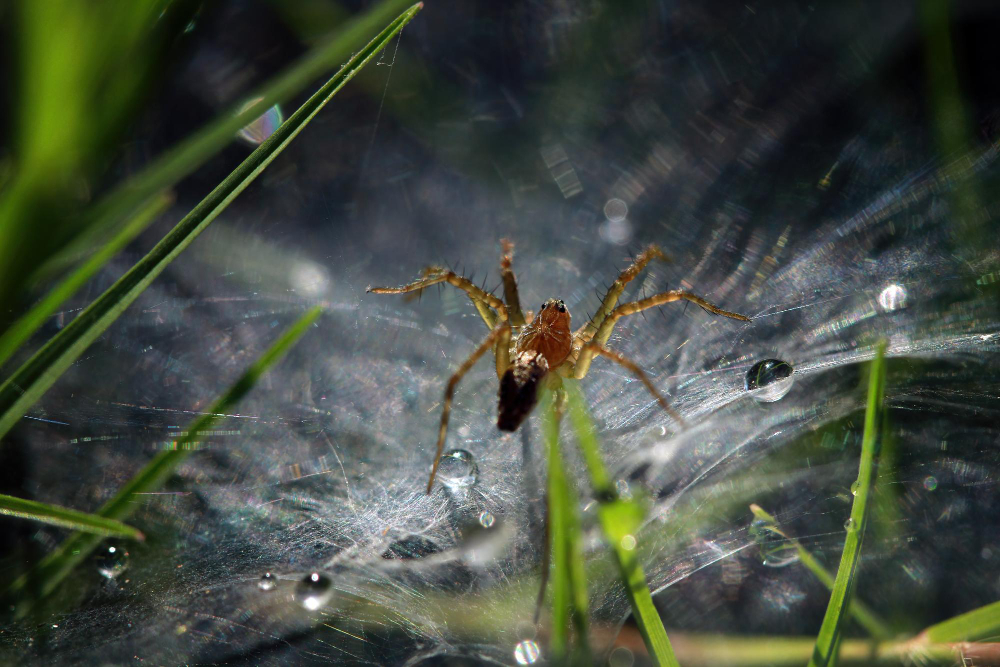
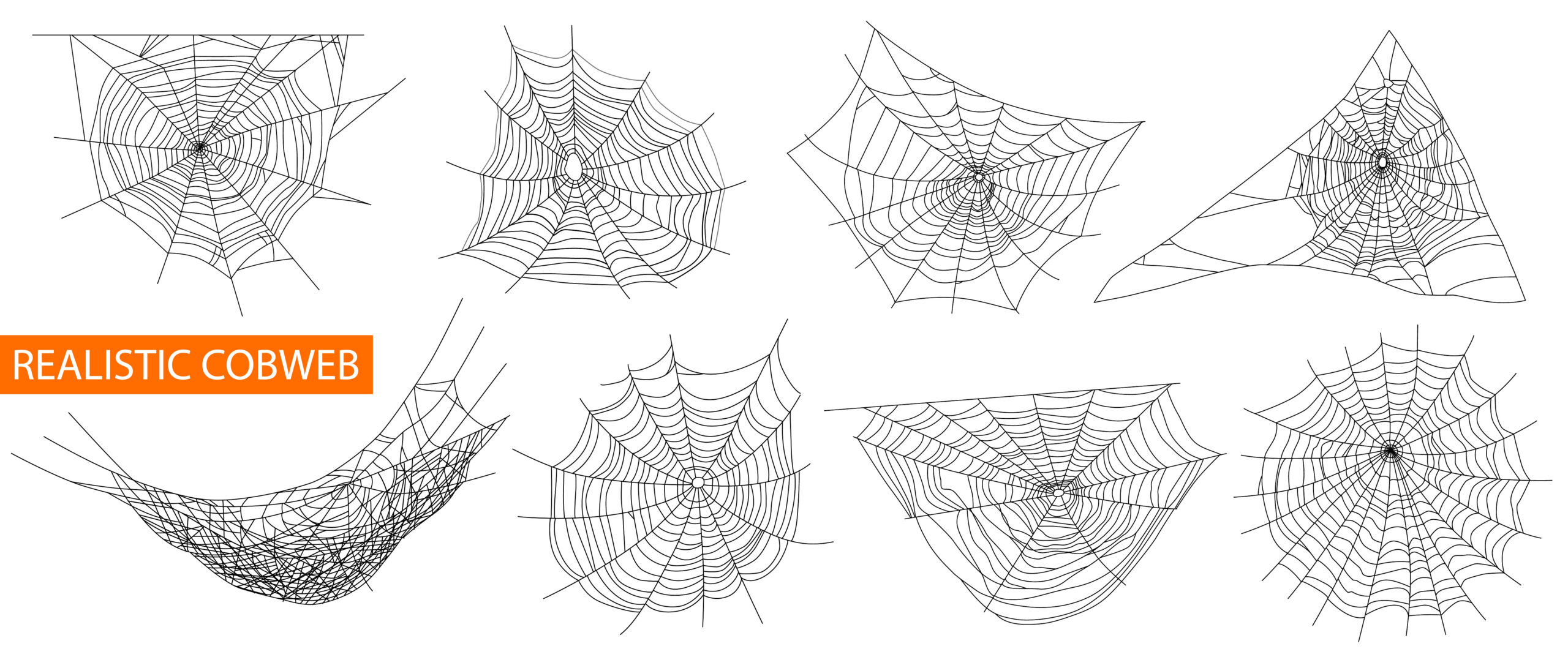
Web architecture can be one of the fastest ways to narrow an identification, especially when the spider is still occupying the web. Different groups build characteristic structures, but web design can vary with age, available space, wind, damage and rebuilding.
| Web type | Common shape | Usual location | Possible spider groups | Common confusion |
|---|---|---|---|---|
| Orb web | Wheel-shaped web with radial spokes and a spiral catching area | Between plants, branches, railings, buildings or across open gaps | Orb-weavers, long-jawed orb-weavers and several other orb-building families | A damaged or partly rebuilt orb may no longer look circular |
| Tangled cobweb | Irregular three-dimensional network, sometimes with sticky lines leading downward | Corners, sheds, furniture, rocks, cavities and sheltered outdoor structures | Cobweb spiders, including many common house spiders and widow relatives | Old dust-covered webs may be mistaken for an occupied web |
| Funnel or sheet web | Horizontal or sloping sheet leading to a tube-like retreat | Grass, shrubs, wall crevices, window wells, logs and building foundations | Funnel weavers and some sheet-web builders | “Funnel web” is a web description and does not automatically mean an Australian funnel-web spider |
| Cellar spider web | Loose, irregular and lightly constructed tangle | Ceiling corners, basements, garages, caves and undisturbed sheltered areas | Cellar spiders in the family Pholcidae | Can resemble other tangled webs unless the long-legged spider is visible |
| Temporary silk retreat | Small silken sac, tube, folded leaf or enclosed resting chamber | Under leaves, bark, stones, furniture edges and sheltered cracks | Sac spiders, jumping spiders and many other active hunters | A resting retreat is not necessarily a prey-catching web |
| No prey-catching web | No permanent capture structure; silk may still be used for safety lines, egg sacs or shelter | Ground, walls, flowers, vegetation, bark and burrow entrances | Wolf spiders, jumping spiders, crab spiders, huntsman spiders and other hunters | The absence of a visible web does not mean the animal cannot produce silk |
Photograph the entire web before moving closer to the spider. Include its attachment points, orientation and retreat. A close-up of a few threads rarely shows the overall architecture.
Webs can usually suggest a group rather than an exact species. An abandoned web is even less reliable because several spiders may reuse nearby structures, and damaged silk can lose its original form. Learn more in Why Do Spiders Build Webs?.
9. Observe How the Spider Behaves
Behavior can support an identification when it is observed naturally. It should not be treated as a rigid rule, because spiders may behave differently when hunting, mating, guarding eggs, escaping or responding to disturbance.
Jumping
Short, controlled leaps and visual tracking can point toward a jumping spider, especially when combined with a compact body and large forward-facing eyes.
Running on the ground
Fast terrestrial movement may suggest wolf spiders, ground spiders or funnel weavers. Speed alone does not separate them.
Waiting in a web
The spider’s position—at the center, edge, underside or inside a retreat—can be as useful as the web’s shape.
Hanging upside down
Many cobweb spiders and cellar spiders rest beneath their webs with the underside facing outward.
Vibrating in the web
Cellar spiders and some other web dwellers may shake or vibrate when disturbed, making their outline difficult to see.
Ambushing on flowers
A spider sitting motionless with enlarged front legs on a flower may belong to a crab spider or another ambush-hunting group.
Living in a burrow
A silk-lined burrow may be associated with trapdoor spiders, tarantulas, wolf spiders or other ground-dwelling groups, depending on the region and burrow structure.
Turning toward the camera
Visually oriented spiders, especially jumping spiders, may rotate to face movement. This is supporting evidence rather than proof.
Do not poke, blow on or corner a spider to produce a behavior for identification. Record what it was already doing.
10. Use the Habitat to Narrow the Possibilities
The immediate microhabitat often provides more information than a broad statement such as “found outside.” Record the surface, shelter, vegetation, moisture and height above the ground.
| Habitat | Useful observations | Possible groups |
|---|---|---|
| Home interiors | Room, wall or floor, proximity to windows, presence of a web | Cobweb spiders, cellar spiders, jumping spiders, funnel weavers and wandering outdoor hunters |
| Basements and garages | Humidity, clutter, cracks, ceiling corners and ground-level webs | Cellar spiders, cobweb spiders, funnel weavers and wandering males |
| Gardens | Plant type, web height, leaf surface and time of day | Orb-weavers, jumping spiders, crab spiders, lynx spiders and small sheet-web builders |
| Flowers | Whether the spider waits motionless, matches the flower or holds the front legs outward | Crab spiders, jumping spiders and other foliage hunters |
| Tree bark | Loose bark, crevices, camouflage and flattened posture | Running crab spiders, huntsman-type spiders, jumping spiders and crevice dwellers |
| Leaf litter | Moisture, woodland type, daytime or nighttime activity | Wolf spiders, ground spiders, small sheet-web spiders and juvenile mygalomorphs |
| Grass | Horizontal sheet webs, funnel retreats, dew-covered silk and ground-running activity | Funnel weavers, wolf spiders and small sheet-web builders |
| Wetlands and water edges | Whether the spider runs on water, rests on emergent plants or builds a web above water | Fishing spiders, long-jawed orb-weavers, wolf spiders and wetland web builders |
| Burrows | Trapdoor, silk collar, radiating trip lines, soil type and burrow entrance | Trapdoor spiders, tarantulas, funnel-web relatives and burrowing wolf spiders |
| Building exteriors | Window frames, lights, siding, eaves, web architecture and nearby vegetation | Orb-weavers, lace-web spiders, jumping spiders, cobweb spiders and funnel weavers |
Readers who found a spider indoors can continue with Common House Spiders in North America. A small, uniformly brown indoor spider may be compared with the narrower guide to Small Brown Spiders in the House.
11. How to Photograph a Spider for Identification
A useful spider photograph documents structure and context rather than simply filling the frame. Keep the original files because social-media compression may remove the details needed for identification.
- Dorsal view: Photograph the back of the body and abdomen.
- Side view: Show body height, leg posture and spinnerets.
- Front view: Include the eyes only when it can be done from a safe distance.
- Ventral view: Photograph the underside only if it is naturally visible through a web or transparent surface.
- Entire web: Show its shape, retreat and attachment points.
- Habitat: Photograph the room, plant, bark, ground surface or burrow.
- Scale: Include a known object or record a measurement after the spider moves.
- Original image: Preserve full resolution and avoid heavy filters.
- Location and date: Attach regional and seasonal information to the photographs.
- Several angles: A sequence is more useful than one extreme close-up.
Do not turn a spider over by hand, restrain it, encourage it onto your skin, open a burrow, remove it from a web or deliberately provoke a defensive posture. A missing photograph is preferable to unsafe handling.
Why photographs can be misleading
Perspective changes leg proportions. Flash may hide dark patterns or create reflective spots. Motion blur can merge several eyes into one dark patch. A spider photographed through glass may be distorted, while a heavily cropped image may remove the habitat and scale.
Whenever possible, submit both a close photograph and a wider environmental photograph.
12. Common Spider Identification Errors
Using color alone
Brown, black, red and green occur in numerous unrelated families. Color should support structural evidence, not replace it.
Ignoring geographic location
A visually similar species from another continent is not automatically a plausible match.
Calling every brown spider a brown recluse
Funnel weavers, wolf spiders, cellar spiders, crevice weavers and many other spiders are brown.
Calling every black spider a black widow
Body proportions, underside markings, life stage, web and regional distribution must all be considered.
Confusing a cellar spider with a harvestman
Cellar spiders have two visibly separated body regions and build silk webs. Harvestmen have a compact, fused-looking body and do not build spider webs.
Confusing a wolf spider with a funnel weaver
Both may be brown and fast. Eye arrangement, visible spinnerets, body pattern and the presence of a sheet-and-funnel web are more useful clues.
Accepting an app or image-search result as confirmation
Automated tools can suggest candidates, but they may overlook geography, life stage and diagnostic structures that are not visible in the image.
Identifying a spider from a suspected bite
A skin lesion does not reveal which animal caused it. Many infections and medical conditions are incorrectly attributed to spiders.
Ignoring sex and life stage
Adult males may be smaller and longer-legged than females. Juveniles can have different proportions or markings, and newly molted individuals may be unusually pale.
Forcing a species-level answer
“Likely family” or “probable genus” may be the highest defensible identification from a photograph.
13. From Spider Group to Exact Species
Identification can stop at several different taxonomic levels. A broader but well-supported answer is scientifically more useful than a precise name based on weak evidence.
Family-level identification often uses overall body structure, eye arrangement, spinnerets, web type and behavior. Genus-level identification may require finer details. Exact species identification can depend on the shape of mature male pedipalps, the female epigyne and internal genital structures, microscopic hairs, spines or other characters described in a formal regional key.[3]
Immature spiders may not yet possess the adult reproductive structures required by a key. A photograph may therefore support “juvenile funnel weaver” or “jumping spider, family Salticidae” without supporting a species name.
Taxonomy also changes. A familiar spider can be transferred to a different genus, or two previously separate names may be recognized as the same species. Current scientific names should be checked in the World Spider Catalog.
14. Which Spiders Require Cautious Handling?
Most spider encounters do not cause injury. Spiders generally attempt to remain hidden, escape or defend their web rather than pursue people. Bites are more likely when a spider is trapped against skin, handled or disturbed.
Medically important spiders differ by country and region. Widow spiders, recluse spiders and Australian funnel-web spiders are examples of groups that require regional context, but this identification guide is not a worldwide dangerous-spider list.
- Keep an unknown spider at a comfortable distance.
- Photograph it without handling, trapping or provoking it.
- Compare the observation with authoritative information for the region.
- Contact a local museum, university extension office or qualified arachnologist when medical importance is a concern.
- Do not infer the spider’s identity from a skin mark or unexplained wound.
- Seek medical help for severe, rapidly worsening or systemic symptoms.
CDC guidance notes that many wounds and infections are incorrectly reported as spider bites when no spider was observed.[9] For broader household risk information, read Are House Spiders Dangerous?.
15. Quick Spider Identification Flowchart
This text-based spider identification chart helps narrow an observation to a likely group. It does not confirm a species.
Spider Identification FAQ
How can I identify a spider I found?
Record the country and region first. Then compare body length, leg proportions, overall shape, markings, eye arrangement, web, habitat and behavior. Use several clear photographs and accept a family- or genus-level answer when the evidence does not support an exact species.
Can you identify a spider by color?
Color can help narrow the possibilities, but it is rarely reliable by itself. Many unrelated spiders are brown, black, yellow, green or red, and color changes with lighting, camera settings, age, sex, molt stage and individual variation.
Can a spider be identified from a photo?
A good photograph can often identify a spider to a recognizable group, family or sometimes genus. Exact species identification may be impossible when the image is blurred, the spider is immature or diagnostic microscopic structures are not visible.
What details are needed for spider identification?
Provide the country, state or province, nearest general location, date, habitat, body-length estimate, web type, behavior and several original photographs showing the back, side, surroundings and scale.
Can a spider web identify the spider?
A web can often narrow the spider to a group such as an orb-weaver, cobweb spider or funnel weaver. It usually cannot confirm an exact species, especially when the web is damaged, abandoned or photographed without the spider.
How do I identify a brown spider?
Do not begin with the assumption that it is a brown recluse. Record the geographic location and examine the body shape, abdominal pattern, leg bands or spines, eye arrangement, spinnerets, web and habitat. “Brown spider” is a color description, not a taxonomic group.
How can I tell a wolf spider from a house spider?
“House spider” can refer to several unrelated indoor species. Wolf spiders are active hunters with a characteristic arrangement of large and small eyes and normally do not build prey-catching webs. Funnel-weaving house spiders often have visible spinnerets and occupy a sheet web with a retreat.
Are spider identification apps accurate?
Apps can provide possible matches, but results should be treated as suggestions rather than confirmation. Accuracy is limited by image quality, regional coverage, life-stage differences and the absence of microscopic characters.
Why do male and female spiders look different?
Mature males and females may differ in body size, leg length, abdominal shape, color and markings. Adult males also develop enlarged reproductive structures on the pedipalps, which can look like small boxing gloves near the mouth.
Where can I get an expert spider identification?
Contact a natural history museum, university entomology or extension office, regional arachnological society or biological recording organization. BugGuide and iNaturalist can provide useful community suggestions when accompanied by clear photographs, date and location, but medically important identifications should be confirmed through an appropriate regional expert.
Continue Your Identification
Once you have narrowed the observation to a likely group or setting, use the appropriate specialist page rather than relying on a general image match.
References
- World Spider Catalog. 2026. World Spider Catalog, Version 27. Natural History Museum Bern. Accessed July 19, 2026. DOI: 10.24436/2.
- Australian Museum. “What Is a Spider?” Spider anatomy and external body features.
- British Arachnological Society. Arachnologists’ Handbook. 2019 edition. Identification, family keys, microscopy, photography and nomenclature.
- Richardson, K. and Davis, R. Utah State University Extension. “Hobo Spider.” April 2023. Identification limitations, color variation, eye arrangement and reproductive structures.
- Cranshaw, W. S.; reviewed by Gharbi, K. Colorado State University Extension. “Brown Recluse Spiders in Colorado: Recognition and Spiders of Similar Appearance.” Reviewed August 2025.
- Australian Museum. “Spider Webs” and “Prey Capture and Feeding.” Web architecture, silk use and prey-catching strategies.
- University of Minnesota Extension. “Pseudoscorpions,” “Harvestmen” and “Spiders.” Identification of spiders and related arachnids.
- Natural History Museum, London. “Identifying False Widow Spiders,” “House Spider Identification” and home-spider identification resources. Variation in sex, markings and common names.
- Centers for Disease Control and Prevention. CDC Yellow Book. “Poisonings, Envenomations, and Toxic Exposures During Travel.” Spider encounters, defensive bites and frequent misattribution of skin lesions.