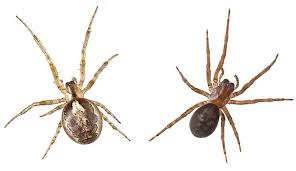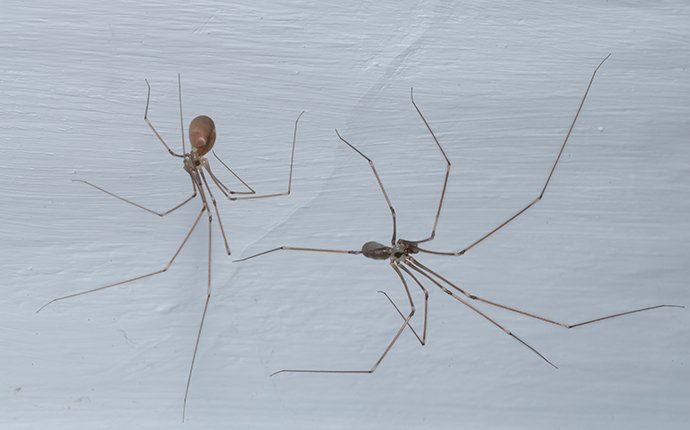
If you have ever noticed a tiny long-legged creature hanging in a basement corner, walking across a garage wall, or resting under a damp outdoor log, you may have wondered whether it was a cellar spider or a daddy long legs.
The confusion is very common. Many people use the name “daddy long legs” for almost any small creature with extremely long legs. But when we compare cellar spider vs daddy long legs, we are usually talking about two different animals: cellar spiders, which are true spiders, and harvestmen, which are arachnids but not spiders.
The good news is that both are generally harmless to humans. Still, knowing the difference helps you understand what is living in your home, why it may be there, and whether you need to do anything about it.
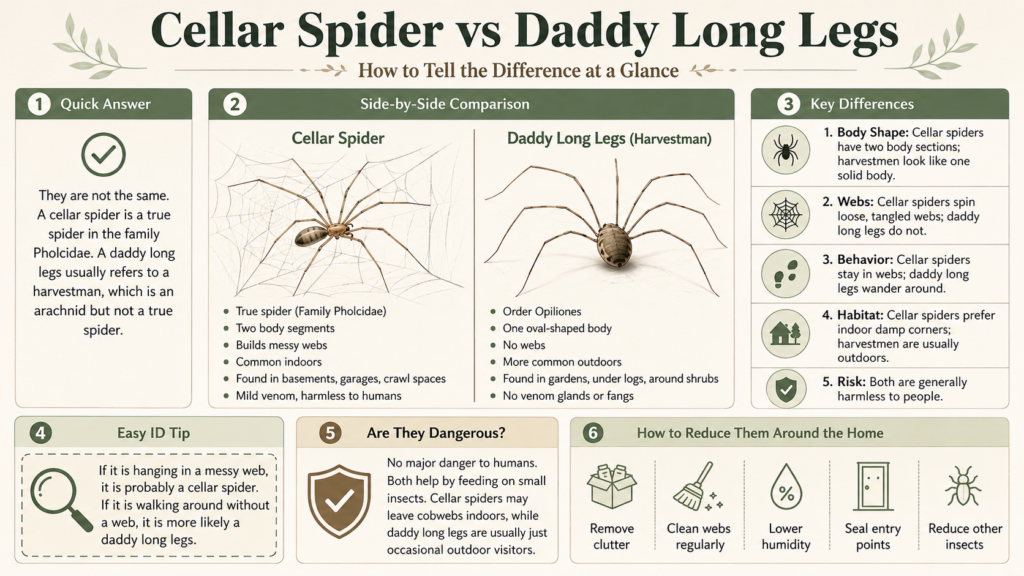
Cellar Spider vs Daddy Long Legs: Are They the Same Thing?
No, a cellar spider and a daddy long legs are not the same thing when “daddy long legs” refers to a harvestman.
This is where the naming problem starts. In some places, people call cellar spiders “daddy longlegs spiders” because of their thin, delicate legs. In other places, “daddy long legs” refers to harvestmen, which belong to the order Opiliones. Some people even use the same nickname for crane flies, which are insects.
For clarity, this article uses:
- Cellar spider = a true spider from the family Pholcidae
- Daddy long legs = a harvestman from the order Opiliones
They may look similar at first glance, but their bodies, webs, behavior, and biology are quite different.
The Fastest Way to Identify Them: Look at the Body
The easiest way to tell the difference is to look at the body shape.
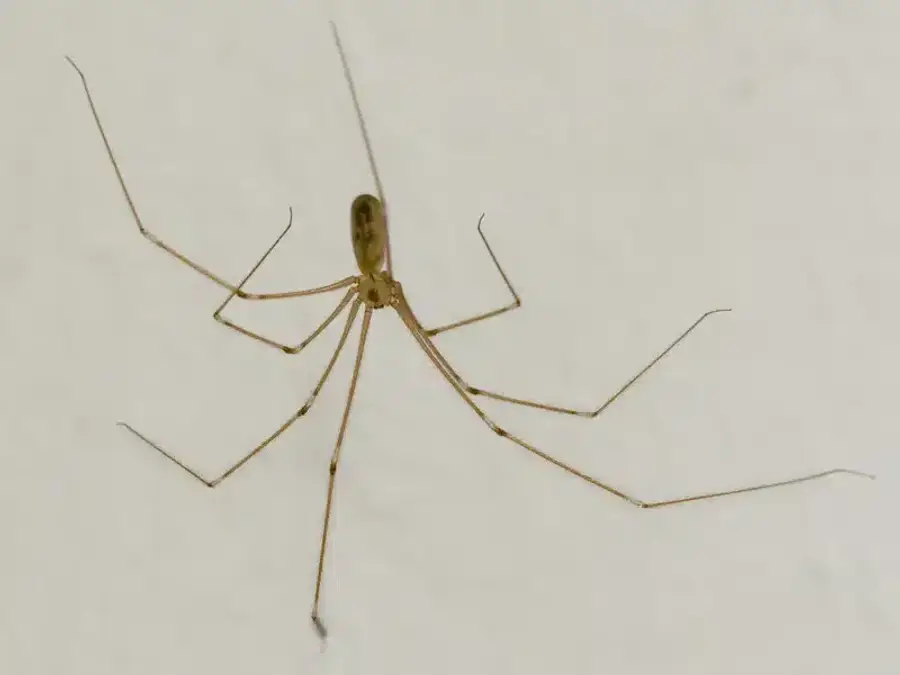
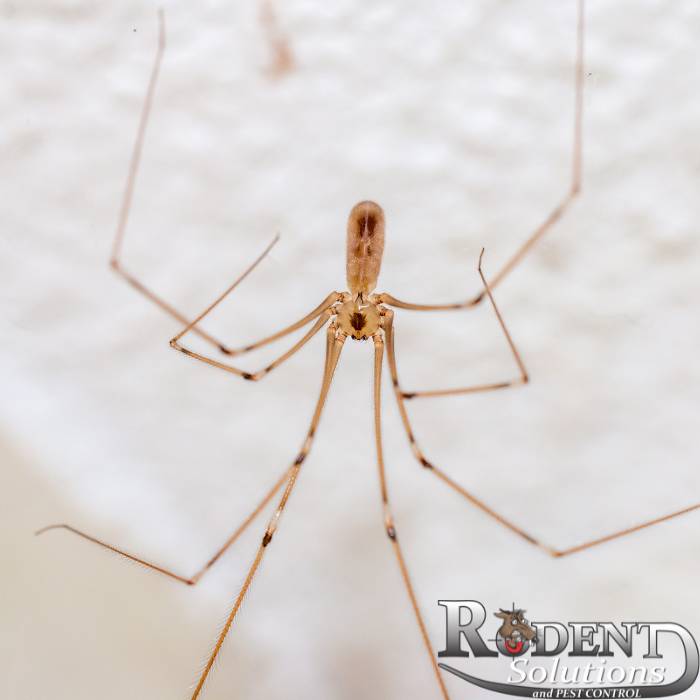
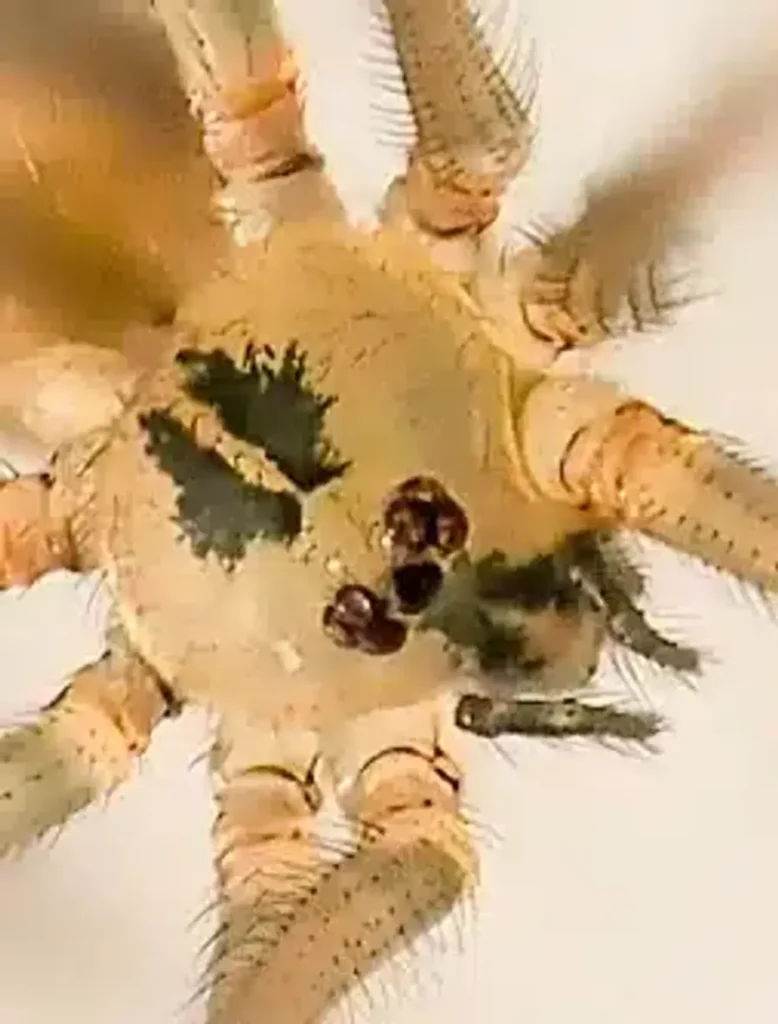
A cellar spider has the classic spider body structure: two body sections joined by a narrow waist. The front section contains the eyes, mouthparts, and leg attachments, while the rear section is the abdomen. Even though the body is small, you can often see that it is divided into two parts.
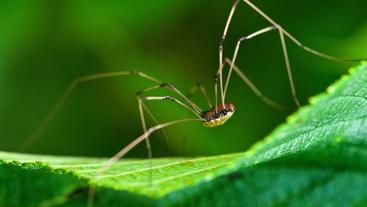
A daddy long legs, or harvestman, looks more like one small oval body with long legs attached. It does not have the clear “waist” that true spiders have. Its body looks compact, rounded, and fused into a single shape.
So, as a simple rule:
If it has two clear body sections, it is probably a cellar spider.
If it looks like one small oval body, it is probably a daddy long legs.
Webs vs No Webs
Another very helpful clue is whether the creature is sitting in a web.
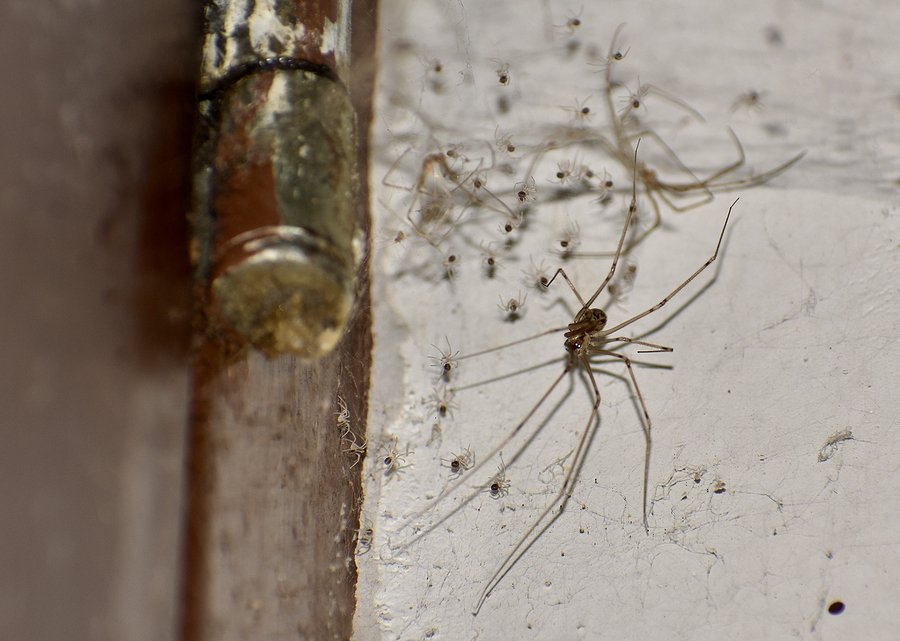
Cellar spiders spin webs. They often build loose, messy, irregular webs in quiet indoor spaces. You may see these webs in basement corners, garages, crawl spaces, attics, closets, or under furniture. The webs are not neat and circular like an orb-weaver’s web. They look more like tangled cobwebs.
Cellar spiders often hang upside down in their webs. When disturbed, they may shake rapidly, making the whole web vibrate. This behavior can make them harder for predators to see.
Daddy long legs do not spin webs. Harvestmen do not have silk glands, so they cannot build webs to catch prey. Instead, they move around on foot, often outdoors, searching for small insects, decaying matter, or other food sources.
A quick identification tip:
If it is hanging in a messy web indoors, it is probably a cellar spider.
If it is walking around without a web, especially outdoors, it may be a daddy long legs.
Where Cellar Spiders Usually Live
Cellar spiders prefer dark, quiet, and slightly damp areas. That is why they are so often found indoors, especially in places people do not disturb very often.
Common cellar spider habitats include:
- Basements
- Garages
- Crawl spaces
- Attics
- Closets
- Storage rooms
- Corners near ceilings
- Under furniture
- Sheds and other quiet structures
They are especially common in homes where small insects are also present. Cellar spiders feed on flies, mosquitoes, ants, and other tiny household pests, so their presence can sometimes mean there is a steady food source nearby.
In small numbers, cellar spiders are not a serious problem. Many people simply remove the webs when cleaning. But if you are seeing many of them, it may be worth checking for excess moisture, clutter, or other insects in the home.
Where Daddy Long Legs Usually Live
Daddy long legs, or harvestmen, are more commonly found outdoors than indoors. They like areas with moisture, shade, and organic material.
Common daddy long legs habitats include:
- Gardens
- Forest edges
- Under rocks
- Under logs
- Around shrubs
- Near leaf litter
- Under decks
- Around sheds
- Exterior walls in late summer or fall
They may occasionally wander into garages, sheds, or entryways, especially during cooler weather. However, they usually do not establish themselves inside homes the way cellar spiders can.
If you see a long-legged creature moving around outside, especially in a garden or under damp debris, it is more likely to be a harvestman than a cellar spider.
Are Cellar Spiders Dangerous?
Cellar spiders are venomous in the technical sense because, like most true spiders, they have venom glands and fangs. However, they are not considered dangerous to humans.
Their venom is used to subdue tiny prey, not to harm people. A bite from a cellar spider is rare and typically not medically significant. The common myth that daddy long legs or cellar spiders are “the most venomous spiders in the world but cannot bite humans” is not true.
Cellar spiders may look unsettling because of their long legs and messy webs, but they are usually more helpful than harmful. They catch many small insects and may even prey on other spiders.
Are Daddy Long Legs Dangerous?
Daddy long legs, when referring to harvestmen, are not dangerous to humans.
They do not have venom glands.
They do not have fangs.
They do not spin webs.
They cannot inject venom.
Harvestmen have small mouthparts that they use to eat tiny prey, dead insects, and organic material. They may produce defensive chemicals when disturbed, but they are not a biting or venomous threat to people.
For most homeowners, daddy long legs are more of a harmless outdoor curiosity than a pest.
Key Differences Between Cellar Spiders and Daddy Long Legs
Here is a clear side-by-side comparison.
| Feature | Cellar Spider | Daddy Long Legs / Harvestman |
|---|---|---|
| Scientific group | True spider, family Pholcidae | Arachnid, order Opiliones |
| Body shape | Two body sections with a narrow waist | One oval-looking body |
| Webs | Spins messy, tangled webs | Does not spin webs |
| Usual location | Indoors, basements, garages, crawl spaces | Outdoors, gardens, logs, rocks, shrubs |
| Venom | Has mild venom, not dangerous to humans | No venom glands |
| Fangs | Has fangs | No fangs |
| Behavior | Often hangs upside down in webs | Walks around actively |
| Human risk | Very low | Very low |
The most useful clues are body shape and webs. If you only remember two things, remember these: cellar spiders have two body sections and make webs; harvestmen have one oval body shape and do not make webs.
Why Are They So Often Confused?
They are confused because both have very long legs and small bodies. From a distance, that may be all you notice.
The name “daddy long legs” also makes things worse because it is used differently depending on region. One person may use it to mean a cellar spider. Another may use it to mean a harvestman. Someone else may use it for a crane fly.
This is why the common name alone is not very reliable. For accurate identification, body shape, web presence, and behavior are much better clues.
Should You Remove Them From Your Home?
You do not need to panic if you find cellar spiders or daddy long legs around your home. Neither one is known for causing structural damage, spreading disease, or posing a serious health risk.
That said, you may still want to manage them if they become too numerous.
Cellar spiders can leave messy cobwebs that collect dust and make corners look neglected. Large numbers of spiders indoors can also suggest that there are many small insects available for them to eat. In other words, the spiders may not be the main issue—their food source may be.
Daddy long legs usually do not stay indoors for long. If one wanders inside, you can gently relocate it outdoors.
How to Reduce Cellar Spiders and Daddy Long Legs Around the Home
A few simple home maintenance steps can make your space less attractive to long-legged arachnids.
1. Remove Clutter
Basements, garages, sheds, and storage areas often provide perfect hiding places. Reducing clutter makes these spaces less inviting and easier to clean.
2. Clean Webs Regularly
For cellar spiders, regular vacuuming or dusting can remove webs, egg sacs, and trapped insects. Focus on ceiling corners, basement walls, closets, and under furniture.
3. Lower Indoor Humidity
Cellar spiders prefer damp, quiet places. A dehumidifier can help in basements, crawl spaces, and poorly ventilated rooms.
4. Seal Entry Points
Check gaps around doors, windows, vents, utility lines, and foundation cracks. Sealing these areas can reduce the number of spiders, insects, and other small pests entering the home.
5. Reduce Outdoor Hiding Spots
Move firewood, leaf piles, and debris away from the foundation. Trim shrubs that touch the house and keep the area around exterior walls tidy.
6. Control Other Insects
Spiders often appear where prey is available. If you reduce flies, mosquitoes, ants, and other small insects, you also reduce the food supply that attracts cellar spiders.
When to Consider Professional Pest Control
Most occasional sightings do not require professional treatment. However, you may want help if you notice a large number of spiders, frequent webs, or signs of other pest activity.
A professional can identify whether you are dealing with cellar spiders, harvestmen, or another household pest. More importantly, they can look for the underlying conditions that are attracting them, such as moisture problems, entry points, or insect activity.
This matters because simply killing visible spiders may not solve the root problem. If the environment remains damp, cluttered, and full of small insects, new spiders may appear again.
Final Thoughts on Cellar Spider vs Daddy Long Legs
The difference between a cellar spider and a daddy long legs is easier to understand once you know what to look for.
Cellar spiders are true spiders. They have two body sections, spin messy webs, and often live in basements, garages, and other quiet indoor spaces. Daddy long legs, when referring to harvestmen, are not true spiders. They have one oval-looking body, do not make webs, and are more often found outdoors.
Both are generally harmless to humans, and both can play a useful role by feeding on small pests. Still, if you see many of them indoors, it may be a sign that your home has moisture, clutter, entry gaps, or other insects attracting them.
The next time you spot a long-legged visitor in your home, check the body shape and look for a web. Those two clues will usually tell you exactly what you are looking at.