Are Cellar Spiders Harmful?
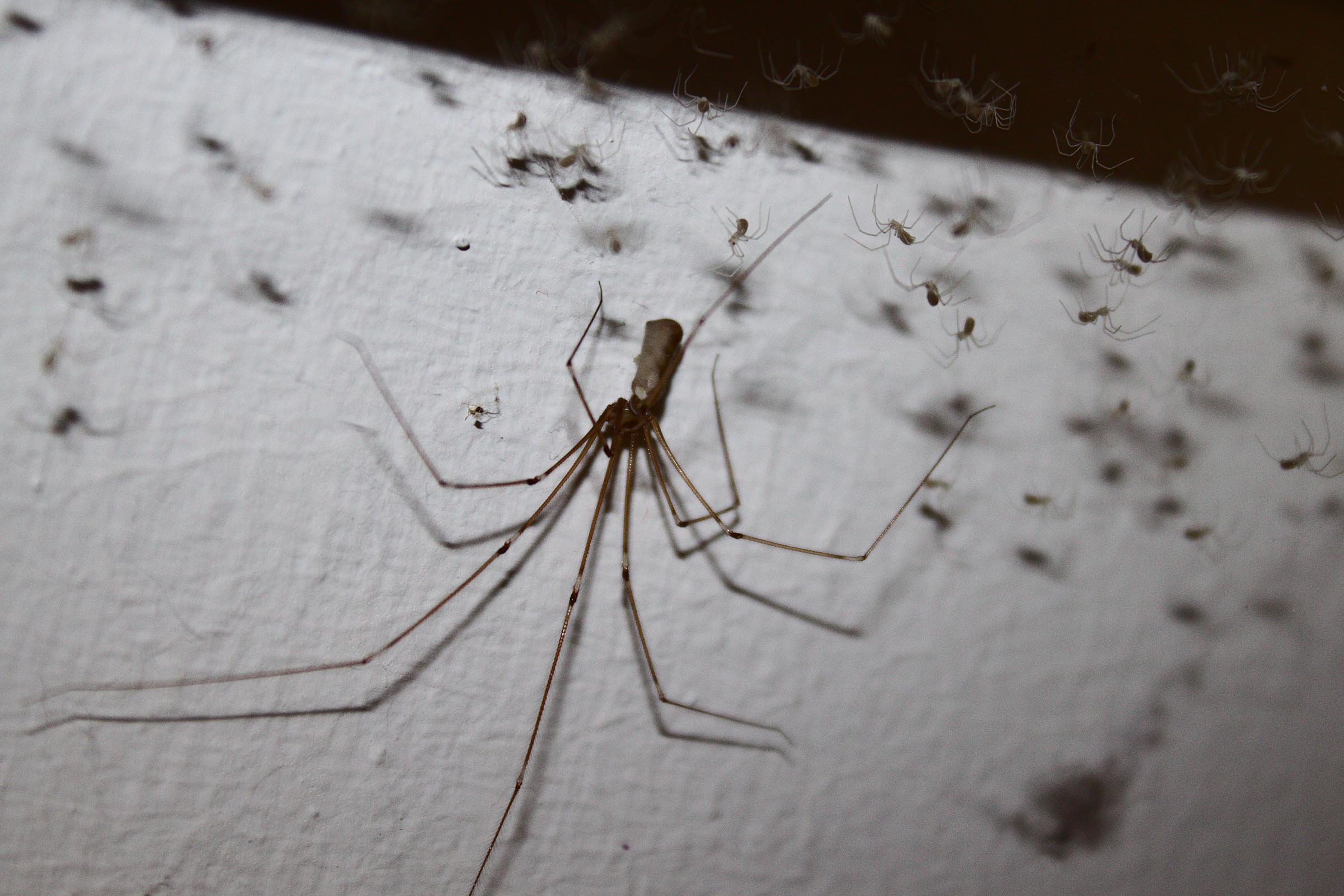
Cellar spiders are not considered dangerous to humans in ordinary household situations. They are true spiders in the family Pholcidae and use venom to subdue small arthropod prey, but being venomous does not automatically make a spider medically significant to people. Bites are possible, yet available evidence indicates that serious effects are not typical. There is also limited species-specific clinical evidence for many cellar spiders.
The short answer: cellar spiders are venomous to their prey, but they are not regarded as medically important spiders. The familiar claim that “daddy longlegs have the strongest spider venom in the world but cannot bite humans because their fangs are too short” is not supported by scientific evidence.
| Question | Evidence-based answer |
|---|---|
| Are cellar spiders dangerous? | No. Common household cellar spiders are not generally regarded as medically significant to humans. |
| Are cellar spiders venomous? | Yes. Pholcid spiders use venom when feeding on arthropod prey. |
| Are cellar spiders poisonous? | “Poisonous” is not the appropriate description. Venom is delivered through a bite; poison is harmful through ingestion or contact. |
| Can a cellar spider bite a human? | At least some pholcid species are physically capable of biting humans, but reported effects are generally minor. |
| Do they have extremely toxic venom? | No evidence supports the popular claim that cellar spiders possess exceptionally dangerous venom for humans. |
What Exactly Is a Cellar Spider?
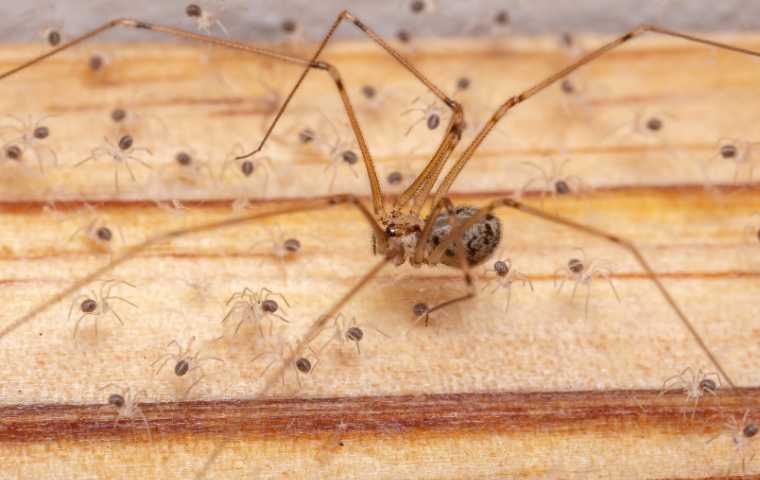
“Cellar spider” does not refer to one species. It is a common name used for spiders in the family Pholcidae, a diverse group containing many genera and species.
One especially familiar indoor species is the long-bodied cellar spider, Pholcus phalangioides. The World Spider Catalog currently recognizes Pholcus phalangioides (Fuesslin, 1775) as the accepted name for this species.
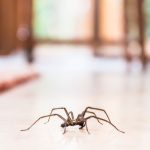
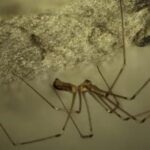
Cellar spiders typically have a small body, unusually long and slender legs, and a loose three-dimensional web. Many are found in sheltered locations such as basements, garages, sheds, ceiling corners and other relatively undisturbed parts of buildings.
Because several pholcids can look similar, a long-legged spider should not automatically be identified as Pholcus phalangioides from a casual photograph. Geographic location, body structure and other characters may be needed for a species-level identification. For a broader comparison, see Spiderpedia’s spider identification guide.
Are Cellar Spiders Venomous?
Yes. Cellar spiders are venomous predators. Their venom is part of their feeding system and helps them subdue arthropod prey. This is very different from saying that their venom is dangerous to humans.
A useful distinction is:
- Venomous: delivers venom through structures such as fangs.
- Poisonous: harmful when eaten, absorbed or otherwise contacted rather than injected through a bite.
- Medically significant: capable of causing clinically important human envenomation.
Cellar spiders fit the first description. Common household pholcids are not generally placed among spiders of medical importance.
Can Cellar Spiders Bite Humans?
A cellar spider bite is physically possible, but this does not mean bites are a meaningful everyday hazard. The claim that pholcid fangs are simply “too short to pierce human skin” is an unreliable explanation for their low medical importance.
The more scientifically defensible conclusion is that available evidence does not show cellar spiders to be an important cause of human envenomation.
A 2019 peer-reviewed venom study examined the pholcid Physocyclus mexicanus. The researchers characterized its venom and found clear activity against arthropod prey. They also reviewed available evidence of mammalian and human effects and concluded that reported human bites caused a mild sting without lasting effects.
An important evidence limitation: Physocyclus mexicanus is not Pholcus phalangioides. Results from one pholcid species should not be treated as proof that every member of Pholcidae has identical venom chemistry or identical bite effects. There is limited species-specific clinical evidence for many cellar spiders.
For the familiar long-bodied cellar spider, Pholcus phalangioides, institutional references including Penn State Extension and the Australian Museum likewise do not regard the species as medically important to people.
Is the “Deadliest Daddy Longlegs Venom” Story True?
No. There is no scientific basis for the claim that cellar spiders have the world’s most powerful spider venom.
The myth usually says that a “daddy longlegs” possesses extraordinarily toxic venom but has fangs too short to penetrate human skin. Both parts are misleading.
First, “daddy longlegs” is an ambiguous common name. It may refer to a cellar spider, a harvestman or, in some regions, a crane fly. These animals are not the same.
Second, experimental research on pholcid venom does not support the idea of extraordinary mammalian toxicity. The University of California, Riverside has also addressed this myth and notes that cellar spiders can bite, while evidence does not show them causing a significant toxic effect in humans.
The fact that some cellar spiders can capture other spiders, including potentially dangerous species, is not evidence that their venom must be more powerful. Pholcids frequently rely on silk, positioning and prey-handling behavior as well as venom.
If the name “daddy longlegs” is causing confusion, compare the two groups in Cellar Spider vs Daddy Long Legs.
Cellar Spider or Harvestman?
Confusing cellar spiders with harvestmen is one reason information about “daddy longlegs venom” becomes so muddled.
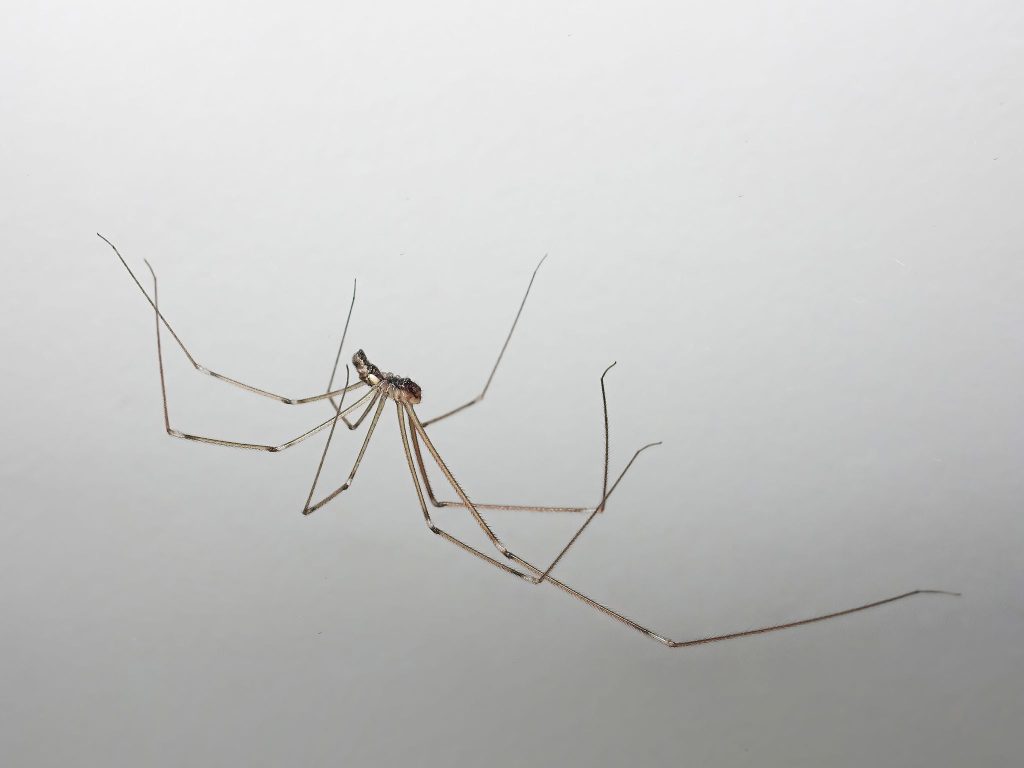
A cellar spider is a true spider in the order Araneae. It has two main body regions, produces silk and possesses venom glands associated with its feeding apparatus.
A harvestman belongs to the order Opiliones. Its body generally appears much more compact or fused, and harvestmen do not have spider venom glands or build prey-catching spider webs.
If the animal is hanging in a loose web in a basement or ceiling corner and has an extremely small body carried on long legs, a cellar spider is a reasonable family-level possibility. For comparisons with other indoor spiders, see common house spiders found indoors.
Why Do Cellar Spiders Live in Houses?
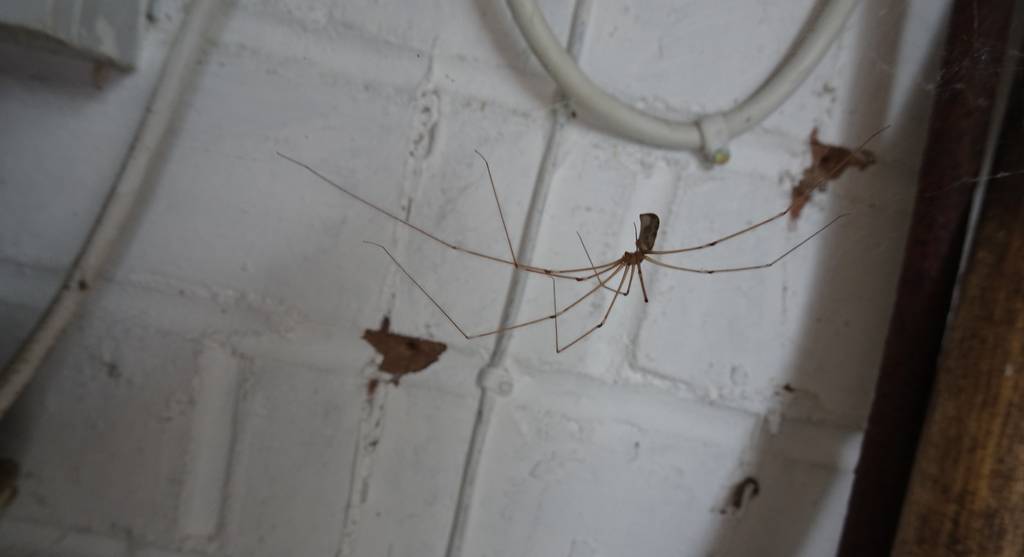
Many cellar spiders do well in protected spaces where they can maintain loose, irregular webs and encounter small arthropod prey. Indoor sites can include basements, crawl spaces, garages, sheds, storage areas and ceiling corners.
The long-bodied cellar spider Pholcus phalangioides is particularly well known for living around buildings. When disturbed, these spiders may vibrate rapidly in their webs, producing a blurred appearance. This defensive behavior is not evidence of aggression toward people.
Cellar spiders feed on insects and other spiders. Research on Pholcus phalangioides has also documented sophisticated predatory behavior involving the capture of other spiders. Their ability to kill another spider does not, however, tell us how dangerous their venom would be to a human.
Should You Remove Cellar Spiders From Your Home?
If you find a single cellar spider, there is usually no safety reason to kill it. Some homeowners tolerate them because they catch small arthropods. Others remove them simply because accumulated webs are unwanted.
If you prefer not to have them indoors, practical measures include:
- remove abandoned webs during routine cleaning;
- reduce populations of insects that provide prey;
- seal obvious gaps around doors, windows and other entry points;
- reduce persistent dampness and clutter in sheltered areas;
- relocate an individual spider with a container rather than handling it directly.
Seeing a cellar spider indoors also does not mean every long-legged spider in the building is the same species. If identification matters, use several features rather than color or leg length alone. Spiderpedia’s guide to whether common house spiders are dangerous provides additional household safety context.
What Should You Do After a Suspected Spider Bite?
Because cellar spider bites are poorly documented at species level, it is better not to diagnose an unexplained skin lesion as a “cellar spider bite” unless the spider was actually observed and reliably identified.
For a minor suspected insect or spider bite, Poison Control recommends washing the area with soap and water and using a cold compress for local discomfort or swelling.
Seek medical advice if pain or swelling becomes severe or continues to worsen, if redness spreads substantially, if systemic symptoms develop, or if the identity of the animal is uncertain. Difficulty breathing or other signs of a serious allergic reaction require urgent medical attention.
Frequently Asked Questions
Are cellar spiders poisonous?
No. “Poisonous” is not the appropriate biological term for the way cellar spiders subdue prey. They are venomous because they deliver venom through their feeding apparatus, but they are not considered medically significant household spiders.
Can cellar spiders actually bite people?
Yes, at least some pholcid spiders are capable of piercing human skin. However, available evidence indicates that bites are uncommon and serious human effects are not typical. Clinical data remain limited for many individual species.
Are cellar spiders the most venomous spiders in the world?
No. Scientific research does not support that claim. It is a long-running myth associated with the ambiguous name “daddy longlegs.”
Is Pholcus phalangioides the only cellar spider?
No. Pholcus phalangioides is one well-known long-bodied cellar spider, but “cellar spider” refers broadly to members of the family Pholcidae, which contains many species.
Should I worry if cellar spiders are living in my basement?
Usually not from a human-health perspective. They are generally low-risk indoor spiders. If their webs become a nuisance, regular cleaning, reducing insect prey and sealing entry points can help.
Bottom Line
Cellar spiders are venomous predators, but they are not considered dangerous spiders for people. The evidence does not support the claim that they possess extraordinarily lethal venom or that humans are protected only because their fangs are too short.
Some pholcids can bite, but available reports indicate minor effects rather than medically important envenomation. Because Pholcidae is a large family, the strongest wording is also the most scientifically accurate: there is limited species-specific clinical evidence for many cellar spiders, and research on one pholcid species should not automatically be applied to every other species in the family.
Scientific Sources
- World Spider Catalog — Pholcus phalangioides (Fuesslin, 1775)
- Zobel-Thropp, P. A. et al. (2019). Not so Dangerous After All? Venom Composition and Potency of the Pholcid (Daddy Long-Leg) Spider Physocyclus mexicanus. Frontiers in Ecology and Evolution, 7:256.
- Australian Museum — Daddy-long-legs Spider, Pholcus phalangioides
- Penn State Extension — Longbodied Cellar Spider
- University of California, Riverside — Are daddy longlegs really the most venomous spiders in the world?
- Poison Control — Insect and Spider Bites: When to Worry