The Intricacies of Cellar Spiders
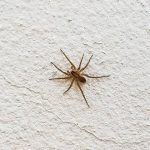
Cellar spiders, scientifically identified as Pholcidae, are commonly misidentified as “daddy long-legs” due to their thin, elongated legs. These creatures are a prime example of the gap between public perception and scientific understanding. They are often associated with deadly venoms due to urban myths, despite no scientific evidence supporting this. This article delves into the intriguing world of cellar spiders, their characteristics, habitat, diet, and their harmless relationship with humans.
Are cellar spiders harmful?
Are cellar spiders dangerous? Cellars are harmless spiders that appear on every continent except for Antarctica and are commonly mistaken for daddy longlegs because of their leg length.
Almost all spiders that are native to North America are venomous. That doesn’t necessarily make them dangerous, though. While many spiders bite their prey to inject it with venom, the cellar spider doesn’t. Even though it has fangs and venom glands, its fangs are quite short. Its venom is also weak, so the cellar spider has to depend on its silk web to immobilize any prey that comes near its web.
There’s a myth floating around out there that cellar spiders have the most poisonous venom out of all spiders and that only their short fangs keep them from being a threat to humans. However, there’s no research out there to prove this to be true. In reality, most spiders don’t bite humans unless they feel threatened to do so. 98% of spiders are harmless and don’t pose any threat to people. Even though a spider bite can be painful or uncomfortable, the venom is the dangerous part, not the bite itself.
Anatomy of Cellar Spiders
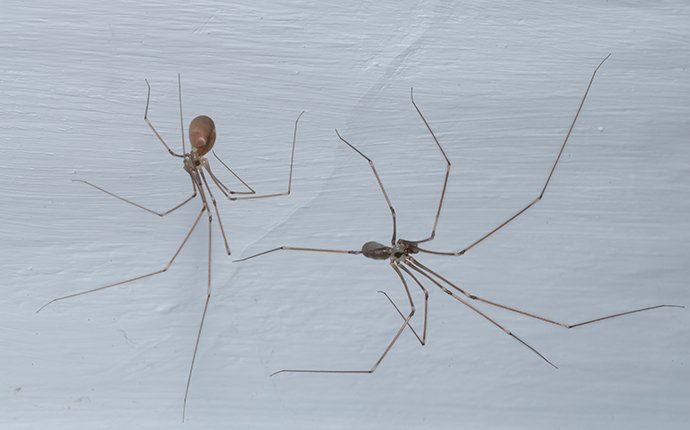
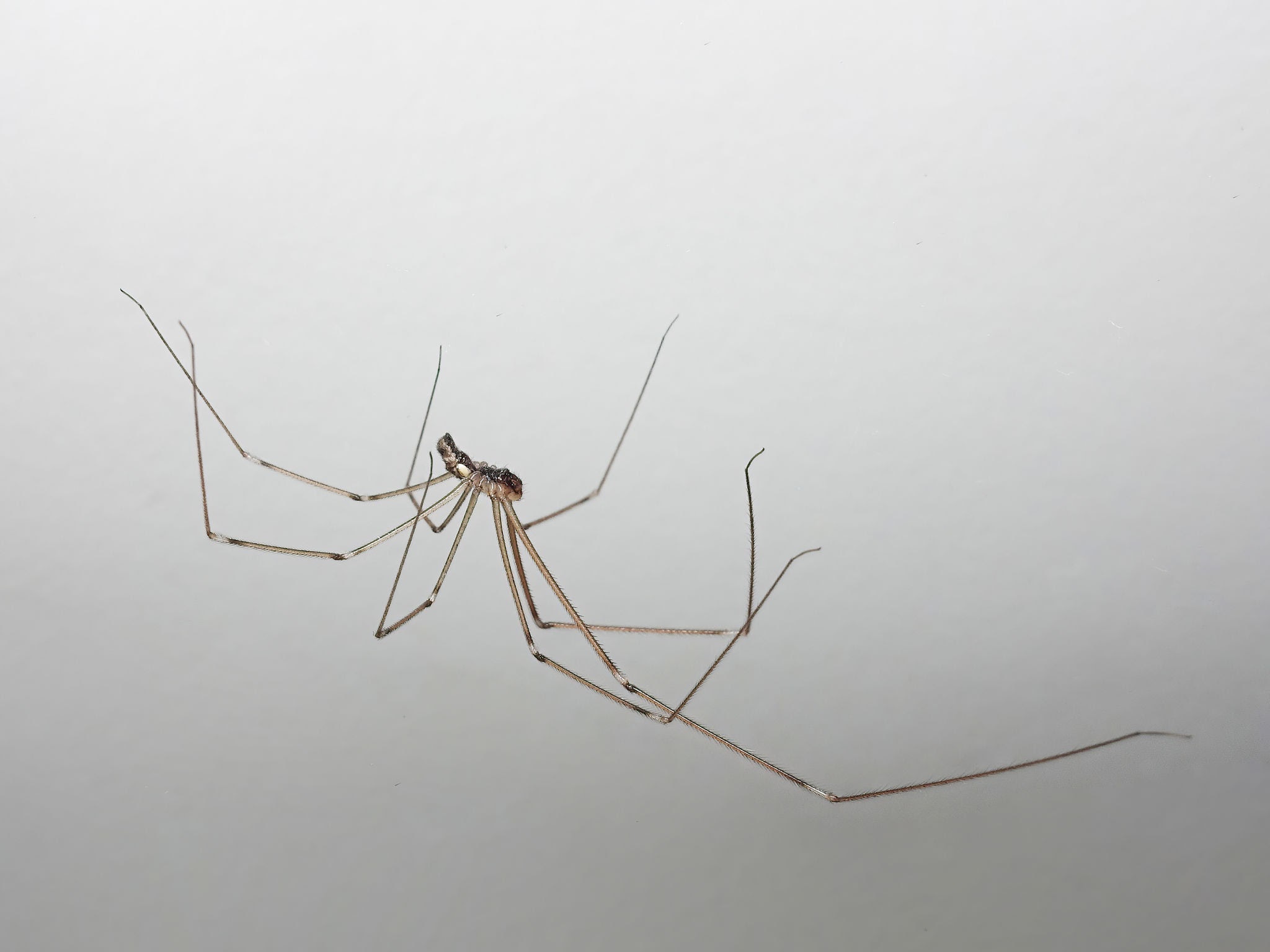
Cellar spiders exhibit unique physical characteristics that set them apart from other spiders. Their bodies are typically small to medium-sized, with lengths ranging from 2 to 10 millimeters. Their most distinguishing feature is their long, thin legs, which can span several inches. These spiders are also characterized by their slender, elongated bodies, which often appear cylindrical or pear-shaped. Their color varies from pale yellow to light brown or gray.
Head and Body
Cellar spiders, like all arachnids, have two body segments – the cephalothorax in the front and the abdomen in the back. Their cephalothorax is narrower, while the abdomen is typically more rounded. At the rear of their abdomen are small, noticeable spinnerets that produce silk for constructing webs.
Legs
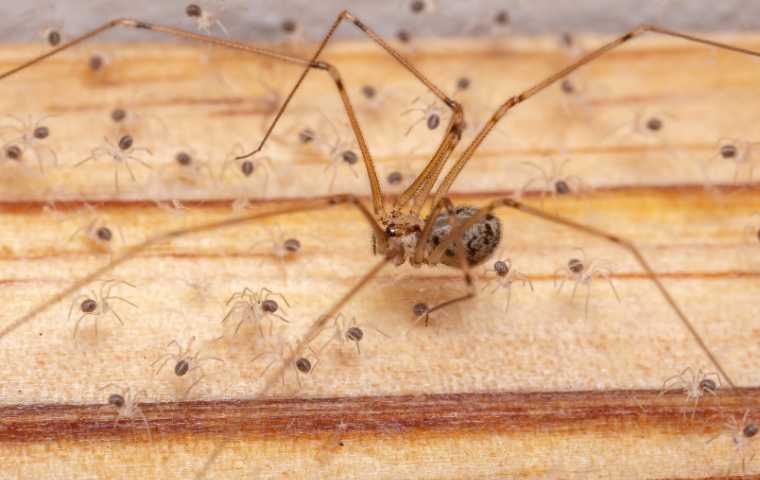
The legs of cellar spiders are particularly long and thin, giving them their typical “daddy longlegs” appearance. The legs of long-bodied cellar spiders can be up to two inches long. Short-bodied cellar spiders, on the other hand, have legs that are about ½ inch long. Due to their long legs, cellar spiders are often mistaken for harvestmen, another type of arachnid that also has long legs but is not technically a spider.
Eyes
Cellar spiders possess eight eyes, arranged in two lateral groups of three eyes each, with two eyes in between. This eye arrangement gives them a wide field of vision, enabling them to detect and respond to threats from various angles.
Habitats of Cellar Spiders
Cellar spiders are known to inhabit a variety of environments, with a preference for dark, sheltered areas. Their name “cellar spiders” stems from their common presence in dark, damp, and secluded areas such as basements, caves, and cellars. They can also be found in other structures like homes, sheds, barns, and warehouses.
Indoor Habitats
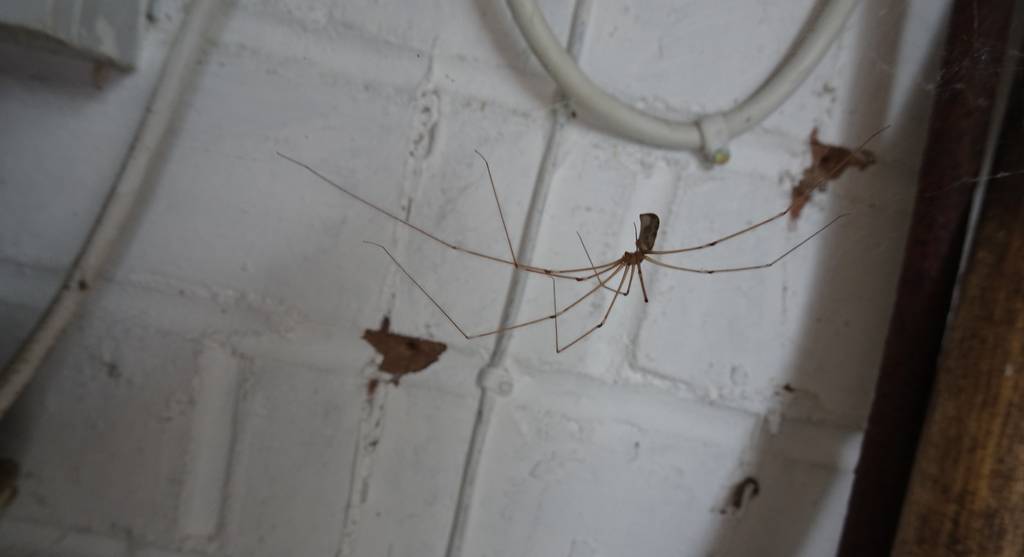
Within buildings, cellar spiders tend to spin their webs in dark corners near ceilings, windows, doors, and eaves. They also prefer damp places like basements, crawl spaces, and garages. In commercial buildings, cellar spiders often spin webs in corners near doors that are frequently left open.
Outdoor Habitats
While less common, cellar spiders can also be found outdoors, spinning their webs among vegetation such as bushes, shrubs, and other plants. They may construct their webs among leaves and branches, capturing flying insects that venture too close.
Diet of Cellar Spiders
Cellar spiders are opportunistic predators. They primarily feed on a variety of small insects and other arthropods, making them beneficial for controlling pest populations. Their diet is diverse and includes the following:
Preying on Flying Insects
Cellar spiders are adept at capturing flying insects that become entangled in their webs. This includes mosquitoes, flies, moths, and other small flying insects.
Hunting Crawling Insects
In addition to flying insects, cellar spiders also capture crawling insects that come into contact with their webs. This can include ants, beetles, small roaches, and even other small spiders.
Consuming Other Spiders
An interesting aspect of the cellar spider’s diet is their tendency to feed on other spiders. Despite their delicate appearance, cellar spiders are not afraid to prey on spiders that are much larger than they are.
Are Cellar Spiders Dangerous to Humans?
Contrary to popular belief, cellar spiders are not venomous or harmful to humans. They are not known to bite humans and do not pose a health threat. Their bites are harmless to humans, and their webs, while sometimes unsightly, pose no danger.
Myth of Deadly Venom
Despite the lack of scientific evidence, there exists an urban myth that the venom of cellar spiders is one of the most dangerous among all spiders. This myth, however, is unfounded. While cellar spiders do have venom glands, their fangs are too short to deliver venom effectively. Furthermore, their venom is weak, making their bites harmless to humans.
Role in Pest Control
While they may be viewed as pests themselves due to their web-spinning habits, cellar spiders play a crucial role in natural pest control. By preying on small insects, they help to control insect populations in and around homes.
Life Cycle of Cellar Spiders
The life cycle of cellar spiders involves several stages including egg-laying, hatching, maturation, and reproduction.
Egg Laying
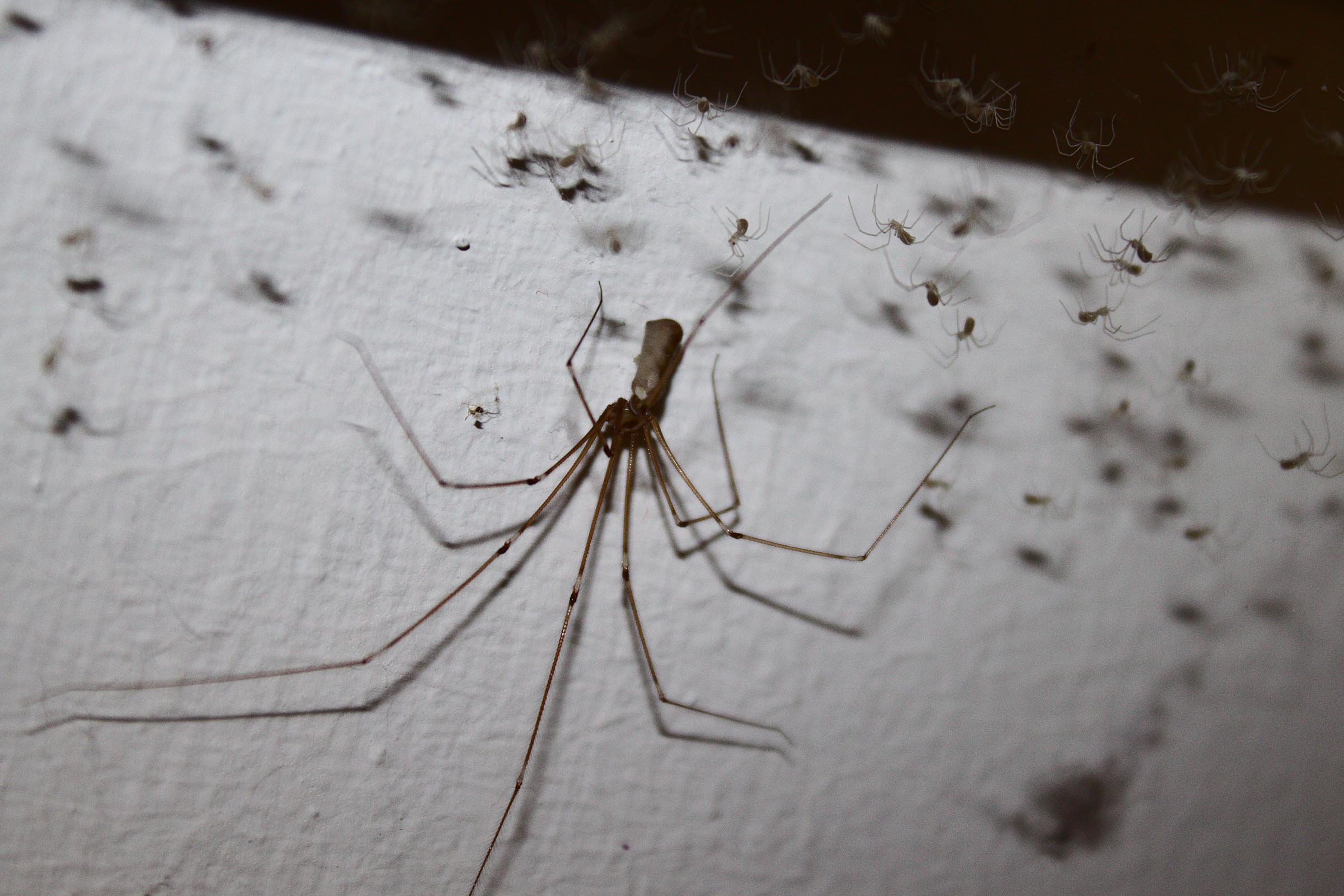
The life cycle begins when female cellar spiders lay eggs. They construct a silken egg sac, which can contain anywhere from a few dozen to several hundred eggs, depending on the species.
Incubation
During the incubation period, which can last a few weeks, the female spider guards the egg sac, keeping it safe from potential threats.
Hatching
When the time is right, the spiderlings (baby spiders) hatch from the eggs. They are initially tiny and pale in color. They typically remain close to the egg sac and start to disperse once they are a bit more developed.
Maturation and Reproduction
As the spiderlings continue to grow and mature, they eventually reach the adult stage. Once mature, they are capable of reproducing and start the cycle anew.
Preventing Cellar Spiders
Even though cellar spiders are harmless and even beneficial, not everyone may want them around. To prevent cellar spiders from infesting your home, follow these tips:
- Seal cracks around your home with a silicone-based caulk.
- Use yellow light bulbs for exterior lighting to reduce the number of spiders and insects attracted to your home.
- Use a dehumidifier in damp areas of your home to reduce the number of insects and spiders.
- Store firewood at least 20 feet away from the home to deter spiders from hiding in the wood.
- Keep clothes and shoes from piling up on the floor and shake them out before wearing them.
- Use tightly sealed plastic boxes to store seldom-used items in the basement or other dark areas.
Cellar spiders, despite their reputation, are harmless creatures that contribute to controlling insect populations in and around homes. Their venom is not harmful to humans, and their bites are rare and non-threatening. Understanding the biology and habits of these spiders can help us appreciate their role in our homes and the ecosystem at large.