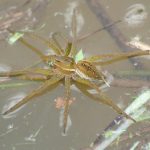
Fishing spiders are venomous, but they are not considered dangerous to most people. They can bite if they are trapped or handled, yet bites are uncommon and usually cause only mild, short-term symptoms. For most readers, the practical answer is simple: fishing spiders may look intimidating, but they are not a major medical risk.
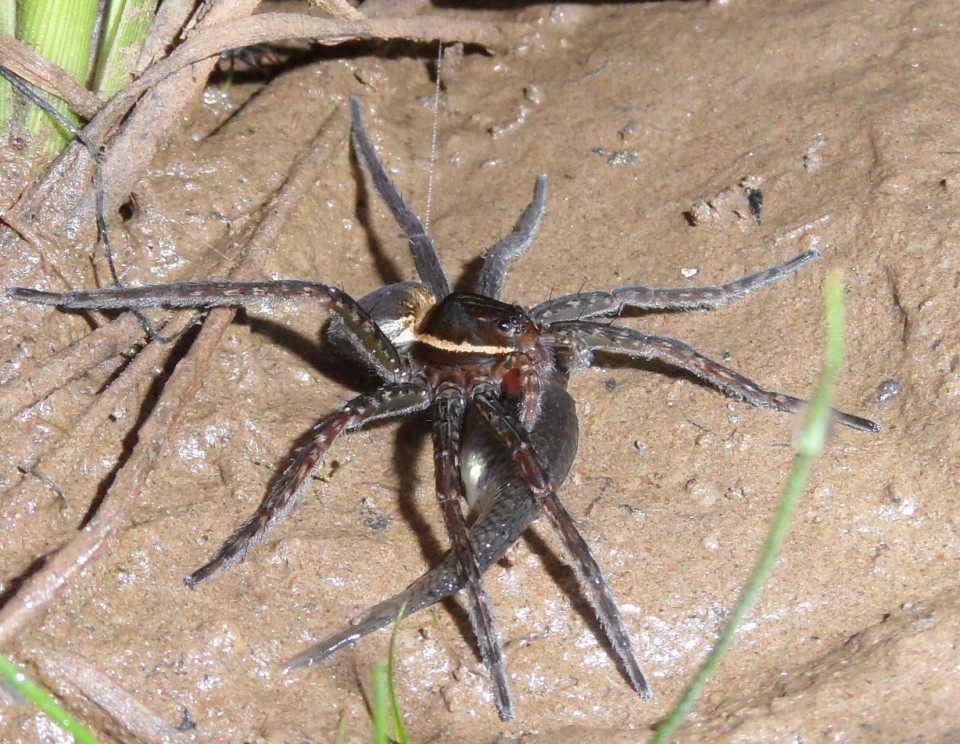
Fishing spiders belong to the genus Dolomedes. They are large, fast-moving spiders often found near ponds, streams, lakes, docks, pools, and damp wooded areas. Some species stay close to water, while others, such as the dark fishing spider, may also turn up on tree trunks, sheds, garages, basements, or inside homes near forests.
Are they dangerous?
In most cases, no. Fishing spiders are not considered dangerous to humans, even though they are venomous.
That distinction matters:
- Venomous means the spider uses venom to subdue prey.
- Dangerous means it poses a serious threat to people.
- Medically significant means its bite is known to cause important health problems that may require medical treatment.
- Harmless is a general word people use for animals that are not likely to hurt us, though a “harmless” spider may still bite in self-defense.
Fishing spiders are venomous because they use venom to catch insects and other prey. But their venom is not considered medically significant to most people. In practical terms, that means a bite may be unpleasant, but it is not usually serious.
They are also not poisonous. “Poisonous” means harmful if touched or eaten, which is not the right term here.
Can they bite humans?
Yes, fishing spiders can bite humans, but they usually do so only when they feel directly threatened.
A fishing spider is much more likely to run away than bite. Most bites happen when the spider is:
- trapped in clothing or bedding
- pressed against skin
- picked up by hand
- accidentally stepped on or sat on
Simply seeing one on a wall, dock, or near water does not mean it is likely to bite. These spiders are shy, fast, and generally avoid contact with people.
What happens if they bite?
For most people, a fishing spider bite causes mild, local symptoms. The bite is often compared to a bee sting or wasp sting.
Possible symptoms include:
- brief sharp pain
- redness
- mild swelling
- itching or irritation
These symptoms usually stay limited to the bite area and improve with basic first aid.
Wash the area with soap and water, apply a cool compress, and monitor symptoms. Avoid scratching, and seek medical advice if the reaction seems unusual or gets worse instead of better.
When should you worry?
Most fishing spider bites do not require emergency care. Still, you should pay closer attention if:
- pain or swelling becomes severe
- redness continues to spread
- the bite area shows signs of infection
- you develop dizziness, trouble breathing, or facial swelling
- you have a known allergy to insect or spider bites
- the person bitten is a young child, older adult, or someone with a weakened immune system
The main concern is usually an allergic reaction or secondary infection, not the spider’s venom itself.
If you did not see the spider clearly and symptoms are strong or unusual, it is also reasonable to contact a doctor or local medical service for advice.
Why do fishing spiders look so alarming?
Fishing spiders are among the larger spiders many people encounter, and size alone often makes them seem more dangerous than they really are. They are long-legged, quick, and sometimes found in places people do not expect, including boathouses, garages, basements, and bathrooms.
Their appearance can be startling, but appearance is not the same as risk.
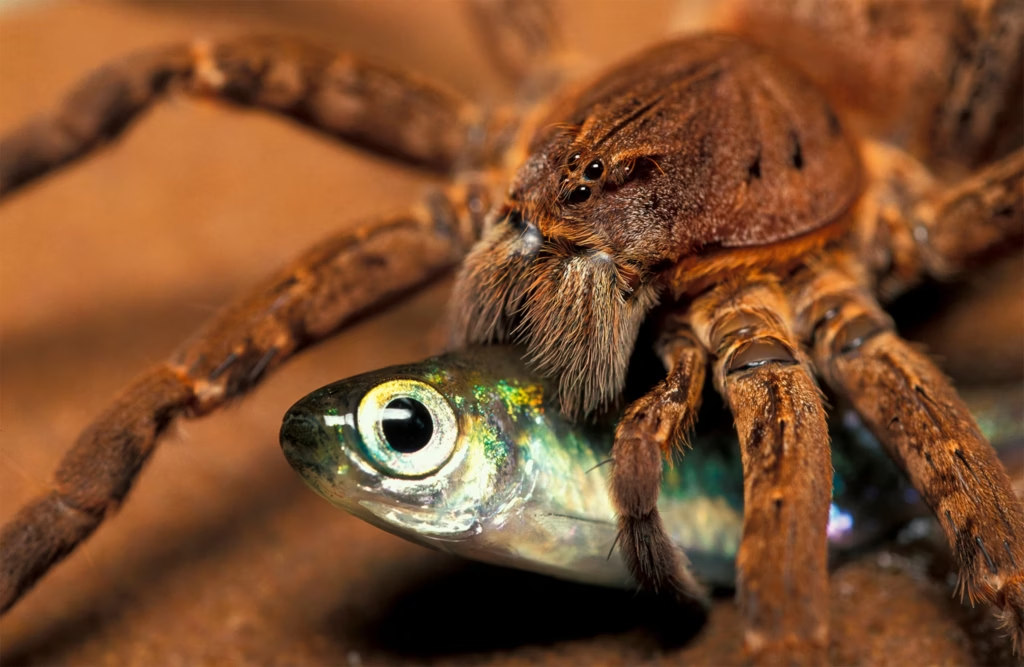
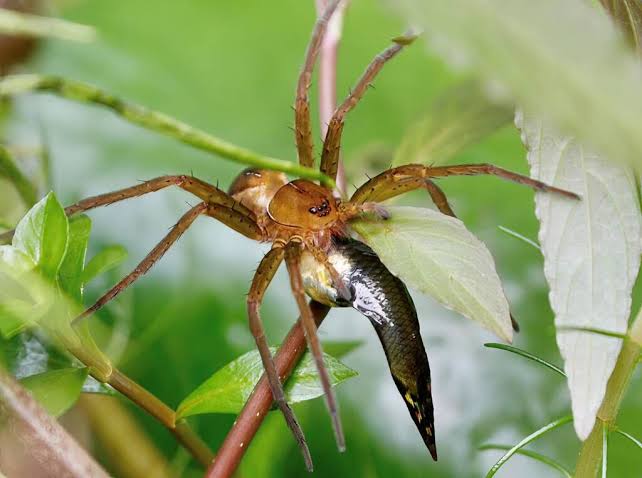
These spiders are active hunters rather than classic web-builders. Some species wait at the water’s edge, detect vibrations, and dash across the surface to catch insects, tadpoles, or even small fish. That behavior is impressive, but it does not make them aggressive toward humans.
Where are fishing spiders usually found?
Fishing spiders are most often found:
- near ponds, lakes, marshes, streams, and rivers
- around docks, boathouses, and pool areas
- in damp vegetation, under rocks, and under loose bark
- in garages, sheds, crawl spaces, and basements near wooded or wet areas
If one enters a home, it is usually there by accident or because the space offers shelter and insects to eat.
How can you reduce encounters safely?
You usually do not need to worry about a single fishing spider. If you want fewer encounters around the home, practical steps include:
- sealing cracks and gaps around doors and windows
- repairing window screens
- reducing clutter in garages and basements
- moving woodpiles away from the house
- limiting standing water where possible
- wearing gloves when handling outdoor items stored in damp places
If you need to move a spider, use a cup and stiff paper rather than your hands.
Final answer
Fishing spiders are venomous but not dangerous to most people. They can bite, but bites are rare, usually happen only when the spider is trapped or handled, and are not considered medically significant in most cases. For most readers, the real risk is low, and the best response is calm avoidance rather than fear.
5. 5 FAQ questions and answers
FAQ 1: Are fishing spiders poisonous or venomous?
Fishing spiders are venomous, not poisonous. They use venom to subdue prey, but they are not considered poisonous to touch.
FAQ 2: Is a fishing spider bite dangerous?
Usually no. A fishing spider bite is typically mild and causes short-term pain, redness, or swelling rather than serious medical problems.
FAQ 3: Do fishing spiders bite often?
No. Bites are uncommon because fishing spiders usually try to escape instead of defend themselves. Most bites happen when the spider is accidentally trapped against skin.
FAQ 4: Should I kill a fishing spider in my house?
There is usually no need. If possible, move it outside with a container and paper. Fishing spiders are not aggressive and can help reduce insect populations.
FAQ 5: When should I see a doctor after a fishing spider bite?
Seek medical advice if symptoms become severe, redness keeps spreading, the area looks infected, or you develop signs of an allergic reaction such as trouble breathing or facial swelling.