Quick answer
The giant house spider is a fast-moving, long-legged brown spider commonly found in buildings and sheltered spaces. It builds a sheet web with a funnel retreat, usually avoids people, and is not considered dangerous to humans.
Overview
The giant house spider is a member of the funnel-weaver family and is best known for its large size, quick movements, and habit of turning up inside homes. It is often seen near floors, in basements, garages, sheds, and other quiet places where insects are available.
Many people notice this spider in autumn, when wandering males leave their webs to search for females. That seasonal movement is one reason giant house spiders suddenly seem to appear indoors.
Although the name sounds alarming, this is not an aggressive spider. In most cases, it runs away when disturbed and spends its time waiting in its web for prey.
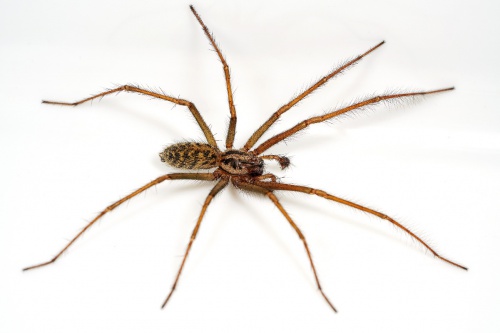
The giant house spider is a large funnel-weaving spider often found in dark corners of homes, garages, and basements. It matters because it is one of the spiders people most often notice indoors, especially in late summer and autumn, yet it is generally harmless and helps reduce insect pests.
Identification
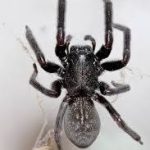
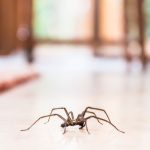
Giant house spiders are usually brown to gray-brown and have a hairy, non-shiny appearance. Adults can look quite large because of their long legs, with a leg span that may reach around 3 to 4 inches in larger individuals.
Body length is much smaller than the leg span. Females are typically larger-bodied than males, while males often look leggier and more mobile.
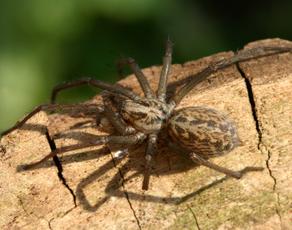
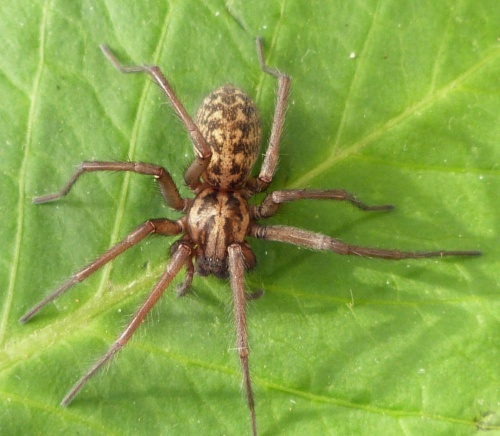
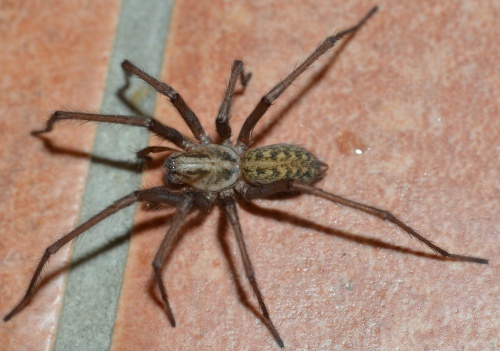
Color and markings can vary a lot, so they are not always reliable for identification. Some individuals look darker, some lighter, and the body pattern may appear faint or fairly clear depending on the spider.
A more useful set of clues includes:
- Long legs
- Hairy brown body
- Fast running speed
- Funnel-shaped web retreat
- Preference for dark indoor corners
They are often confused with other house spiders, especially hobo spiders. In practice, closely related house spiders can be difficult to separate by appearance alone.
Habitat
Giant house spiders prefer dark, sheltered places where they can build webs and remain undisturbed. Indoors, they are commonly found in:
- Basements
- Garages
- Attics
- Behind furniture
- Around fireplaces
- In corners near the floor
- Sinks or bathtubs where they become trapped
Outdoors, they may live in sheds, woodpiles, gaps between stones or bricks, and other protected spaces.
They are well adapted to living around buildings, but they can also be brought indoors accidentally in boxes, firewood, or stored items.
Behavior
This spider is mainly nocturnal, so it is most active at night. During the day, it usually stays hidden in or near its funnel retreat.
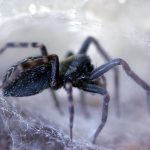
The web is one of its most recognizable features. Giant house spiders build a flat sheet of silk leading into a funnel-like hole. The spider waits in the funnel and rushes out when it senses prey caught on the web.
Males are especially noticeable in late summer and autumn because they roam in search of females. This wandering behavior explains why people often see them crossing floors or appearing in bathtubs during that time of year.
Despite their speed, giant house spiders are not aggressive. Their first response is usually to flee.
Diet
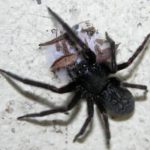
Giant house spiders feed mainly on insects and other small invertebrates they catch in their web. They help control common household pests by preying on whatever small animals become trapped in the silk.
Because they are predators, they can be beneficial in and around homes, even if their size makes them unwelcome guests.
Are they dangerous?
For most people, giant house spiders are not dangerous.
They do have venom, like nearly all spiders that hunt prey, but it is used to subdue small insects rather than to harm humans. Bites are uncommon and usually happen only if the spider is trapped or handled.
A bite, when it occurs, is generally described as mild rather than medically serious. The larger issue is usually anxiety caused by the spider’s size and sudden speed, not any real medical danger.
If someone is bitten and develops unusual symptoms, medical advice is sensible. If possible, correct identification of the spider is also helpful.
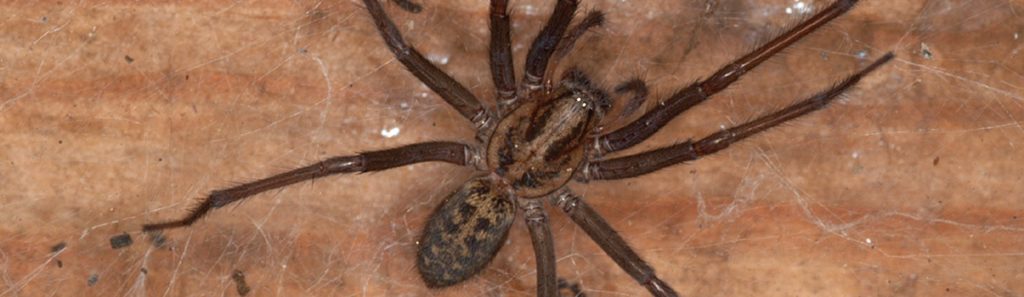
Key facts
The giant house spider is often described as one of the faster-running spiders people encounter indoors. It is also one of the most familiar large house spiders in cooler regions.
Females can live for years, while males are more often noticed during their wandering season. The species is strongly associated with funnel webs, low indoor surfaces, and dark sheltered spaces.
The main reason people mistake it for something more dangerous is its appearance. In reality, it is a shy predator that spends most of its life hiding and catching insects.
6. Quick facts box
Common name: Giant house spider
Scientific name: Often referred to as Eratigena atrica in older general guides
Family: Agelenidae
Type: Funnel-weaving spider
Body length: Usually around 12 to 18 mm in adults
Leg span: Can reach about 3 to 4 inches in large individuals
Color: Brown to gray-brown
Web type: Sheet web with a funnel retreat
Active season: Most noticeable in late summer and autumn
Behavior: Fast, shy, mainly nocturnal
Diet: Insects and other small invertebrates
Danger to humans: Low; bites are rare and usually mild