
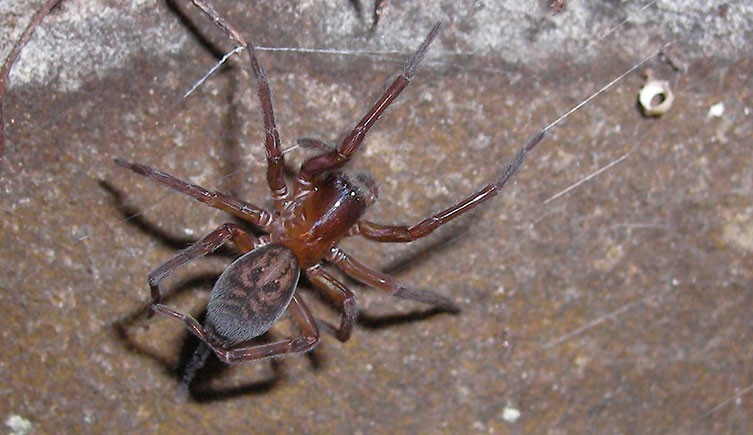
Lace web spiders are not considered dangerous to humans, and they are not medically significant spiders. While they are technically venomous like most spiders, their venom is used to subdue prey, not to cause serious harm to people, and bites are uncommon.
These spiders are often found around walls, fences, window frames, sheds, and gardens, especially in the UK. Because they can look a little like false widows, people sometimes worry when they see them indoors. In reality, lace web spiders are generally low-risk and best left alone.
Are they dangerous?
For most people, no. Lace web spiders are not dangerous in the way people usually mean when asking about risky spiders.
It helps to separate a few terms:
- Venomous means an animal uses venom to subdue prey or defend itself. Lace web spiders are venomous in this technical sense.
- Dangerous means likely to cause serious harm. Lace web spiders are not generally dangerous to humans.
- Medically significant means a bite is known to cause symptoms serious enough to regularly need medical treatment. Lace web spiders are not considered medically significant.
- Harmless is often used in everyday language to mean “not a real threat.” In practical terms, lace web spiders are usually harmless to most people, even though they can bite if forced into contact.
So the balanced answer is this: lace web spiders do have venom, but they are not regarded as a serious risk to people.
Can they bite humans?
Yes, they can bite humans, but they usually do so only if they are trapped against the skin or handled roughly.
Like most spiders, lace web spiders do not go out of their way to bite people. They are shy, defensive animals that mainly want to stay hidden in crevices, bark, walls, or their silk retreats. Most encounters end with the spider running away rather than biting.
You are more likely to see one in autumn, when males wander in search of females, or after heavy rain when spiders are displaced from their usual hiding places.
What happens if they bite?
In most cases, a lace web spider bite is likely to cause minor, local symptoms, if any symptoms occur at all.
Possible effects may include:
- brief pain or a sharp pinprick sensation
- mild redness
- slight swelling
- temporary irritation around the bite area
For most healthy adults, symptoms should stay limited and settle on their own. A bite from a lace web spider is not the same as a bite from a medically significant spider.
It is also worth noting that many skin irritations blamed on spiders are never actually confirmed as spider bites. Unless someone sees the spider bite them, it can be difficult to know what caused the mark.
When should you worry?
Although lace web spiders are low-risk, it is sensible to monitor any bite or skin reaction.
You should pay more attention if:
- pain becomes severe or keeps getting worse
- swelling spreads significantly
- the area shows signs of infection, such as increasing warmth, pus, or worsening redness
- you feel unwell in a more general way
- the person bitten is a young child, elderly, or has a known allergy history
In most cases, simple first aid is enough: wash the area with soap and water, apply a cold compress if needed, and avoid scratching.
If symptoms seem unusual, severe, or do not improve, it is reasonable to seek medical advice. That is a general precaution for any bite or sting, not a sign that lace web spiders are especially dangerous.
Where are lace web spiders usually found?
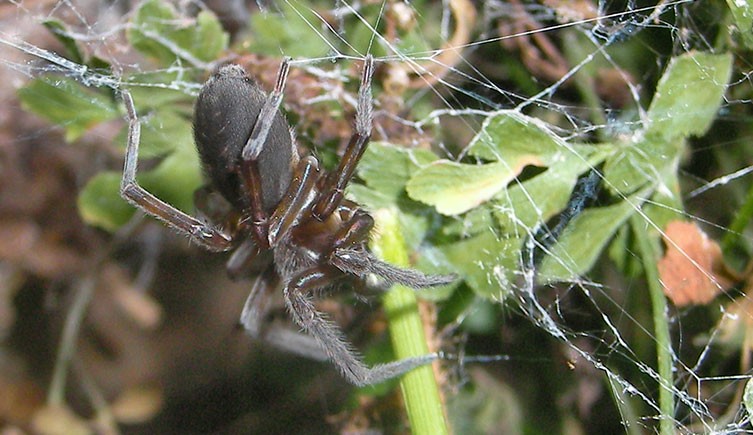
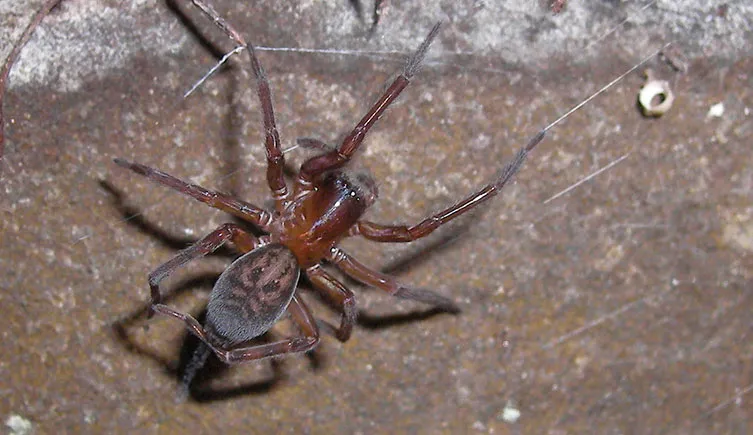
Lace web spiders in the genus Amaurobius are common around buildings, gardens, walls, fences, logs, stones, bark, and window frames. They build messy-looking woolly webs with a tubular retreat where they hide.
In Britain, the three species people most often refer to are:
- Amaurobius similis
- Amaurobius fenestralis
- Amaurobius ferox
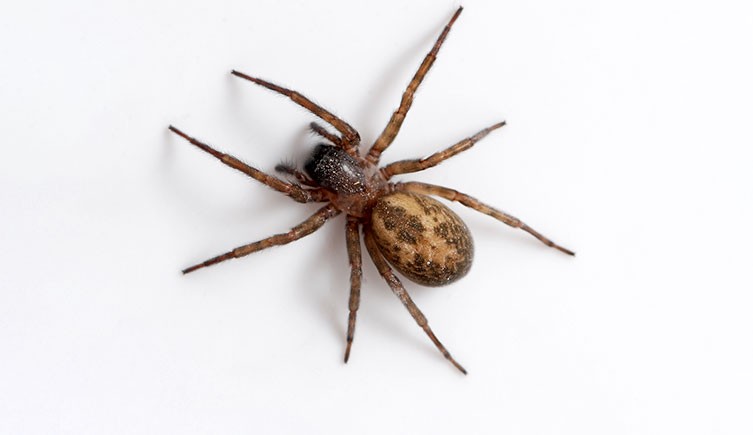
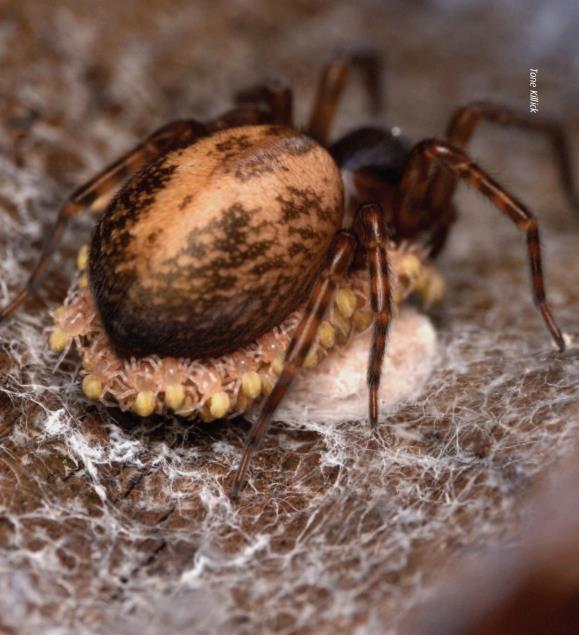
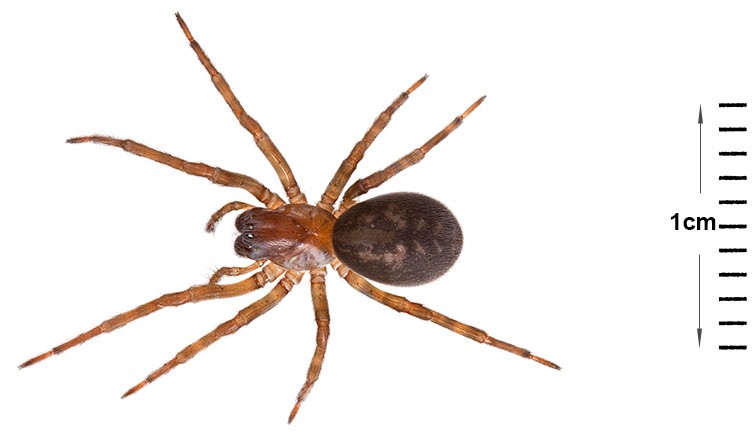
They are usually brown to dark brown, sometimes with pale or yellowish markings on the abdomen. Adults are medium-sized spiders, typically around 5 to 15 mm in body length, though their leg span makes them appear larger.
Why do people confuse them with dangerous spiders?
Lace web spiders are sometimes mistaken for false widows because both can appear dark-bodied and are often found on buildings or around homes.
That resemblance causes unnecessary concern. But appearance alone does not tell you how risky a spider is. Lace web spiders may look dramatic up close, yet their real-world risk to humans is low.
Final answer
Lace web spiders are not dangerous to humans, and they are not considered medically significant. They are technically venomous, but their bites are uncommon and usually cause only mild, short-lived local symptoms.
If you find one in your home or garden, there is usually no need to panic. The safest approach is simply to leave it alone or guide it outside gently if needed.
5. 5 FAQ questions and answers
FAQ 1: Is a lace web spider poisonous?
No. Lace web spiders are not poisonous. They are venomous, which means they use venom to catch prey through a bite. That does not mean they are dangerous to people.
FAQ 2: Are lace web spiders dangerous to humans?
No, lace web spiders are not generally dangerous to humans. They are not considered medically significant, and the overall risk from them is low.
FAQ 3: Can a lace web spider bite you?
Yes, it can bite if it is trapped against the skin or handled. However, bites are uncommon because these spiders usually prefer to hide or escape.
FAQ 4: What does a lace web spider bite feel like?
A bite may feel like a small pinprick and can cause mild redness, swelling, or irritation. For most people, symptoms are minor and temporary.
FAQ 5: Should I remove a lace web spider from my house?
You do not usually need to remove it urgently. If you want it gone, the best option is to gently catch it with a glass and card and move it outside, rather than handling it directly.