Mimetidae identification and bite risk
Are Pirate Spiders Dangerous to Humans?
Pirate spiders belong to the family Mimetidae and are best known for feeding on other spiders. They possess venom for subduing prey, but no pirate spider species is generally recognized as medically significant to humans. Available human-bite information is limited, so they are better described as a low-concern spider family rather than as completely harmless.
Direct answer: Pirate spiders are venomous because they use venom when capturing prey, especially other spiders. However, “venomous” does not automatically mean dangerous to people. Mimetidae are not recognized as a medically important human-bite group, and there is too little verified bite information to assign them a standard set of symptoms or make absolute claims about how often bites occur. [7]
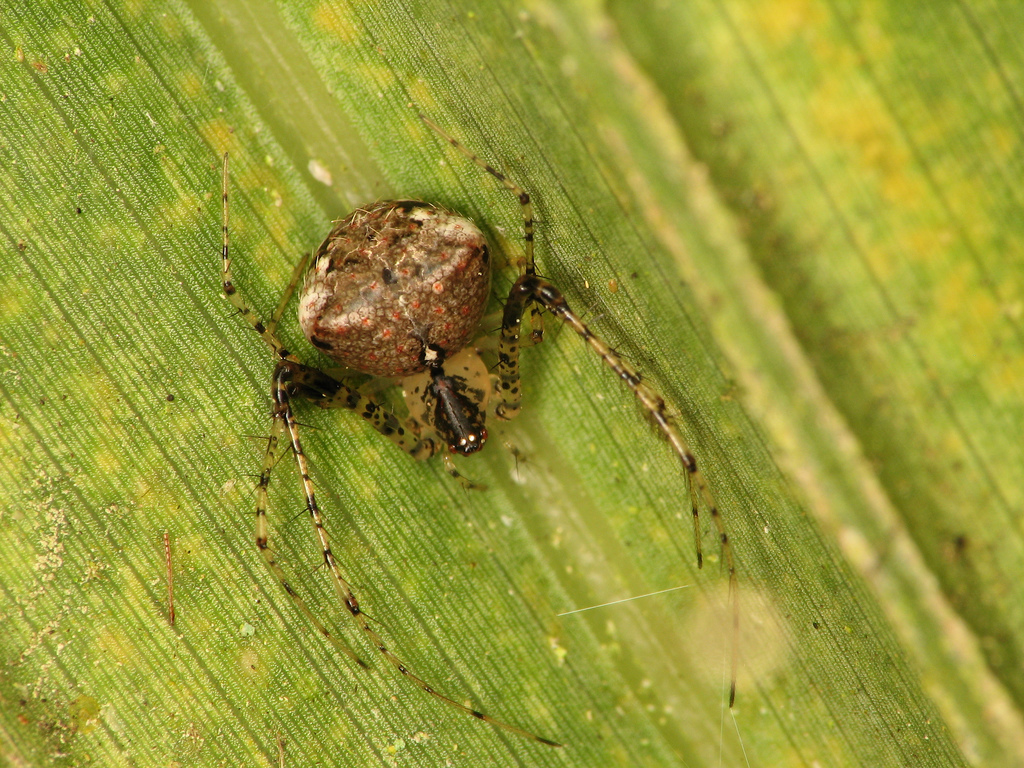
Pirate Spider Quick Facts
| Scientific family | Mimetidae Simon, 1881, an accepted spider family in the current World Spider Catalog. [1] |
|---|---|
| Common name | Pirate spiders, sometimes called spider-eating spiders. |
| Main feeding tendency | Araneophagy: predation on other spiders. Diet is not necessarily limited to spiders in every species. |
| Typical hunting behavior | Some studied species enter another spider’s web and produce deceptive vibrations, but hunting behavior varies across the family. |
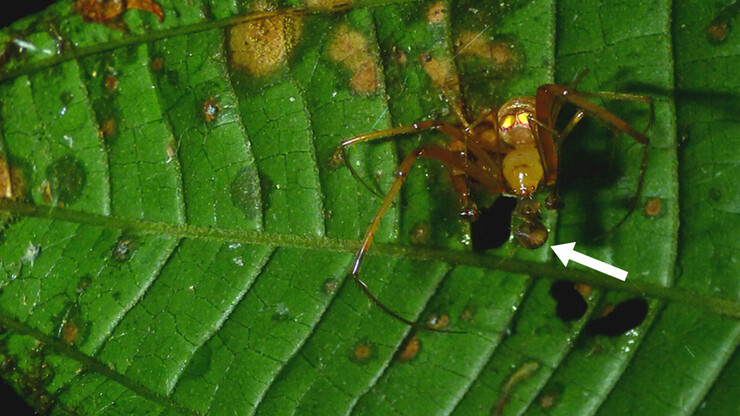
| Useful visual clue | Long anterior legs bearing conspicuous rows of spine-like or raptorial setae. |
| Danger to humans | Not recognized as medically significant. Verified bite data are limited. |
What Is a Mimetidae Spider?
Pirate spiders are members of the family Mimetidae. Their common name refers to their tendency to enter silk structures made by other spiders and attack or exploit the occupants. The family includes several genera, including Mimetus, Ero, Australomimetus, Gelanor and Anansi. [1]
Mimetidae are particularly associated with araneophagy, meaning the consumption of other spiders. This feeding specialization is a defining feature in discussions of pirate-spider biology, but it should not be simplified into the claim that every species has an identical diet or uses exactly the same attack sequence. [2] [3]
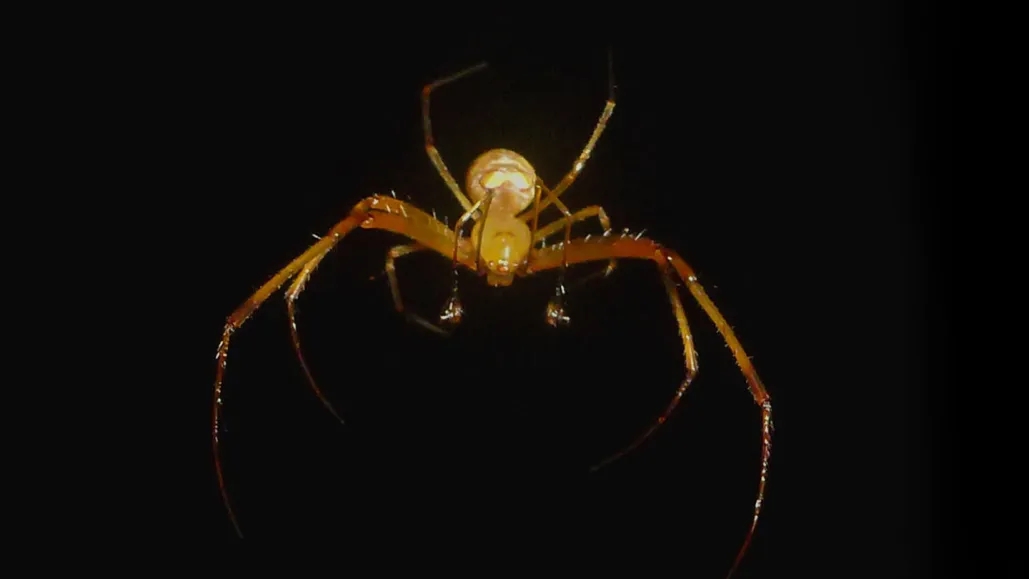
Pirate Spider Identification
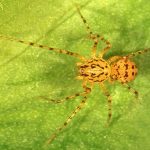
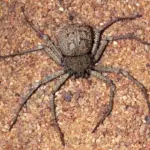
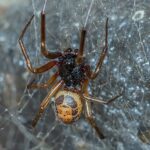
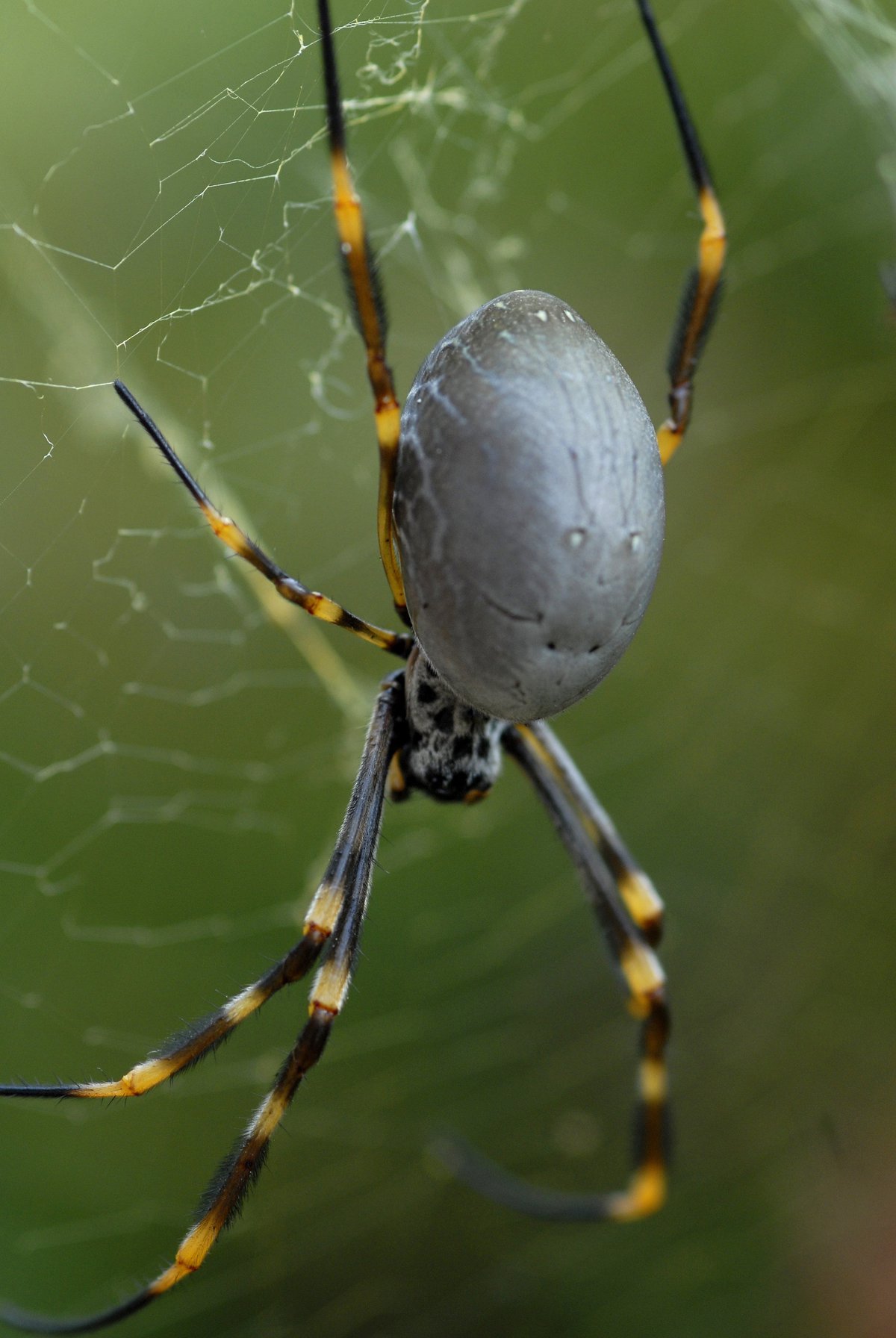
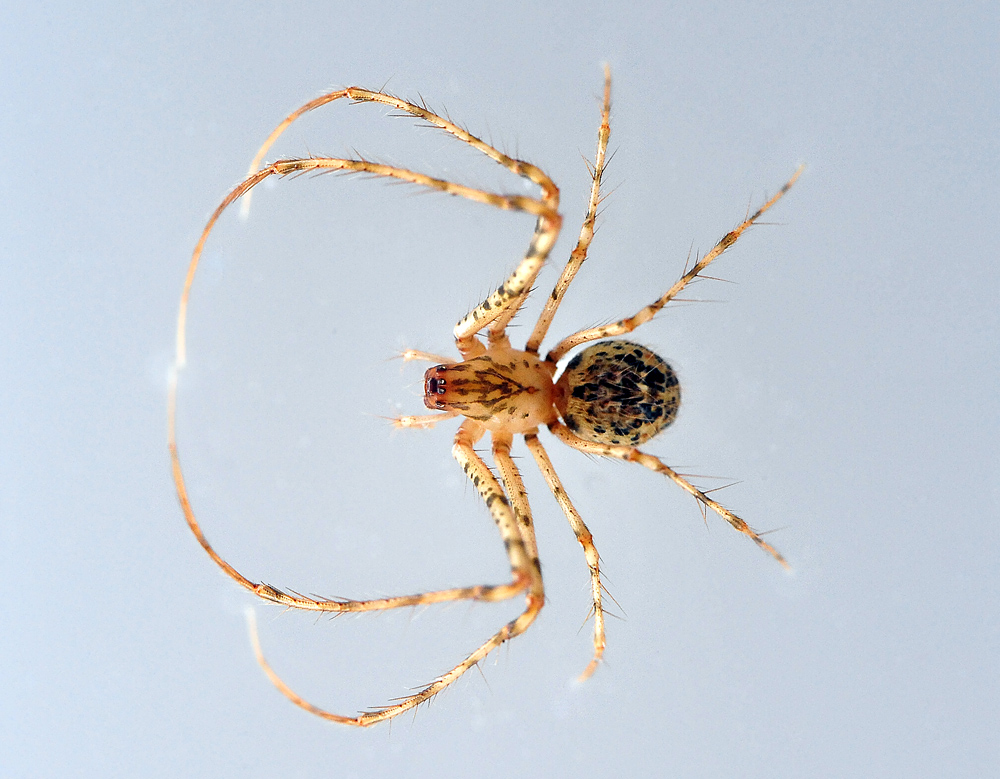
Pirate spiders are commonly described as small, slender or rounded-abdomened spiders with relatively long legs. Many are brown, yellow, orange, cream or mottled, but color varies and can overlap with unrelated spider families.
One of the most useful Mimetidae clues is the presence of conspicuous rows of strong, spine-like setae on the front legs. These anterior-leg structures are associated with handling dangerous spider prey and are important in formal descriptions of the family. [2] [8]
- Relatively long first and second pairs of legs.
- Rows of prominent spines or stiff setae on the anterior legs.
- A small body that may be pale, mottled or strongly patterned.
- A rounded, angular or tuberculate abdomen in some genera.
- Frequent association with vegetation, leaf litter or other spiders’ webs.
Identification limitation: Long front legs and leg spines are useful clues, but they are not exclusive to Mimetidae. Ordinary photographs may not clearly show the eye arrangement, chelicerae, genital structures or exact spine pattern required for a confident family- or species-level identification.
How Do Pirate Spiders Hunt Other Spiders?
Certain well-studied pirate spiders enter the web of another spider and use silk-borne vibrations during an approach. In behavioral studies of an Australian Australomimetus species and a New Zealand species, the predators performed varied vibratory behaviors that caused resident web spiders to respond as though ordinary prey or another familiar signal were present. [3]
This is described as aggressive mimicry: a predator produces a signal that is misleading to its intended prey. When the web owner moves within range, the pirate spider may lunge, bite a leg and use its long, spined front legs to restrain the prey.
It would nevertheless be inaccurate to state that every Mimetidae species always mimics a struggling insect, always imitates courtship, or follows one fixed attack sequence. The behavior of many species remains incompletely documented, and current phylogenetic work treats Mimetidae as a diverse lineage rather than a behaviorally uniform group. [2]
For a broader explanation of silk-borne signals and the different functions of webs, see why spiders build webs .
What Do Pirate Spiders Eat?
Other spiders are the best-documented and most characteristic prey of Mimetidae. Studied species have attacked spiders occupying orb webs, cobwebs and other silk structures. This is why pirate spiders are commonly described as araneophagous specialists.
However, “pirate spiders only eat spiders” is too absolute. Field observations of Mimetus notius documented substantial insectivory in addition to spider predation. Other reports indicate that some mimetids may consume spider eggs, exploit prey already caught in a web, or use an occupied or abandoned web while feeding. [4] [5]
The safest summary is that Mimetidae are primarily known as spider predators, while the exact diet depends on the species, life stage, habitat and available opportunities.
Do Pirate Spiders Build Their Own Capture Structures?
Older general descriptions often stated that pirate spiders do not build prey-catching webs. That remains broadly applicable to many familiar web-invading species, but it is no longer a safe family-wide rule.
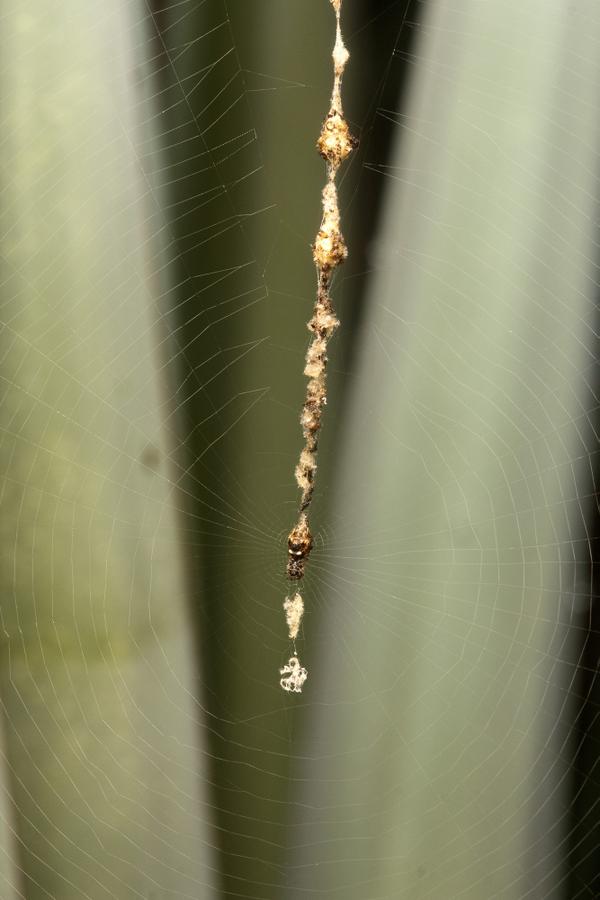
Research on the Costa Rican species Gelanor siquirres documented a specialized capture structure consisting of long, dry silk lines placed between a retreat and nearby vegetation. Exploring web-building spiders could attach their own floating lines to this structure and then move along the silk into the pirate spider’s attack zone. [6]
The researchers described it as the first known capture web of this kind in a pirate spider. It is therefore best presented as evidence of behavioral diversity within Mimetidae, not as the standard hunting method of the entire family.
Pirate Spiders Compared with Portia Jumping Spiders
Pirate spiders
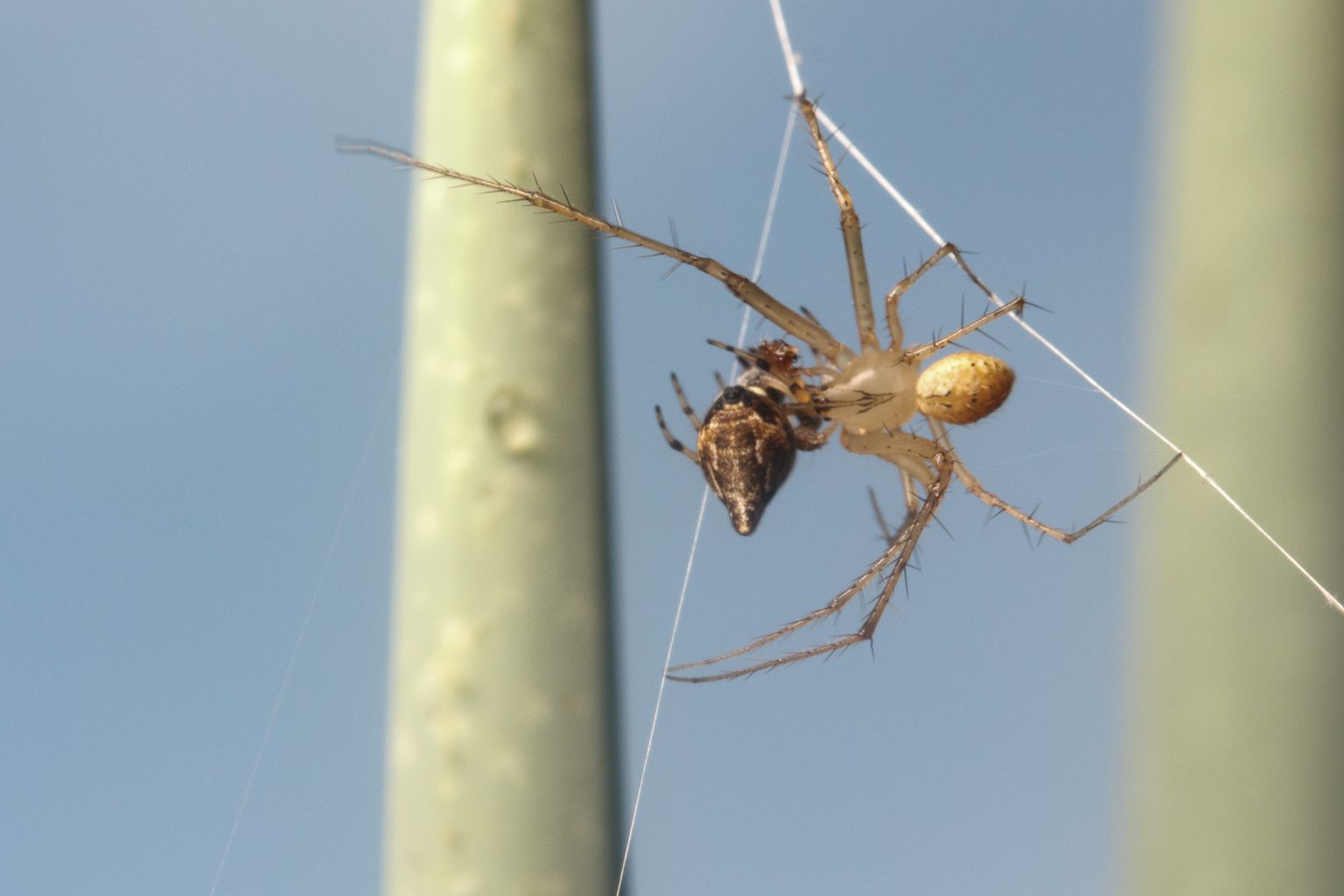
Pirate spiders belong to Mimetidae. They are recognized by anatomical traits such as the distinctive anterior-leg spines and are especially associated with tactile and vibrational hunting in or around other spiders’ silk.
Portia spiders
Portia belongs to the jumping-spider family Salticidae. These spiders have the large forward eyes characteristic of jumping spiders and combine strong vision with stalking, detours and deceptive web vibrations. [9]
Both groups include spider-eating predators capable of aggressive mimicry, but they are not closely interchangeable common names. A Portia jumping spider is not a Mimetidae pirate spider.
See the Spiderpedia profile of Portia fimbriata for a closer look at web invasion by a jumping spider.
Are Pirate Spiders Venomous?
Yes. Pirate spiders use venom to immobilize their arthropod prey. The correct scientific term is venomous, because the secretion is delivered through the fangs. “Poisonous” normally describes a toxin that causes harm when eaten, touched or absorbed.
The presence of venom does not show that an animal is medically dangerous to humans. Pirate-spider venom has been discussed primarily in relation to its effectiveness against other spiders, not as a recognized cause of serious human envenomation. [3]
What is known about pirate spider bites?
Verified human-bite data for Mimetidae are limited. In a prospective Australian study of 750 definite spider bites, Mimetidae accounted for only one or two cases and were not numerous enough to analyze as a separate clinical group. [7]
This evidence supports the wording “not recognized as medically significant”. It does not justify claiming that a pirate spider can never bite, that every bite is symptom-free, or that bites have a known universal reaction.
Medical caution: Skin lesions are frequently blamed on spiders without a captured and professionally identified specimen. Seek medical advice if suspected bite symptoms are severe, persistent or spreading, or if the spider may have belonged to a medically important group.
For general risk context, visit the Spiderpedia spider-bite guide .
How to Handle a Pirate Spider Safely
A pirate spider found outdoors normally requires no action. Avoid handling an unidentified spider with bare hands, especially when the identification is based only on color or body shape.
- Leave outdoor spiders in place when they are not causing a problem.
- Do not squeeze, pin or pick up the spider with your fingers.
- Indoors, place a clear container over the spider and slide stiff card beneath it.
- Release it into sheltered vegetation away from frequently used doors.
- Keep a clear photograph if professional identification may be needed.
If a suspected bite occurs, wash the area gently and monitor it. General first-aid information is available in how to treat a spider bite at home , but online information cannot diagnose a skin reaction or replace medical care.
Frequently Asked Questions
Are pirate spiders dangerous to humans?
Pirate spiders are not recognized as a medically significant spider family. They possess venom for capturing prey, but available human-bite information is too limited to define a standard clinical reaction.
Can a pirate spider bite a person?
A pirate spider has functional fangs and could potentially bite during direct physical contact. However, verified bite records are limited, so bite frequency should not be stated as a known fact.
Are pirate spiders venomous or poisonous?
Venomous is the accurate term. Pirate spiders inject venom through their fangs when subduing prey. This does not mean their venom is considered medically important to humans.
Do pirate spiders eat other spiders?
Yes. Araneophagy is the feeding behavior for which Mimetidae are best known. Some species invade another spider’s web and use deceptive vibrations before attacking.
Do pirate spiders eat only spiders?
Not necessarily. Other spiders are their characteristic prey, but research on Mimetus notius documented insect prey as well. Some mimetids may also consume spider eggs or exploit prey already present in another spider’s web.
What is pirate spider aggressive mimicry?
Aggressive mimicry occurs when a predator produces a misleading signal that causes prey to approach or respond in a vulnerable way. In some pirate spiders, movements on a resident spider’s web create vibrations resembling prey or another familiar web signal.
Do all pirate spiders hunt in the same way?
No. Web invasion and vibratory deception are well documented in certain species, but the behavior of many Mimetidae remains poorly known. Gelanor siquirres also demonstrates that unusual self-built capture structures can occur within the family.
How can I identify a pirate spider?
Long front legs with conspicuous rows of spines are useful clues. However, other spiders may look similar, and reliable identification may require close examination of the eyes, leg armature and mature reproductive anatomy.
Are Portia spiders pirate spiders?
No. Portia spiders are jumping spiders in Salticidae. Pirate spiders belong to Mimetidae. Both may eat spiders and use deceptive web signals, but they are taxonomically different groups.
Related Spiderpedia Guides
Scientific Sources
Taxonomy was checked against the current World Spider Catalog. Behavioral claims are based primarily on peer-reviewed Mimetidae research rather than generalized spider descriptions.
- World Spider Catalog — Mimetidae Simon, 1881: accepted genera and current classification .
- Benavides, L. R. & Hormiga, G. (2020). A morphological and combined phylogenetic analysis of pirate spiders. Invertebrate Systematics 34: 144–191 .
- Jackson, R. R. & Whitehouse, M. E. A. (1986). The biology of New Zealand and Queensland pirate spiders: aggressive mimicry, araneophagy and prey specialization .
- Kloock, C. T. (2001). Diet and insectivory in the araneophagic spider, Mimetus notius. The American Midland Naturalist 146: 424–428 .
- Kloock, C. T. (2012). Natural history of the pirate spider Mimetus hesperus in Kern County, California .
- Barrantes, G., Segura-Hernández, L. & Solano-Brenes, D. A novel prey capture strategy in the pirate spider Gelanor siquirres. Animal Behaviour .
- Isbister, G. K. & Gray, M. R. (2002). A prospective study of 750 definite spider bites, with expert spider identification .
- Zhang, J. et al. — Survey and morphological treatment of Mimetidae, including anterior-leg raptorial spines .
- Cross, F. R. & Jackson, R. R. (2020). Arthropod intelligence? The case for Portia .
- Australian Museum — Spider bites and venoms .