Quick Answer
No, golden silk orb-weavers are not considered dangerous to humans. They do have venom, but it is not regarded as medically significant for most people. A bite can be painful and may cause mild local symptoms such as redness, swelling, or soreness, but serious reactions are uncommon.
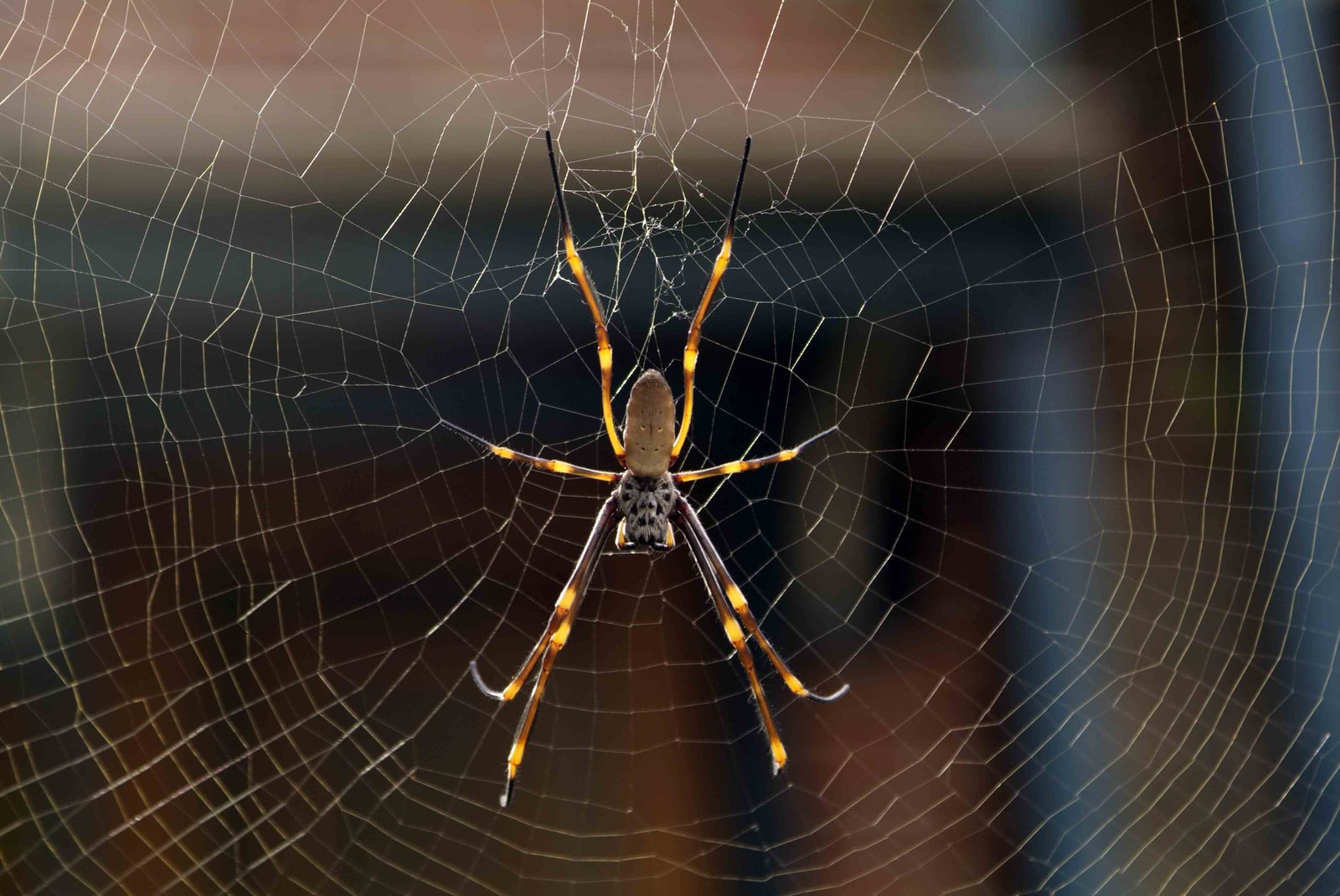
Golden silk orb-weavers are large web-building spiders best known for their huge golden webs and striking appearance. They can look intimidating, but for most people the real question is simple: are they actually dangerous? In most cases, the answer is no. These spiders are not considered a serious threat to humans, and they play an important role in controlling flying insects.
Overview
Golden silk orb-weavers are large orb-weaving spiders found in warm parts of the world, including parts of Australia, Asia, Africa, and the Americas. They are famous for spinning strong webs with a golden sheen, often stretched between trees, shrubs, or other vegetation.
These spiders matter because they are both easy to notice and easy to misunderstand. Their size and web strength can make them seem dangerous, but they are generally shy spiders that spend most of their time sitting in the web and waiting for prey.
Identification
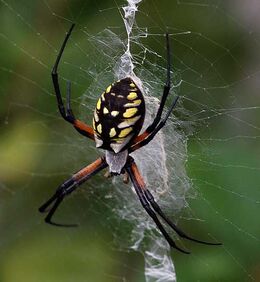
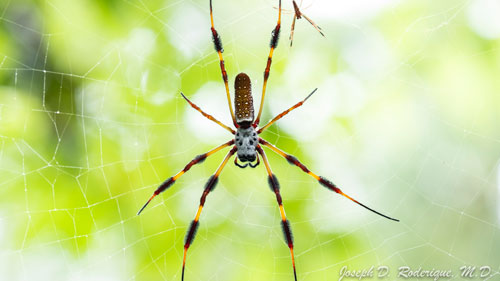
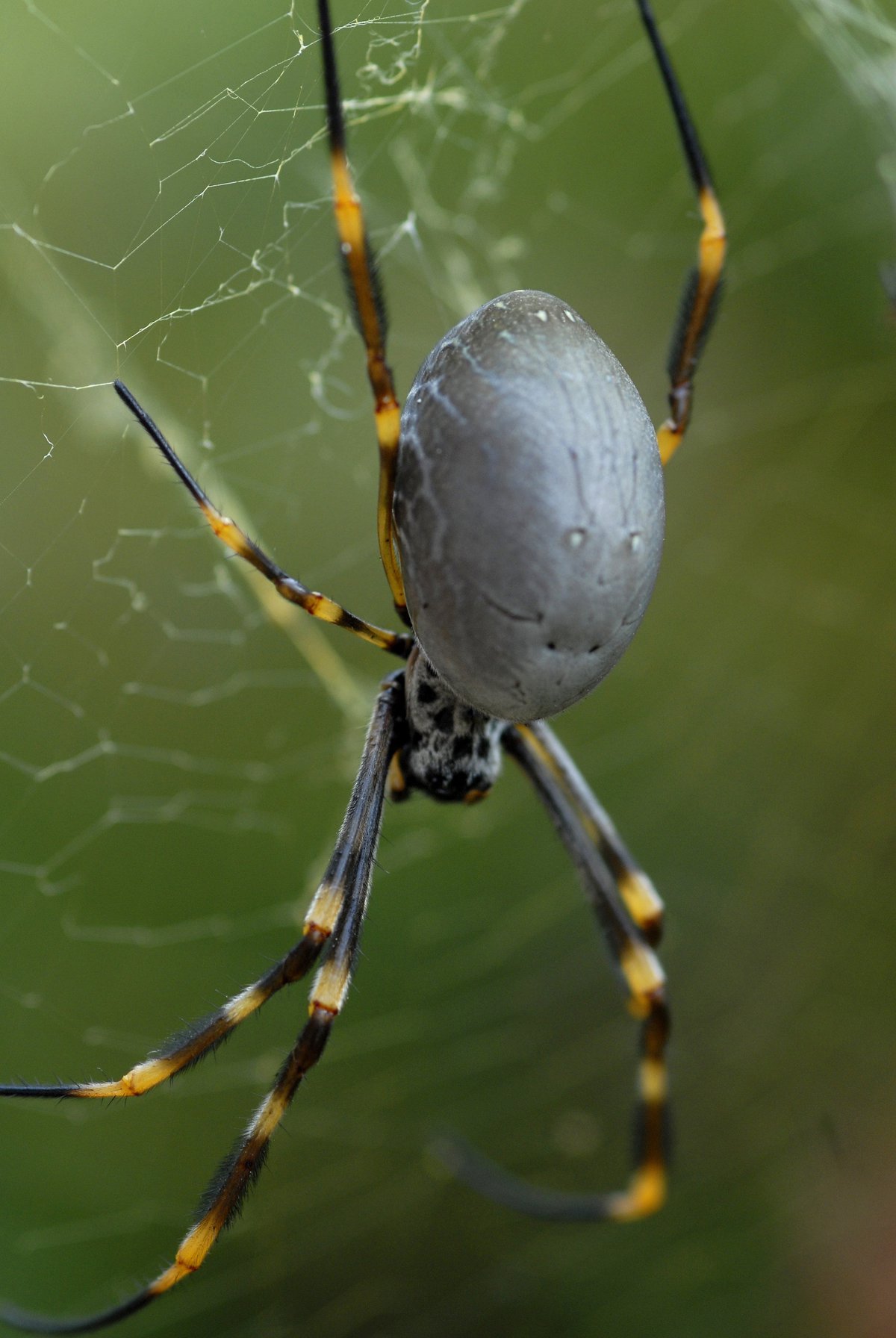
Golden silk orb-weavers are among the largest web-building spiders. Females are much larger than males and are the spiders most people notice. They often have long legs with dark and yellow banding, and the body may appear silvery, grey, plum-toned, or yellow-marked depending on the species.
Their webs are often the easiest clue. Look for a large, round orb web suspended in an open space where flying insects pass through. The silk can appear golden in the light, which is one of the spider’s best-known features.
Males are much smaller and less conspicuous. In some species, they may be tiny compared with the female and are often seen near the edges of the female’s web.
Habitat
Golden silk orb-weavers prefer warm habitats with enough open space to anchor a large web. They are commonly found in forests, woodlands, gardens, coastal vegetation, shrubland, and mangrove areas.
They usually place webs between branches, shrubs, or other supports where insects are likely to fly. In some places, they can also be seen in parks, urban gardens, and other vegetated outdoor spaces.
Behavior
These spiders build large, semi-permanent orb webs and often remain in or near the web for long periods. Unlike some other orb-weavers that rebuild their webs daily, golden silk orb-weavers may keep the same web in place for longer.
They rely heavily on vibration rather than vision. When prey hits the web, the spider detects the movement through the silk and rushes over to wrap or bite the trapped insect.
If disturbed, they may vibrate the web rapidly, which can help confuse predators. In some areas, several individuals may build webs close together, creating a tangled cluster of overlapping webs.
Their webs can also host tiny kleptoparasitic spiders that steal small trapped insects from the larger spider’s web.
Diet
Golden silk orb-weavers mainly feed on flying insects. Common prey includes flies, moths, beetles, bugs, and butterflies. Their large, strong webs are especially effective at catching insects that move through open air spaces.
Once prey is trapped, the spider quickly immobilizes it and feeds at the web. Like other orb-weavers, they are useful predators that help reduce local insect populations.
Are They Dangerous?
For most people, golden silk orb-weavers are not dangerous. They are venomous in the same basic sense that many spiders are, but their venom is not considered a serious threat to human health.
Bites are uncommon because these spiders are not aggressive and usually prefer to stay on the web rather than confront a person. If one does bite, the result is usually limited to local pain, redness, and swelling. Many people describe the discomfort as similar to a bee sting.
As with any spider bite, medical attention is a good idea if symptoms become severe, do not improve, or if the person shows signs of an allergic reaction.
Why People Mistake Them for Dangerous Spiders
Much of their reputation comes from appearance. Golden silk orb-weavers are large, highly visible, and often sit in huge webs at head height, which can be startling.
They are also known by common names such as “banana spider” or “giant wood spider” in some places, and those names can cause confusion because different spiders may share similar nicknames in different regions.
Why They Matter
Golden silk orb-weavers are beneficial spiders. They help control insect numbers and are an important part of the food web, serving as both predators and prey.
They are also scientifically interesting because their silk is exceptionally strong and elastic. The golden color and performance of the silk have attracted research attention, even though large-scale silk harvesting is not practical.
- Quick facts box
Quick Facts: Golden Silk Orb-Weavers
- Common names: Golden silk orb-weaver, giant wood spider, sometimes banana spider
- Spider type: Orb-weaving spider
- Size: Females are large; males are much smaller
- Web: Large orb web with silk that may appear golden
- Habitat: Forests, gardens, shrubland, coastal vegetation, mangroves
- Diet: Mostly flying insects
- Behavior: Usually stays in or near the web; not aggressive
- Danger to humans: Low
- Bite effects: Usually mild, with local pain, redness, or swelling
- Benefit: Helps control insect populations