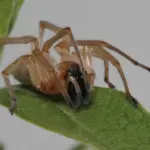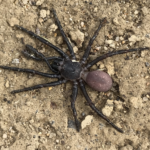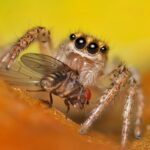
Ant spiders are spiders that closely resemble ants in shape, movement, and behavior. This disguise helps them avoid predators and, in some cases, get close to prey without being noticed. Although they can look confusing at first glance, they are a fascinating group for anyone trying to identify unusual small spiders in gardens, forests, or around the home.
Quick answer
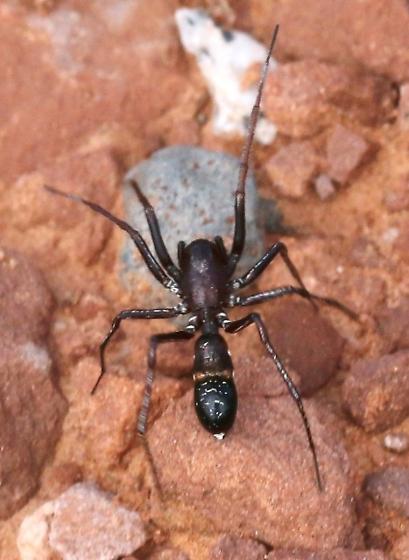
Ant spiders are ant-mimicking spiders that use their narrow bodies, quick movements, and raised front legs to look like ants. They are usually not dangerous to people, and most are small hunters that feed on insects and other tiny arthropods.
Overview
Ant spiders are not true ants. They are spiders that have evolved to imitate ants so convincingly that many predators overlook them. This form of mimicry is common in several spider groups, especially jumping spiders and some ground spiders.
Their ant-like appearance matters for two main reasons. First, ants are often avoided by predators, so looking like an ant can offer protection. Second, some ant-mimicking spiders use the disguise to move more safely through areas where ants or other small prey are active.

Identification
Ant spiders are easiest to recognize by their shape and movement.
Most have long, slender bodies, narrow waists, and relatively thin legs. Many also move in a jerky, hurried way that makes them look even more ant-like. Some lift their front legs so they resemble antennae, which is one of the classic signs of an ant-mimicking spider.
At a glance, they can be mistaken for ants, but a closer look usually reveals the difference. Unlike ants, spiders have eight legs and no true antennae. Their body structure is also different, even if the mimicry hides that well from a casual observer.
Habitat
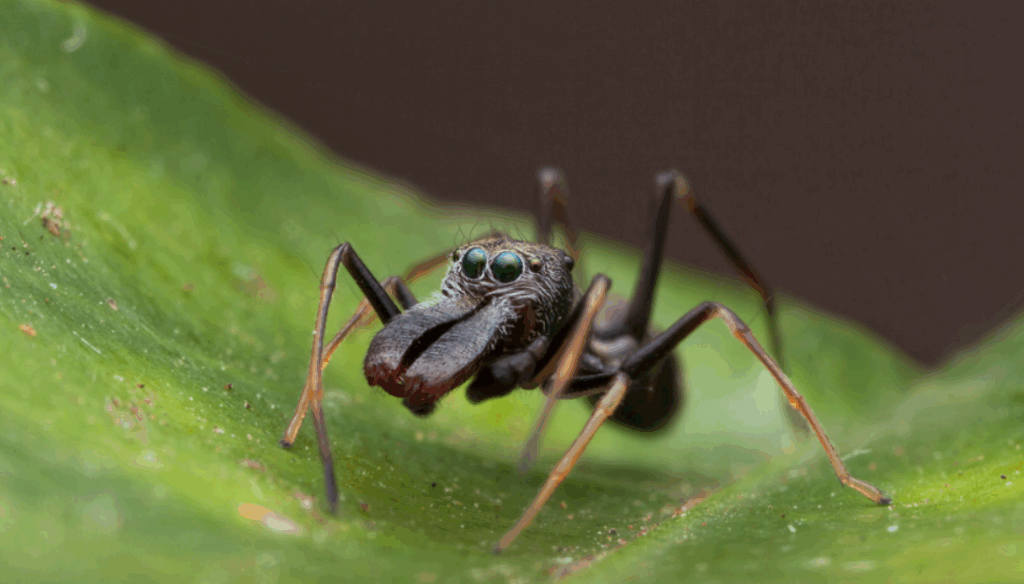
Ant spiders live in a wide range of habitats. They can be found in urban areas, woodlands, forests, gardens, and shrubby habitats. They are often noticed in places where ants are common, including leaf litter, low vegetation, tree trunks, fallen wood, and around the edges of paths.
Some are more often seen in wetter forested areas, while others adapt well to disturbed ground and suburban environments. In Australia, ant-like species have been recorded across a broad range of regions.
Behavior
These spiders are active hunters rather than web-builders in the usual sense. Instead of waiting in a web for prey, they move through vegetation or across the ground, searching for food.
Their most remarkable behavior is mimicry. Ant spiders do not just look like ants. They often move like them too, with quick stops, sudden turns, and restless darting motions. This behavior strengthens the illusion and makes them harder for predators to identify as spiders.
Some ant-mimicking species appear to use this disguise mainly for defense. Others may use it while hunting, especially when moving near ants or other insects that might otherwise react quickly to a spider.
Diet
Ant spiders usually feed on small insects and other tiny arthropods. Depending on the species, this may include flies, aphids, small beetles, or even ants.
Some ant-mimicking spiders are generalist hunters, while others are more specialized. A few are known to attack ants directly, using speed and precision to strike and retreat. Others simply benefit from resembling ants while feeding on different prey nearby.
Because many are small and active, they can be useful natural predators in gardens and other outdoor habitats.
Life cycle
The life cycle of ant spiders is broadly similar to that of other spiders. They begin as eggs, hatch into spiderlings, and then pass through several molts as they grow into adults.
Young individuals may not always mimic ants as convincingly as adults, but the ant-like body form and behavior become more pronounced as they mature. Adult females produce egg sacs, and the number of eggs can vary by species.
As with many spiders, growth, lifespan, and breeding season depend on climate, habitat, and the species involved.
Are they dangerous?
Ant spiders are not considered dangerous to humans. They are small, secretive, and far more interested in avoiding threats than confronting them.
Like many spiders, they may bite if trapped or handled roughly, but this is uncommon. In most cases, they are harmless and best left undisturbed.
Their unusual appearance can make them seem more alarming than they really are, especially when they are moving quickly. In reality, they are simply small predators playing an important role in local ecosystems.
Why do ant spiders mimic ants?
Ant mimicry is one of the most successful defensive strategies found in spiders. Many predators avoid ants because ants can bite, sting, spray chemicals, or defend themselves aggressively. By looking like ants, spiders may reduce the risk of being eaten.
There may also be trade-offs. A spider shaped to resemble an ant may not have the same body form as other spiders, and extreme mimicry can come at a cost. Even so, the survival benefits are clearly strong enough that this strategy has evolved many times.
Key facts
Ant spiders are spiders, not ants.
They are best known for ant mimicry, both in appearance and movement.
Most are active hunters rather than web-dependent sit-and-wait predators.
They are usually harmless to people.
They can be found in gardens, forests, woodlands, and urban habitats.
Many belong to jumping spider or ground spider groups, though “ant spider” is a common name rather than a single formal species.
6. Quick facts box
Common name: Ant spider
Type: Ant-mimicking spider
Main feature: Resembles ants in body shape and movement
Size: Usually small
Habitat: Forests, woodlands, gardens, urban areas, leaf litter, low vegetation
Diet: Small insects and other arthropods
Behavior: Active hunter, fast-moving, often mimics ants for protection
Danger to humans: Low
Web use: Limited or not the main hunting method in many species
Range: Broad, with ant-mimicking spiders found in many parts of the world