What should I do if there is “recluse spider” in my room

Brown Recluse in Your Room? What to Do Safely

If you think there is a brown recluse in your room, do not pick it up or try to identify it at close range with your bare hands. Keep children and pets away, put on shoes, and—only if you can do so safely—capture the spider under a clear container with a stiff card or remove it with a vacuum. Then check bedding, clothing and shoes, reduce clutter, and use sticky monitoring traps along walls. Most importantly, verify the identification: many ordinary brown house spiders are mistaken for brown recluses.

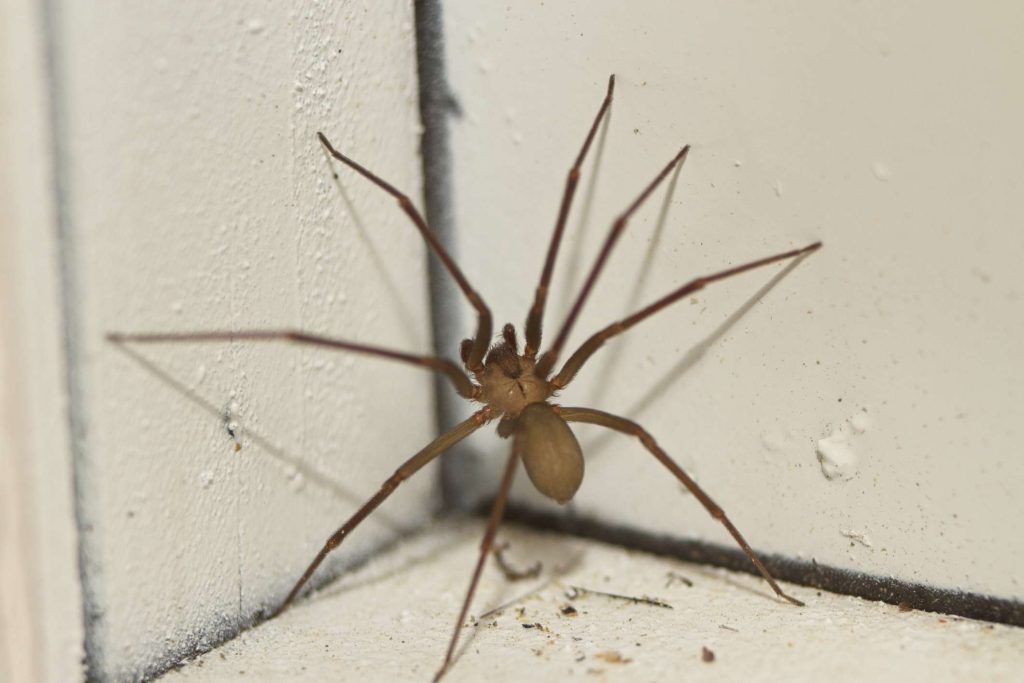
Brown spider resting in the corner of an indoor room
A brown spider indoors should not automatically be identified as a brown recluse from color alone.

First, Make Sure a Brown Recluse Is Actually Plausible

The brown recluse, Loxosceles reclusa, is an accepted species in the family Sicariidae. The name “brown recluse” refers specifically to this species, not to every brown spider or even every member of the genus Loxosceles.

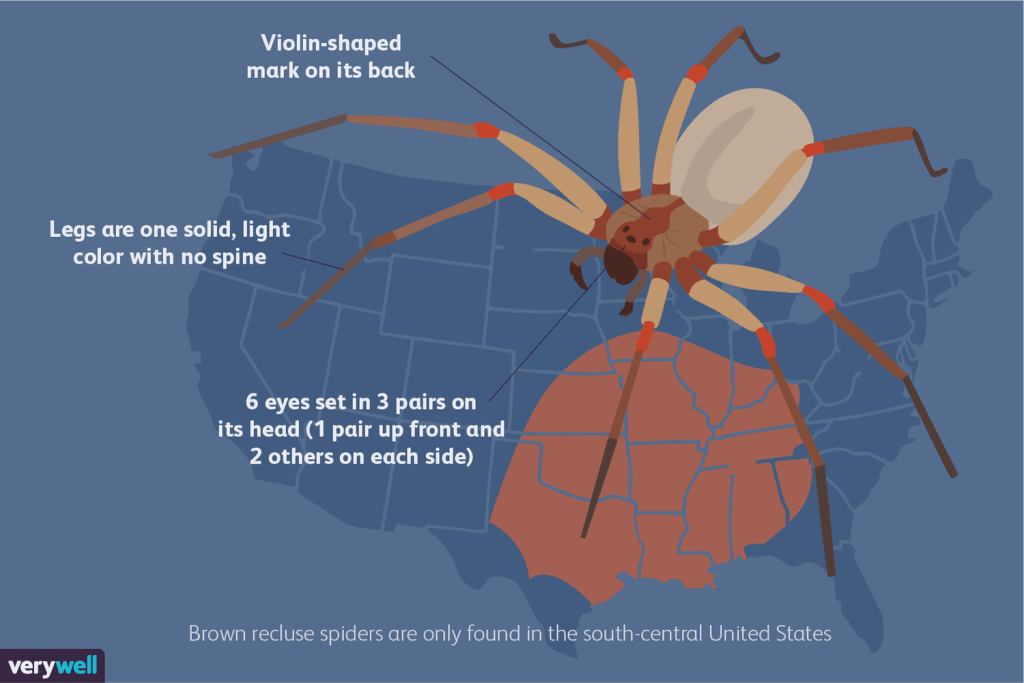
Geography is one of the most useful first checks. Established populations of L. reclusa are concentrated in the south-central and central Midwestern United States. Verified specimens are uncommon across much of the rest of North America, even though suspected “brown recluses” are frequently reported far outside their established range.

If you are outside the known range, an unidentified brown spider in your bedroom is more likely to be another spider than L. reclusa. Spiderpedia’s guide to common house spiders in North America can help narrow the possibilities before you assume that a medically significant species is present.

Identification clueWhat fits a brown recluseImportant caution
Geographic locationMost plausible within its documented south-central and central Midwestern U.S. range.A brown spider found far outside that range should not be called a brown recluse without expert confirmation.
EyesSix eyes arranged as three pairs.Do not move close to a live spider just to count its eyes. Other spiders can also have six eyes.
Body markingsAdults often have a darker violin-like marking on the cephalothorax.The “violin” is not sufficient by itself. Many unrelated spiders appear to have similar dark markings.
Legs and abdomenGenerally plain rather than strongly banded or patterned.Color and pattern vary with lighting, age, condition and photography.
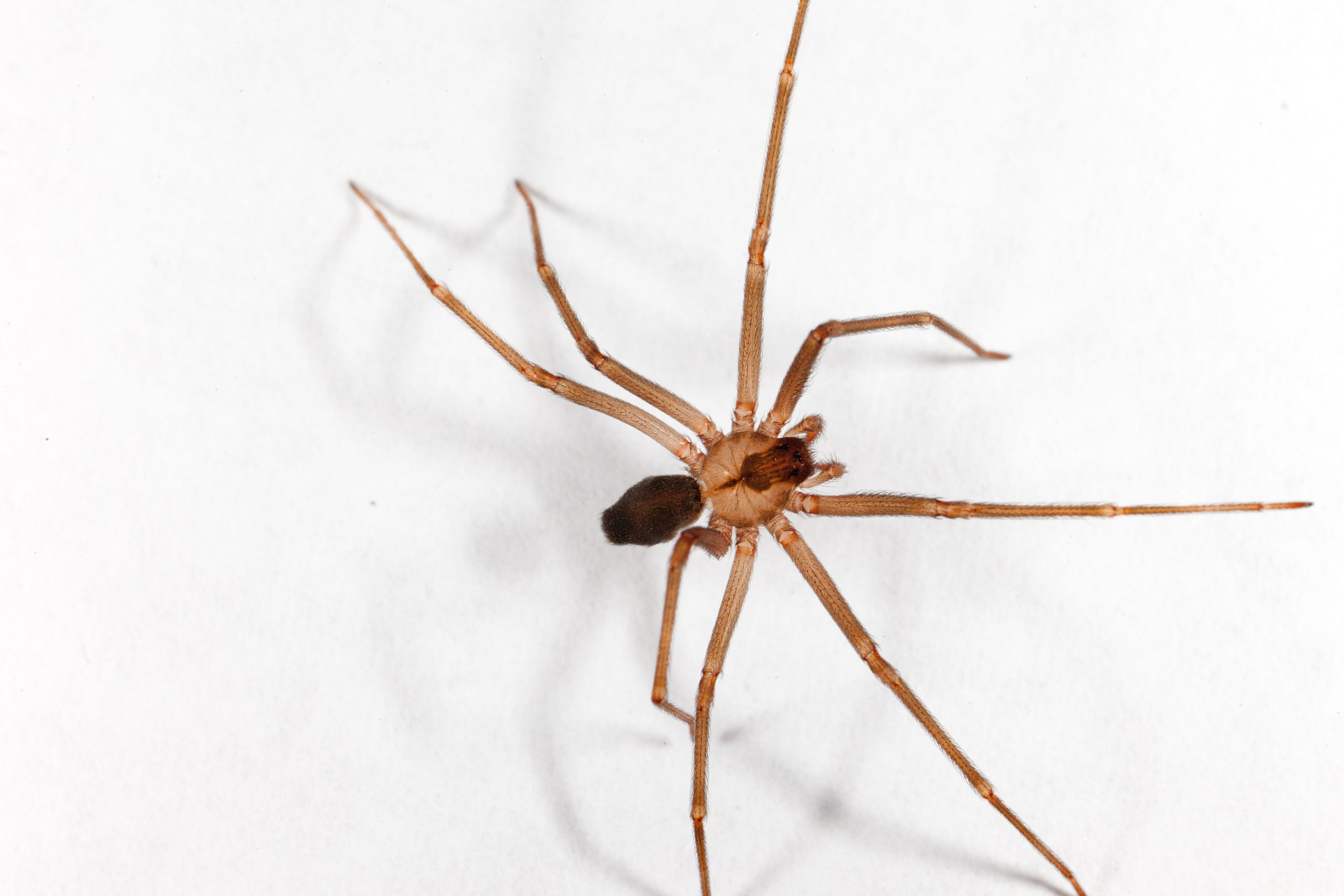
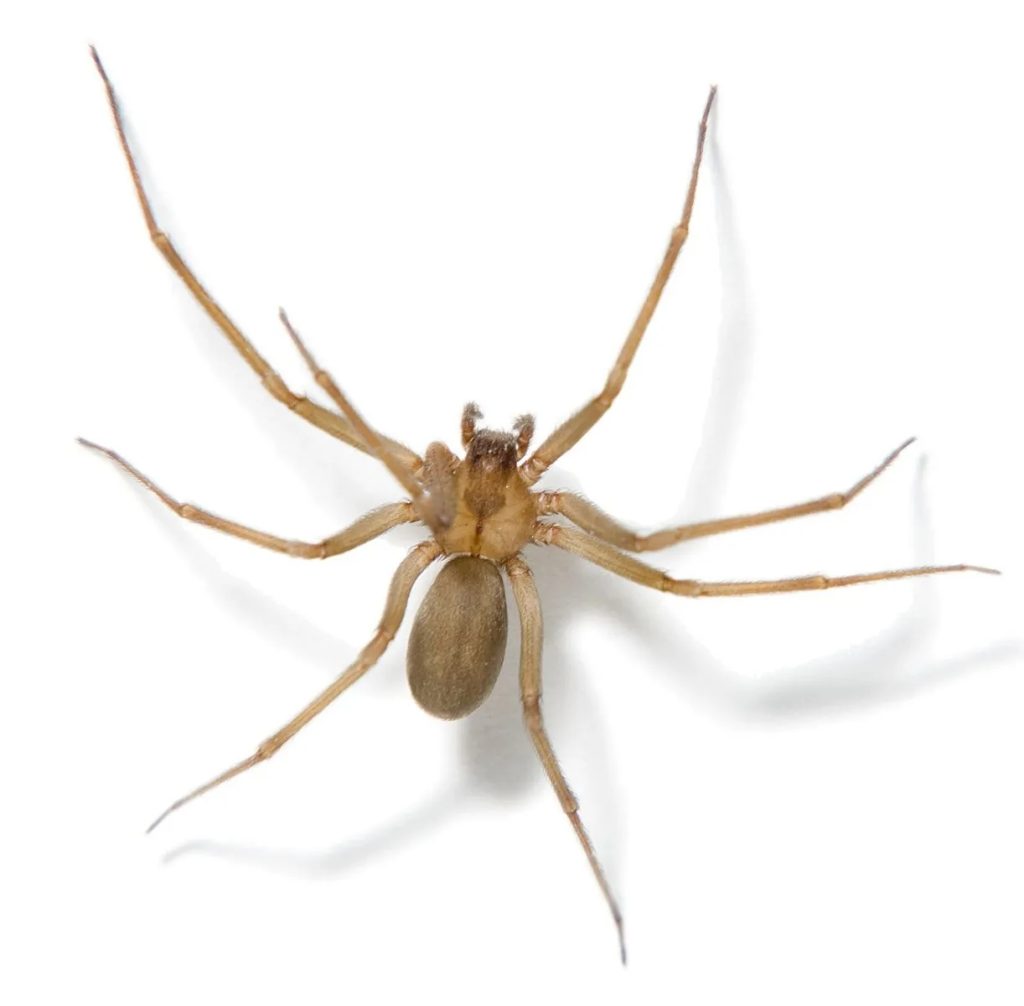
Plain brown spider photographed against a white background for identification comparison
Accurate identification should combine location and multiple anatomical features rather than relying on brown coloration or one dark marking.

Do not force a species identification from a blurry photograph. A clear image can be useful, but reliable spider identification may require details that are not visible in an ordinary phone photo. See the Spiderpedia spider identification guide for a more systematic approach.

What Should You Do Right Now?

  1. Keep your hands away from the spider.
    Brown recluses do not hunt or attack people. Bites are associated mainly with defensive contact, especially when a spider becomes trapped against skin. There is no benefit in trying to grab one with your fingers.
  2. Put on shoes and keep children and pets away.
    Avoid walking barefoot around the area until the spider has been removed and nearby floor-level hiding places have been checked.
  3. Remove the spider without direct contact if you can do so safely.
    One option is to place a transparent jar or container over the spider and slide a piece of stiff paper or thin cardboard underneath. A vacuum can also physically remove an indoor spider. If you are uncomfortable approaching it, leave it alone and ask someone experienced or a pest-management professional to handle it.
  4. Keep the specimen or a clear photograph if identification matters.
    A reasonably intact specimen is much more useful for identification than a badly crushed spider. Correct identification can prevent unnecessary treatment of the home.
  5. Check the places where skin contact is most likely.
    Inspect shoes, clothes, blankets and other items that have been on the floor or stored undisturbed. Shake out footwear and clothing before putting them on.

If the Spider Was in Your Bedroom, Reduce Contact With the Bed

Recluse spiders normally spend the day in secluded retreats and may wander at night. The main concern in a bedroom is not that the spider will deliberately approach a sleeping person; it is accidental contact if a wandering spider becomes trapped between skin, clothing or bedding.

Research-based brown recluse management guidance recommends several simple bedroom precautions:

  • Move the bed slightly away from the wall.
  • Remove bed skirts or fabric that hangs down to the floor.
  • Do not store boxes, clothing or other clutter underneath the bed.
  • Keep blankets and sheets from trailing onto the floor.
  • Keep shoes and clothes off the floor where possible.
  • Shake out clothing, shoes and infrequently used blankets before use.

These steps reduce the number of routes by which a ground-level wandering spider can accidentally enter bedding or clothing.

Does One Brown Recluse Mean You Have an Infestation?

No. One suspected spider does not by itself prove that your home contains an established brown recluse population. It may not be a recluse at all, and individual spiders can occasionally be transported in boxes, furniture or other belongings.

However, if an expert confirms Loxosceles reclusa and you live within its established range, further inspection is reasonable. Recluse populations can remain hidden in cracks, storage areas, wall voids, attics, garages and other places that are rarely disturbed.

Sticky traps are particularly useful for monitoring. Place flat glue traps along baseboards, behind furniture, inside closets and in other low-traffic areas where children and pets cannot reach them. Brown recluses tend to move along walls, so traps placed close to edges are generally more informative than traps placed in the middle of a room.

Sticky traps are not a complete treatment by themselves. They can capture wandering spiders and reveal where activity is concentrated, but less-mobile spiders may remain in protected retreats. Repeated confirmed captures are a stronger reason to investigate the structure than one unverified sighting.

How to Make the Room Less Suitable for Recluse Spiders

Reduce clutter and hiding spaces

Brown recluses favor protected cracks, gaps and tight spaces. Cardboard box flaps, piles of stored objects, furniture backs and other undisturbed spaces can provide suitable retreats.

Declutter gradually rather than reaching blindly into boxes or piles. If you are working in an area where recluses have actually been confirmed, wear gloves, long sleeves and closed footwear.

Vacuum thoroughly

Vacuum along baseboards, beneath and behind furniture, around the bed frame, inside accessible closet edges and other sheltered locations. Mechanical removal can eliminate individual spiders, webs and other debris while also making future activity easier to detect.

Store items more securely

Frequently used belongings are less likely to remain undisturbed for long periods. Seasonal clothing, shoes and other stored items can be kept in closed containers rather than loose cardboard boxes where practical.

Seal entry points and structural gaps

Repair damaged screens and seal appropriate gaps around doors, utility penetrations and other openings. Exclusion also reduces the movement of insects into the building.

Reduce insect prey

Spiders remain where shelter and prey are available. Addressing flies, moths, silverfish, cockroaches and other indoor arthropods can form part of a broader integrated pest-management program. It should not, however, be treated as an instant way to eliminate recluses because these spiders can tolerate long periods between meals.

What Not to Do

  • Do not handle a suspected recluse with bare hands.
  • Do not identify a spider solely by its brown color.
  • Do not assume every dark mark is a diagnostic “violin.”
  • Do not treat one unconfirmed spider as proof of a whole-house infestation.
  • Do not rely on room foggers or indiscriminate spraying as a stand-alone solution. Recluse spiders often remain deep inside cracks, voids and clutter where broad surface treatments may not reach them effectively.
  • Do not apply pesticides contrary to their labels. If a recluse infestation is confirmed and chemical treatment is needed, targeted treatment by an experienced pest-management professional is preferable to improvised applications.

When Should You Call a Pest-Control Professional?

Professional inspection becomes more useful when identification has been confirmed and there is evidence that the problem extends beyond one wandering spider.

Consider professional help if:

  • confirmed brown recluses are appearing repeatedly;
  • several traps are capturing suspected recluses;
  • spiders are being found in bedrooms or frequently handled storage areas;
  • activity appears to originate from an attic, basement, crawlspace or structural void that is difficult to inspect safely;
  • the home contains extensive clutter or inaccessible harborages;
  • you cannot safely collect or inspect the spiders yourself.

Accurate identification should come before an expensive control program. A licensed professional or qualified entomology service may also be able to help determine whether trapped specimens are actually Loxosceles.

Are Brown Recluses Dangerous?

The brown recluse is venomous, not poisonous: venom is delivered through a bite. It is considered medically significant because some bites can cause local tissue injury and, rarely, more serious systemic illness. That does not mean that every encounter results in a bite or that every bite produces severe necrosis.

Brown recluses are secretive spiders and generally bite when they are compressed or trapped against the skin. Confirmed bites are much less common than the widespread fear surrounding the species might suggest.

What If You Think You Were Bitten?

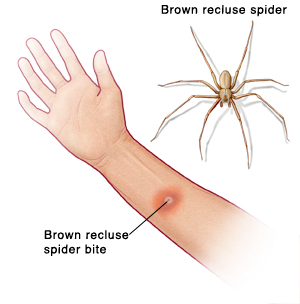
If you actually saw a suspected recluse bite you, wash the area gently with soap and water and seek appropriate medical or poison-control advice. Do not cut the wound, attempt to suck out venom or apply a tourniquet.

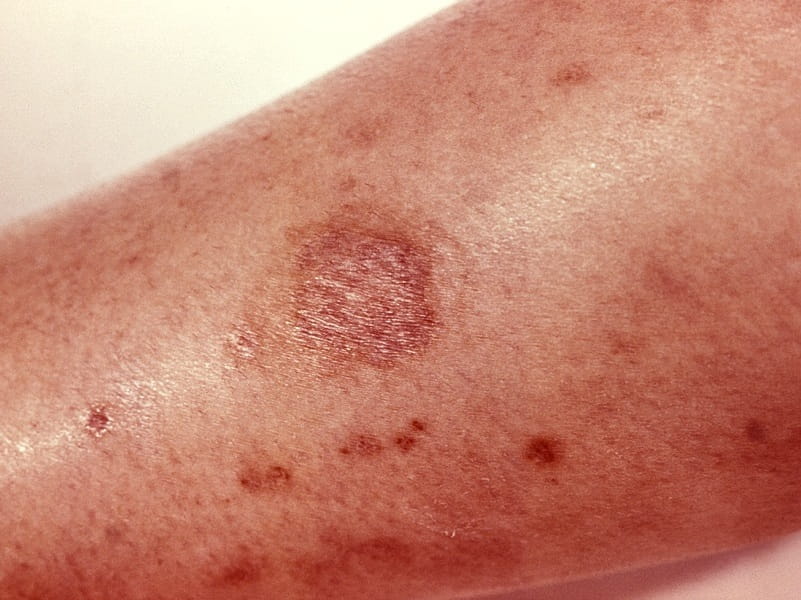
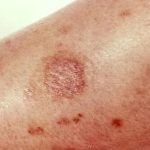
Medical evaluation becomes especially important if pain or skin injury is worsening or you develop significant symptoms beyond the bite area. Many infections, inflammatory disorders and other skin conditions can resemble lesions blamed on brown recluse spiders, so a skin wound by itself cannot reliably identify the animal responsible.

For more detail about bite symptoms and medical precautions, see Spiderpedia’s brown recluse bite guidance.

Brown Recluse in a Room: Frequently Asked Questions

Is it safe to sleep in a room where I found a brown recluse?

One unconfirmed brown spider does not mean the bedroom is dangerous or infested. Remove the spider if possible, inspect bedding and nearby clothing, move the bed away from the wall, remove floor-level clutter and keep bedding from touching the floor. Repeated sightings of confirmed brown recluses warrant a more thorough inspection.

Can a brown recluse crawl into a bed?

Yes, a wandering spider can accidentally reach a bed, especially if the bed touches a wall or bedding hangs to the floor. Brown recluses do not enter beds because they are seeking people. The concern is accidental contact and entrapment against the skin.

Will a brown recluse chase or attack me?

Brown recluses are not known for pursuing people. They are secretive spiders that normally retreat or remain hidden. Bites are primarily defensive and are most likely when a spider becomes trapped against the body.

Is the violin marking enough to identify a brown recluse?

No. The marking can be useful when several other features also fit, but many unrelated spiders have dark markings that people interpret as a violin. Geographic range, eye arrangement and the spider’s overall anatomy should be considered together.

Should I use bug bombs or foggers for brown recluse spiders?

They should not be treated as a primary solution. Recluse spiders spend much of their time inside protected cracks, voids and clutter, making broad fogging or surface treatment unreliable. Confirmed infestations are better approached through integrated pest management: identification, monitoring, decluttering, mechanical removal, exclusion and appropriately targeted professional treatment.

Scientific Sources

  1. World Spider Catalog — Loxosceles reclusa Gertsch & Mulaik, 1940. Current accepted taxonomy and family placement.
  2. Vetter, R. S. & Hedges, S. A. — Integrated Pest Management of the Brown Recluse Spider. Journal of Integrated Pest Management, 2018.
  3. Vetter, R. S. — Arachnids Submitted as Suspected Brown Recluse Spiders. Journal of Medical Entomology, 2005. Evidence concerning geographic distribution and frequent misidentification.
  4. University of California Statewide Integrated Pest Management Program — Brown Recluse and Other Recluse Spiders. Identification, distribution, bedroom precautions and nonchemical management.
  5. National Capital Poison Center — Brown Recluse Spider Bites: Know the Signs, Reduce the Risks. Bite prevention, medical significance and first-response guidance.
nathan reed
About the author
Nathan Reed
Nathan Reed is the editor of Spiderpedia, where he writes and reviews content about spider identification, behavior, habitat, diet, and related nature topics. The site’s content is based on publicly available scientific and educational references and is updated when needed for clarity and accuracy.