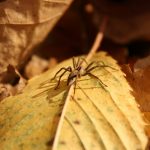
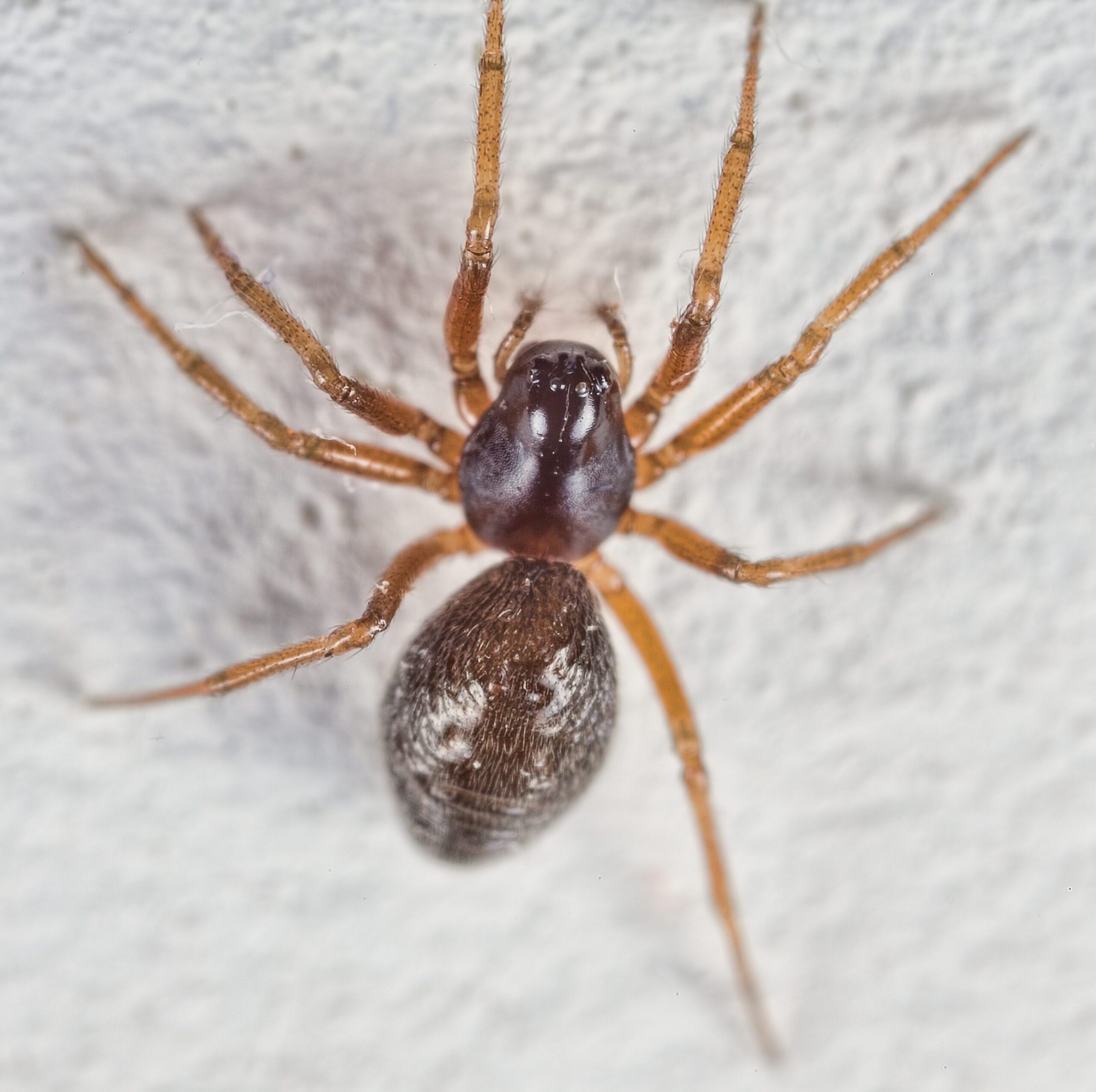
A small brown spider usually cannot be identified from color alone. Many unrelated spiders can look small and brown, so reliable identification starts with geographic location, body shape, leg proportions, markings, eyes, spinnerets, web type, habitat and behavior. A clear photograph may narrow the spider to a family or recognizable group, but one blurry image often cannot confirm an exact species.
If your first thought is “brown recluse,” be especially cautious about jumping to that conclusion. Small size, brown color, long legs or a dark mark on the front of the body are not enough by themselves to identify a recluse.
Small Brown Spider Identification: Start With These Clues
The phrase “small brown spider” describes an appearance, not a biological group. Brown coloration occurs in many spider families, and apparent color can also change with lighting, camera exposure, age, sex and recent molting.
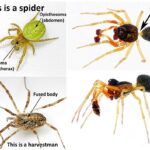
Instead of trying to match one feature, work through several independent clues. Spiderpedia’s broader spider identification guide explains the same principle in more detail: a combination of traits is much more useful than color alone.
| Clue | What to Check | Why It Helps |
|---|---|---|
| Location | Country, state or region | Many spiders have limited geographic distributions. |
| Body shape | Compact, elongated, rounded, flattened or robust | Different spider families often have recognizable proportions. |
| Legs | Long or short, slender or robust, banded, hairy or obviously spiny | Leg structure can eliminate several lookalike groups. |
| Markings | Stripes, chevrons, spots, bands or an apparently plain abdomen | Patterns are useful when combined with anatomy and range. |
| Eyes | Number, relative size and arrangement | Eye patterns can be important at family or genus level. |
| Spinnerets | Whether they visibly project from the rear of the abdomen | Prominent spinnerets are a useful clue for some funnel weavers and related spiders. |
| Web | Tangle, sheet, funnel, retreat or no capture web | Web architecture can quickly narrow the possibilities. |
| Behavior | Running, jumping, hanging in a web, hiding in a retreat or stalking prey | Hunting style provides clues that a still photograph may miss. |
Common Types of Spiders That Can Look Small and Brown
The exact candidates depend strongly on where you live. The groups below are useful starting points, especially for spiders encountered in and around buildings, but they are not a universal list for every country.
Funnel Weavers and House Spiders
Funnel weavers are frequent sources of “brown spider” identifications. Many have an elongated abdomen, relatively long legs and patterned brown or gray-brown bodies. In some species, the spinnerets at the rear of the abdomen are conspicuous.
The web is often more informative than the color. A typical funnel-weaver web consists of a horizontal or slightly curved sheet of silk leading into a funnel-like retreat. The spider waits near the retreat and runs rapidly across the sheet when prey lands on it.
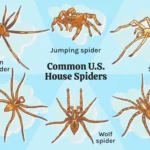
Indoors, related house-dwelling species may be found in basements, garages, storage spaces and other sheltered areas. You can compare several examples in Spiderpedia’s guide to common house spiders in North America.
Cobweb Spiders
Cobweb spiders often have a more rounded or bulbous abdomen than funnel weavers. Their webs are irregular tangles rather than neat circular webs or obvious funnel sheets.
A small brown spider hanging upside down in a messy three-dimensional web in a corner is therefore a different identification problem from a similarly colored spider running across the floor.
Body pattern, abdominal shape and geographic range are still necessary for a closer identification. Some cobweb spiders can be difficult to distinguish from one another from a distant photograph.
Wolf Spiders and Other Ground-Hunting Spiders
Many brown spiders do not rely on a capture web at all. Wolf spiders and several unrelated ground-hunting groups spend much of their time walking or running after prey.
A spider repeatedly seen moving across a floor, patio, soil surface or beneath objects may belong to one of these hunting groups. Wolf spiders are often relatively robust, with noticeable hairs or markings, while other ground spiders may be smoother, darker or more elongated.
“It runs fast” is useful behavioral information, but it is not enough for a species identification because many unrelated spiders are fast runners.
Sac Spiders
Some sac spiders are pale tan, yellow-brown or light brown and may wander on walls and ceilings, especially at night. Instead of building a permanent capture web, they typically use silk to make a retreat where they rest.
A pale roaming spider should therefore not automatically be grouped with a web-building house spider just because the two have similar colors.
Jumping Spiders
Not every jumping spider is brightly colored. Some small species are predominantly brown, gray-brown or mottled.
The most useful clues are usually their compact body, comparatively sturdy front end and conspicuous forward-facing eyes. They actively stalk prey and often turn toward movement rather than waiting in a capture web.
Very Small Sheet-Web Spiders
Some very small spiders build delicate horizontal or dome-like sheets of silk in vegetation, protected outdoor spaces and occasionally around buildings. Their small size can make eye patterns, markings and other diagnostic structures impossible to see in an ordinary phone photograph.
For these spiders, family-level identification may be more realistic than assigning a species name from a distant image.
Is a Small Brown Spider a Brown Recluse?
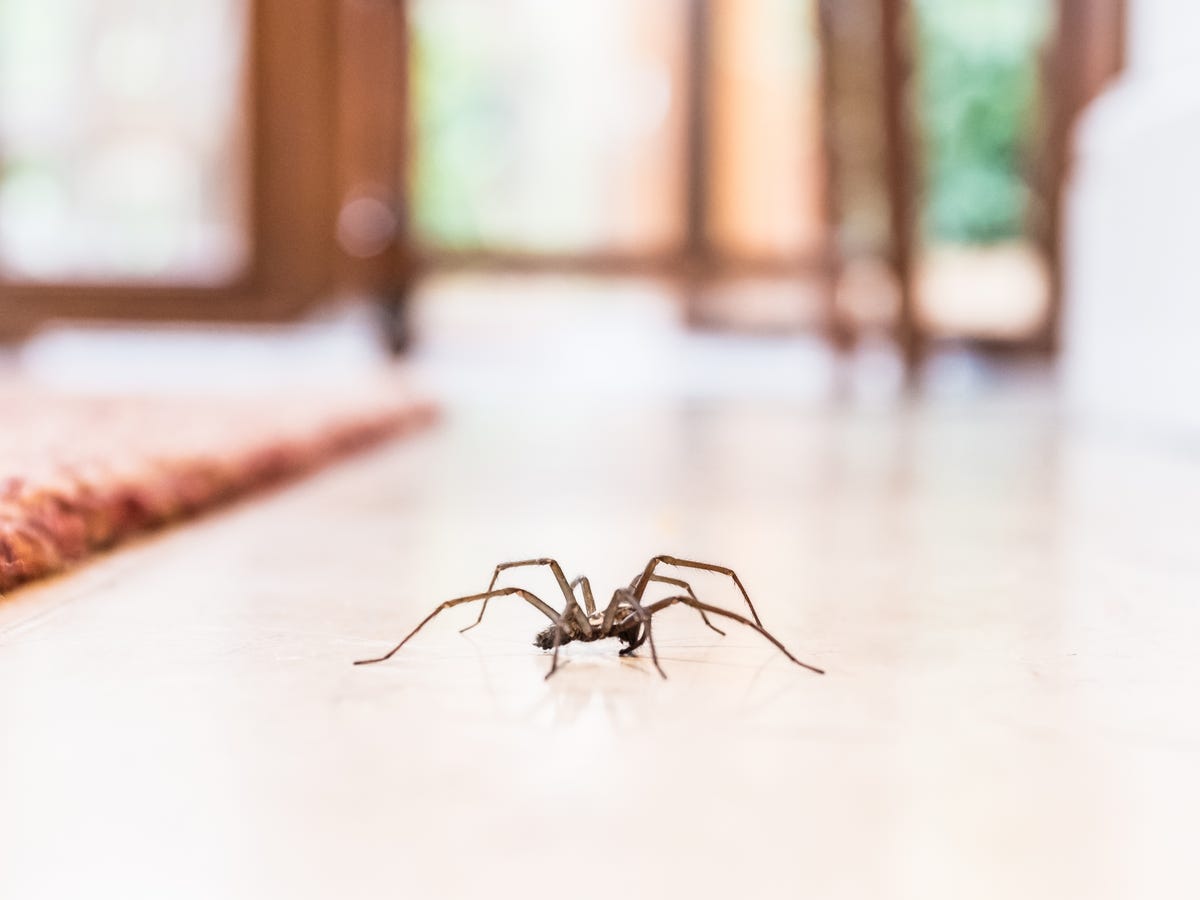
Usually, there is not enough information to say. A brown spider should not be identified as a brown recluse simply because it is small, tan or brown, found indoors, long-legged or appears to have a dark mark on the front of its body.
The accepted scientific name of the brown recluse is Loxosceles reclusa, in the family Sicariidae. Its natural distribution is centered in part of the south-central and central United States rather than across all of North America or the world.
Geography is therefore one of the first questions to ask. A claimed brown recluse from far outside its established range deserves much more scrutiny than a matching specimen from within the species’ known range.
Useful Brown Recluse Identification Features
A possible brown recluse should be evaluated using several traits together:
- six eyes arranged in three pairs rather than the more familiar eight-eye arrangement of many spiders;
- relatively uniform, unbanded legs;
- fine hairs rather than obvious stout spines on the legs;
- a relatively plain abdomen rather than strong stripes, spots or chevrons;
- a body shape consistent with Loxosceles;
- geographic location consistent with the species’ established range.
A dark violin-like marking on the cephalothorax may occur on a brown recluse, but it is not sufficient by itself. Other spiders can have markings that people interpret as a violin, and photographs can exaggerate shadows or patterns.
Eye arrangement can be highly informative, but trying to inspect the eyes of a suspected recluse at close range is not a good reason to handle an unknown spider. A sharp zoomed photograph or examination of a safely contained specimen is preferable.
| Possible Spider | Useful Clues | What May Separate It From a Brown Recluse |
|---|---|---|
| Brown recluse | Six eyes in three pairs, uniform legs, relatively plain abdomen, correct geographic range | Identification depends on the combination of anatomy and range, not the violin mark alone |
| Funnel weaver | Elongated body, patterned abdomen, sheet-and-funnel web, sometimes conspicuous spinnerets | Patterning, projecting spinnerets and web architecture can rule against recluse |
| Cobweb spider | Often rounder abdomen, irregular tangle web, frequently hangs beneath web | Body proportions and web type are typically different |
| Wolf or ground-hunting spider | Active runner, no capture web, often more patterned or robust | Body build, eye pattern, markings and hunting behavior differ |
| Jumping spider | Compact body, large forward-facing eyes, stalking and jumping | Eye structure and body proportions are very different |
If you are dealing specifically with a suspected recluse indoors, see Spiderpedia’s guidance on what to do if you suspect a brown recluse in your room.
Use the Web to Narrow Down a Brown Spider
A web can sometimes provide more useful identification information than color.
- Flat sheet leading to a funnel: consider a funnel-weaving spider.
- Irregular tangled web in a corner: consider cobweb-building groups.
- Small sheet suspended in vegetation: a sheet-web-building spider may be involved.
- No capture web and the spider actively runs after prey: consider hunting groups such as wolf, ground, sac or jumping spiders.
Webs should still be treated as supporting evidence. Abandoned webs may be occupied by another animal, and wandering male spiders can be found far from the type of web normally associated with females of their species.
Habitat and Behavior Can Be More Useful Than Color
Record exactly where the spider was found. “Inside my house” is useful, but “under a cardboard box on a dry basement floor” is much better.
Useful habitat notes include:
- basement, attic, bedroom, bathroom or garage;
- wall, ceiling, floor or window frame;
- under bark, stones, logs or stored objects;
- vegetation, flowers, lawn or leaf litter;
- inside a web, inside a silk retreat or wandering freely.
Behavior matters too. Note whether the spider jumps, runs continuously, remains at the center of a web, retreats into a funnel, hangs upside down or hides in a silk shelter.
Why a Photograph May Not Be Enough for Species Identification
Photographs are extremely useful, but there are limits to what they can establish.
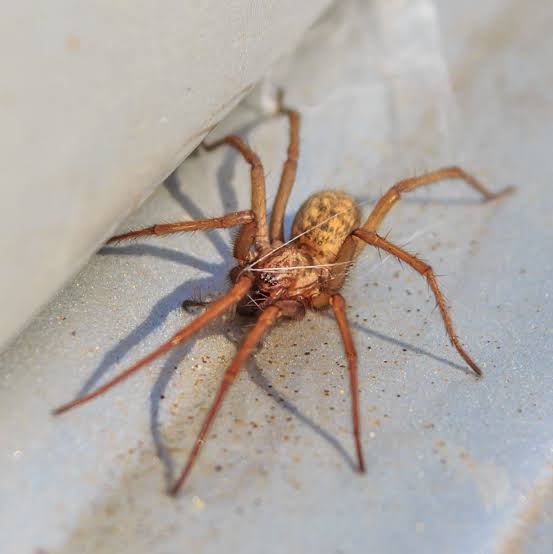
Closely related spider species can share nearly identical color, pattern and body proportions. In some groups, reliable species-level identification depends on an adult specimen and microscopic examination of reproductive structures or other small anatomical features.
Juveniles create another problem because diagnostic adult structures may not yet be developed. Males and females of the same species can also look surprisingly different.
A responsible identification may therefore stop at “funnel weaver,” “wolf spider,” “jumping spider” or another family-level group instead of giving an unsupported species name.
How to Photograph a Small Brown Spider for Identification
If you can photograph the spider without handling it, try to collect several different views rather than one distant picture.
- Photograph the spider from directly above. This records the carapace, abdomen and leg pattern.
- Get a front view if it can be done safely. Eye arrangement may be valuable.
- Photograph the rear of the abdomen. Visible spinnerets can help identify funnel-weaving groups.
- Include a scale reference nearby. Do not place an object directly against the spider.
- Record the exact location. Country and region are essential identification data.
- Photograph the web or retreat. Its architecture can be diagnostic at a broader group level.
Avoid relying on extreme digital zoom if it turns markings into blurred blocks or artificial outlines. Several clear images at moderate magnification are more useful than one heavily processed picture.
Are Small Brown Spiders Dangerous?
Brown coloration does not indicate medical importance. Many common brown spiders encountered around homes are not considered medically significant.
Spiders use venom to subdue prey, but “venomous” does not automatically mean “dangerous to people.” Human risk depends on the particular spider, whether a bite actually occurs and the medical effects associated with that taxon.
Unknown spiders should still be handled cautiously. Do not pick up a spider with bare hands simply to inspect it more closely.
If You Think You Were Bitten
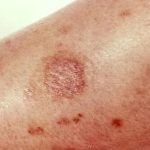
Redness, swelling, itching, pain, blisters or skin lesions are not enough to prove that a spider caused the problem. Many conditions can produce similar symptoms, and a spider bite is difficult to confirm when no spider was seen or reliably identified.
If symptoms are severe, rapidly worsening, involve difficulty breathing or include concerning systemic effects, seek appropriate local medical care. This article cannot replace advice from a doctor, emergency service or local poison-control service.
How to Remove a Small Brown Spider Safely
If the spider is in an inconvenient indoor location and you want to remove it, avoid direct handling.
When it can be done safely, place a clear container over the spider, slide a stiff piece of card underneath and move the contained spider without touching it. A vacuum can also be used when capture is impractical.
If you repeatedly find spiders indoors, reducing clutter, sealing gaps around doors and windows, moving stored items away from walls and reducing insect prey can be more useful than trying to identify and eliminate every individual spider.
References and Further Reading
- World Spider Catalog — Loxosceles reclusa Gertsch & Mulaik, 1940
- University of California, Riverside — How to Identify and Misidentify a Brown Recluse Spider
- Burke Museum — Myth: A Violin Shape Means a Brown Recluse
- Vetter — Integrated Pest Management of the Brown Recluse Spider
- National Capital Poison Center — Brown Recluse Spider Bites