Are armed spiders aggressive?
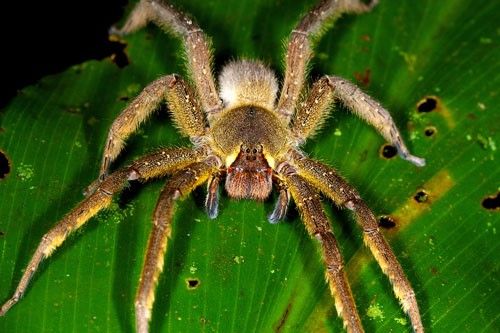
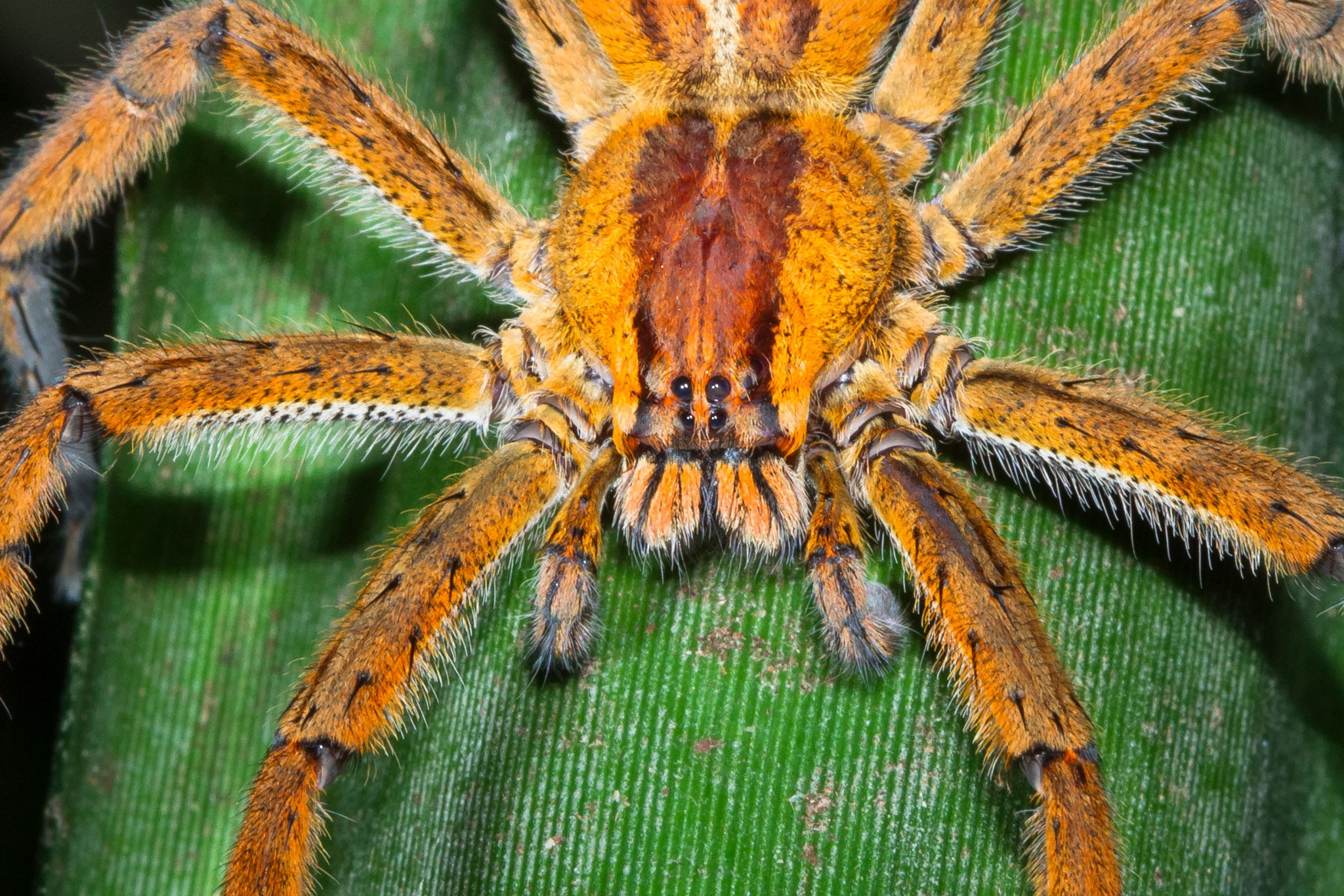
The genus Phoneutria is represented by eight species of spiders that all occur naturally only in Central and South America: Phoneutria boliviensis (Pickard-Cambridge), Phoneutria fera Perty, Phoneutria reidyi (Pickard-Cambridge), Phoneutria nigriventer (Keyserling), Phoneutria keyserlingi (Pickard-Cambridge), Phoneutria pertyi (Pickard-Cambridge), Phoneutria eikstedtae Martins and Bertani and Phoneutria bahiensis Simo and Brescovit (Simo and Brescovit 2001, Vetter and Hillebrecht 2008). Collectively, this group is referred to by a number of common names that include armed spiders, Brazilian wandering spiders and banana spiders in English speaking countries. In Brazil, they are known as “aranha armadeira”, which translates as armed spider (Martins and Bertani 2007).
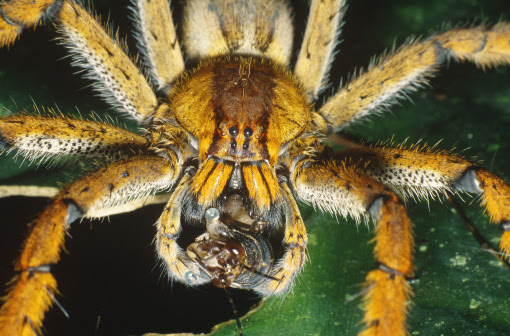
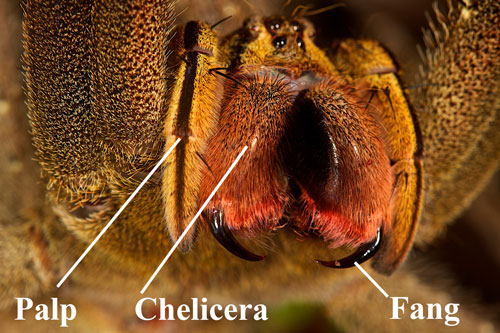
They are aggressive, and their name, Phoneutria, is Greek for “murderess.” Their large chelicerae inflict painful stings, causing immediate sweating and local piloerection.
Armadeiras (armed spiders)
Armed spiders have long arms. Since they often hide in banana boxes, they are known as banana bunch spiders by locals.The symptom of its bite is severe pain which is observed in 96 % of patients. The bite of this spider can cause respiratory failure and death at both ends of the age spectrum. Its venom is neurotoxic thus stimulates the autonomic nervous system (tachycardia, hypertension, diaphoresis and salivation), priapism, dizziness and visual disturbances. This venom is recommended to be used for controlling permanent pathological pains due to its different compounds and its effect on pain neurons.
Patients receive supportive treatment including pain and symptom control. There is antivenom for the treatment of these patients but it is used in few cases. With regard to the probability of respiratory failure in these patients, it is contradictory to use narcotics for pain control. Therefore, local nerve block anesthesia is recommended.
Expert Opinions on Armed Spiders
To gain further insights into the world of armed spiders, let’s explore the opinions of experts in the field:
Dr. ArachnoExpert, Arachnologist and Professor at Arachnid University: “Armed spiders are a fascinating group of arachnids. Their spitting behavior is truly remarkable, but it’s important to remember that they pose no direct danger to humans. They are generally docile creatures that prefer to avoid conflict whenever possible.”
Dr. SpiderEnthusiast, Arachnophile and Author of “The Secret Lives of Spiders”: “Armed spiders are often misunderstood and unfairly stigmatized. Their spitting technique is an incredible adaptation for capturing prey and defending themselves. It’s a marvel of nature, and we should appreciate their unique qualities without undue fear.”
Dr. VenomResearcher, Toxinologist and Scientist at Venom Institute: “While armed spiders do produce venom, it is not harmful to humans. Their venom is primarily designed to break down the tissues of their prey. When it comes to potential danger, armed spiders rank low on the list of venomous creatures.”
These expert opinions reinforce the notion that armed spiders are not a significant threat to humans. They highlight the importance of understanding and appreciating the natural behaviors and adaptations of these creatures.
Identification of Armed Spiders
Armed spiders, also known as spitting spiders, belong to the family Scytodidae. These unique spiders can be identified by their distinct body shape and behavior. They are typically small to medium-sized, ranging from 3 to 15 mm in length. Armed spiders have elongated bodies with a flattened cephalothorax and a cylindrical abdomen. They are often brown or gray in color, with some species displaying intricate patterns on their bodies.
One characteristic that sets armed spiders apart is their ability to spit silk from their fangs. This behavior is used for both defense and capturing prey. When threatened, the spider raises its front legs, aims at the perceived threat, and releases a stream of sticky silk. The silk quickly ensnares the target, immobilizing it and allowing the spider to either escape or deliver a venomous bite. This unique adaptation is what gives armed spiders their name.
Armed spiders can be found in various parts of the world, including North and South America, Africa, Europe, and Asia. They are often encountered in outdoor environments, such as gardens, forests, and fields. While armed spiders may appear intimidating, it’s essential to understand that they pose no direct danger to humans.
Venomous or Poisonous?
One common misconception about armed spiders is that they are venomous and pose a threat to humans. However, this is not entirely accurate.
Over the past 100 years, 10 fatalities have been attributed to Phoneutria spiders, mostly among young people (Nentwig and Kuhn-Nentwig 2013). In comparison, similar numbers of fatalities are reported for the widow spiders and Australian funnel-web spiders. While cases of mortality are known, in the majority of cases (90%), Phoneutria envenomation is considered to be mild and only 0.5-3.3% are diagnosed as severe or systemic (Bucaretchi et al. 2008). The effects of envenomation include severe pain, elevated heart rate, arterial hypertension, cardiac distress, shock, muscle tremors, priapism and frequent vomiting (Gomez et al. 2002). These symptoms can be particularly pronounced in children. In Brazil, moderate and severe cases (about 3% of cases) of envenomation are treated with anti-venom but are otherwise treated symptomatically (Bucaretchi et al. 2016).
Myth or Reality: Are Armed Spiders Really Dangerous?
The question of whether armed spiders are genuinely dangerous to humans can be answered with a resounding “no”. Armed spiders, despite their impressive spitting technique, pose no direct threat to humans. They are generally non-aggressive and prefer to avoid confrontation whenever possible.
The venom of armed spiders is not harmful to humans, and their bites are typically harmless, causing minimal pain or discomfort. Any potential risks associated with armed spiders, such as allergies or accidental silk contact, are minimal and can be easily managed with basic first aid.
It is important to distinguish between the unique qualities and behaviors of armed spiders and the exaggerated myths or misconceptions surrounding them. By educating ourselves and others, we can appreciate these fascinating creatures without unnecessary fear or panic.
ARMED SPIDERS PHONEUTRIA PERTY (ARACHNIDA: ARANEAE: CTENIDAE)
The genus Phoneutria is represented by eight species of spiders that all occur naturally only in Central and South America: Phoneutria boliviensis (Pickard-Cambridge), Phoneutria fera Perty, Phoneutria reidyi (Pickard-Cambridge), Phoneutria nigriventer (Keyserling), Phoneutria keyserlingi (Pickard-Cambridge), Phoneutria pertyi (Pickard-Cambridge), Phoneutria eikstedtae Martins and Bertani, and Phoneutria bahaiensis Simo and Brescovit (Simo and Brescovit 2001, Vetter and Hillebrecht 2008). Collectively, this group is referred to by a number of common names that include armed spiders, Brazilian wandering spiders and banana spiders in English speaking countries. In Brazil, they are known as “aranha armadeira”, which translates as armed spider (Martins and Bertani 2007).
Phoneutria are nocturnal hunters that actively forage and overcome prey with potent venom rather than relying on a web for prey capture. Members of the genus are among the most medically important spiders in the world (Vetter and Isbister 2008). Phoneutria species are large spiders that vigorously defend themselves when threatened. Their venom consists of a mixture of peptides and proteins that together function as a potent neurotoxin in mammals (Richardson et al. 2006). In most spiders, venom serves as a method of subduing prey. However, in Phoneutria, venom may have evolved to perform a defensive function against mammals (Vetter and Isbister 2008). Pharmacologically, their venom has been extensively studied and its components have potential medical and agricultural uses (Gomez et al. 2002, Martin-Moutot 2006). Phoneutria spiders have high medical significance because, in addition to having potent venom, some species occur at high densities in and around populated areas within their native range. Outside their native range, they occasionally are imported accidentally in produce shipments originating from Central and South America (Vetter and Hillebrecht 2008, Vetter et al. 2014).